Solar Battery Backup in Illinois — What It Actually Powers and Whether It's Worth It
Every time I talk to a homeowner about solar, the battery question comes up within the first five minutes. "What happens when the power goes out?" It's the #1 concern I hear, and it's a fair one — Illinois homeowners deal with more outages than most people realize.
Here's the straight answer: without a battery, your solar panels shut off during an outage. With a battery, you keep the lights on. But what exactly does "keep the lights on" mean in practice? Let me break down what a battery actually does, what it costs in 2026 with the rebate, and whether it makes financial sense.
Without a Battery, Solar Doesn't Help During Outages
This surprises a lot of people. If your solar system is grid-tied (which nearly all residential systems are), it must shut off when the grid goes down. This is a safety requirement — it prevents your panels from sending electricity into power lines that utility workers are repairing.
So if you have solar panels but no battery, and the power goes out at 2 PM on a sunny day, your panels are producing electricity but you can't use any of it. That's frustrating. And it's why many customers across Illinois report wishing they'd added a battery or generator along with their solar.
One Battery: Essential Loads
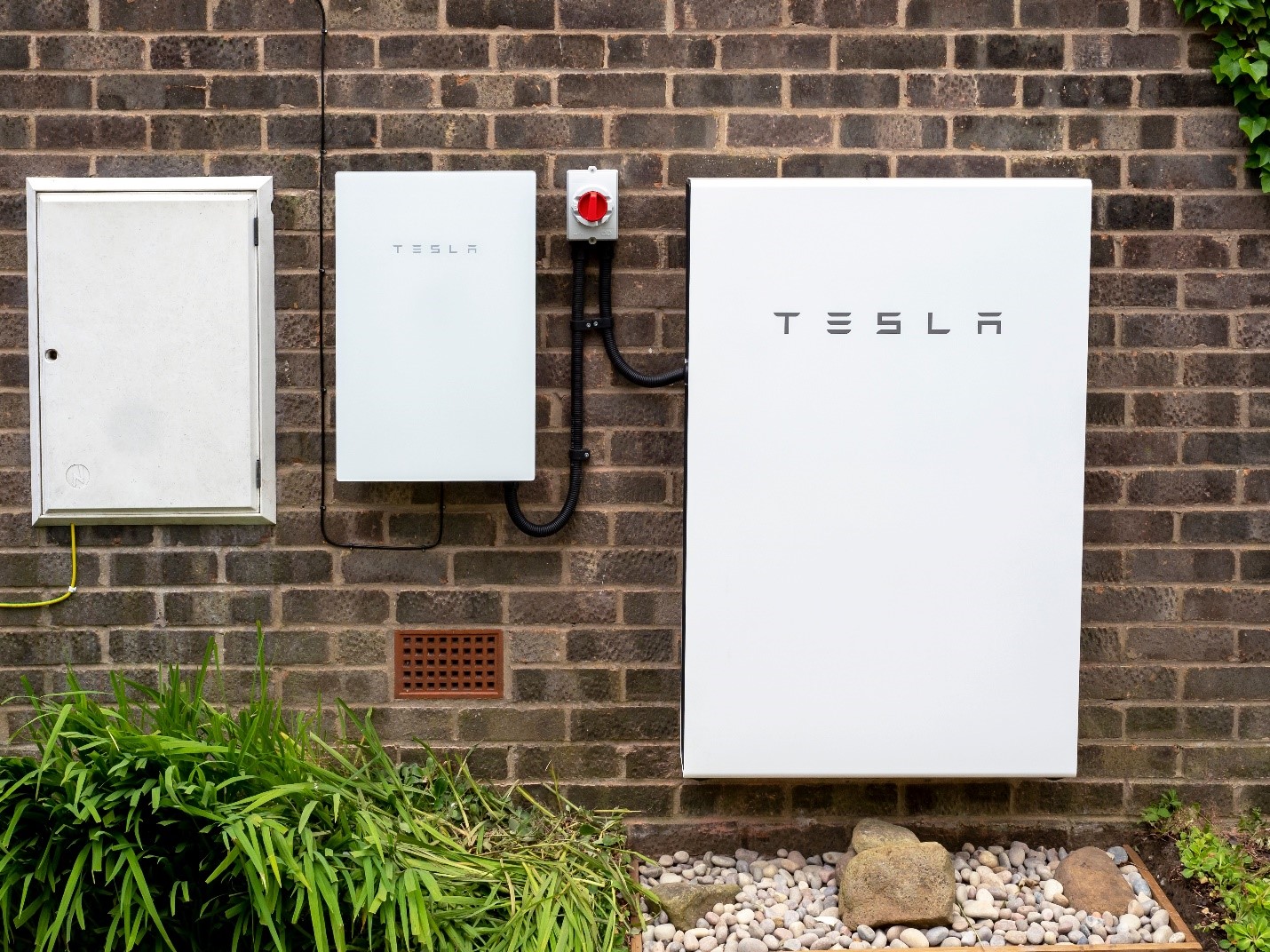
The average home can run what we call "essential loads" on a single battery like a Tesla Powerwall 3. That means:
- Refrigerator — keeps your food safe
- Wi-Fi router — stays connected, keeps security cameras working
- Lights — not every room, but the ones you need
- TV — stay informed during severe weather
- Phone chargers — communication lifeline
- Garage door opener — you can still get in and out
On essential loads like these, a single battery can run for 8-12+ hours depending on usage. If the sun comes up the next day, your panels recharge the battery and you can keep going indefinitely — as long as you're disciplined about what you run.
The key in an emergency is to limit what you use to stretch your battery time. Running the AC or electric oven will drain it fast. Sticking to essentials gives you a full night of power or more.
Two Batteries: Whole Home
Adding a second battery often allows whole-home backup on the average 100-amp service panel. That means your HVAC, washer, dryer, and kitchen appliances can all run — not just the essentials.
For larger homes with 200-amp service, you might need two batteries for essential coverage or three for full home backup. Your installer will size this based on your actual panel and usage.
The $300/kWh Battery Rebate
Here's where the math gets interesting. Governor Pritzker signed the Clean and Reliable Grid Affordability Act (CRGA) in January 2026, which expanded battery incentives significantly.
The DG battery rebate pays $300 per kWh of storage capacity. A standard 13.5 kWh Powerwall gets approximately $4,050 in rebate value. That's a meaningful chunk off the installed cost.
| Setup | Capacity | Approximate Rebate | What It Powers | |-------|----------|--------------------|----------------| | 1 battery | ~13.5 kWh | ~$4,050 | Essential loads (8-12+ hrs) | | 2 batteries | ~27 kWh | ~$8,100 | Whole home (100A service) |
This rebate stacks with the solar DG rebate ($300/kW) — they're separate programs under the same legislation.
Beyond Backup: The Financial Case for Batteries
Outage protection is the obvious reason to get a battery. But there's a financial angle that more customers are catching on to.
A battery lets you maximize self-consumption of your solar power. Instead of exporting excess production to the grid at the net metering rate (approximately 6-8¢/kWh supply credit), you store it and use it yourself at the full retail rate (15-17¢/kWh). That difference — roughly 8-10¢ per kWh — adds up.
Setting up your battery to prioritize self-consumption and minimize grid export means a quicker return on your investment. You're using more of the electricity you produce instead of selling it back cheap.
The upcoming Virtual Power Plant program (expected mid-2026) could add another revenue stream. Under this program, the utility can draw from your battery during peak demand events, and you get compensated for it. You're essentially renting your battery to the grid when they need it most.
On a Lease: Battery Is Included
If you go with a 15-year solar lease, battery backup is included in your monthly payment. One battery runs $70/month. For systems that need two batteries (typically larger homes over 19,000 kWh annual production), it's $140/month.
You don't buy the battery — it's part of the lease package. Maintenance, monitoring, and replacement if needed are all covered for the full 15-year term.
Should You Get a Battery?
My honest take:
Yes, if you experience frequent outages, work from home, have medical equipment that needs power, or live in an area prone to severe weather. The $300/kWh rebate has reduced the cost enough that the peace of mind is worth it for most homeowners.
Also yes, if you want to maximize the financial return on your solar by keeping more of what you produce instead of exporting at low net metering rates.
Maybe not, if you rarely lose power and you're purely optimizing for lowest monthly cost. The lease with battery is slightly more than solar-only. But I'd say 8 out of 10 customers who skip the battery end up wishing they hadn't.
Check Your Options
Use our Solar Savings Calculator to see how battery backup affects your monthly cost. Or check what solar looks like on your actual home with our Solar Visualizer — upload a photo and see panels on your roof in seconds.
For your city-specific data including estimated savings and incentive values, find your city on our Illinois solar directory.
Questions? Call me at (618) 217-2001. I walk people through the battery decision every day — happy to give you a straight answer for your situation.
Sources:
- Illinois CRGA — Battery Storage Provisions — Quarles & Brady
- Illinois Energy Storage Incentives 2025-2026 — Illinois Commercial Energy
- Home Battery Storage Guide for Illinois — Illinois Renewables
- Tesla Powerwall — Tesla
- Do Solar Panels Work During a Power Outage? — PowerOutage.us