Ameren Rate Increase 2026: Summer Price to Compare 11.326¢/kWh (ComEd 10.399¢) — Through Sept 30
Updated September 2026: The summer rates below are still in effect, but only through September 30. Both Ameren and ComEd reset their Price to Compare on October 1 for the non-summer period, and the new figures post when the utilities file them. Before you assume your bill drops with the supply rate, read what actually changes on October 1.
If your electric bill has felt heavier lately, you're not imagining it. Illinois electricity rates have climbed sharply since 2021 — and on June 1, 2026, they jumped again. The new summer rates are now official: Ameren Illinois' Price to Compare is 11.326¢/kWh and ComEd's is 10.399¢/kWh, both effective June 1 through September 30.
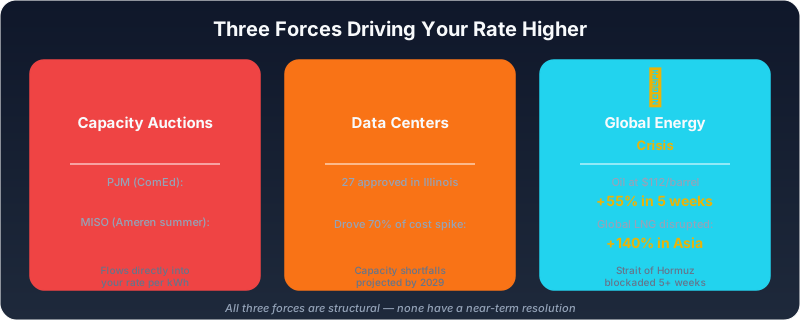
This isn't a temporary blip. There are three structural forces pushing rates higher at the same time: a global energy crisis from the Iran conflict, massive data center construction across the state, and record-breaking wholesale capacity auction prices that directly set what you pay per kilowatt-hour.
Here's what changed on June 1, why it happened, and what your options are.
The New Summer Rates (Effective June 1, 2026)
The June 1 reset is official. Here are the new summer Prices to Compare, straight from the ICC's Plug In Illinois data:
| Utility | New Price to Compare (June 1 – Sept 30, 2026) | What's in it |
|---|---|---|
| Ameren Illinois | 11.326¢/kWh (first 800 kWh) | 8.2¢ supply + 0.308¢ supply adjustment + 2.765¢ transmission |
| ComEd | 10.399¢/kWh | 8.677¢ supply + 1.722¢ transmission |
Sources: Ameren Illinois Price to Compare · ComEd Price to Compare
What that means in context:
ComEd (northern Illinois, Chicagoland):
- The new 10.399¢ Price to Compare is up from roughly 9.66¢ this past winter (CUB's January figure)
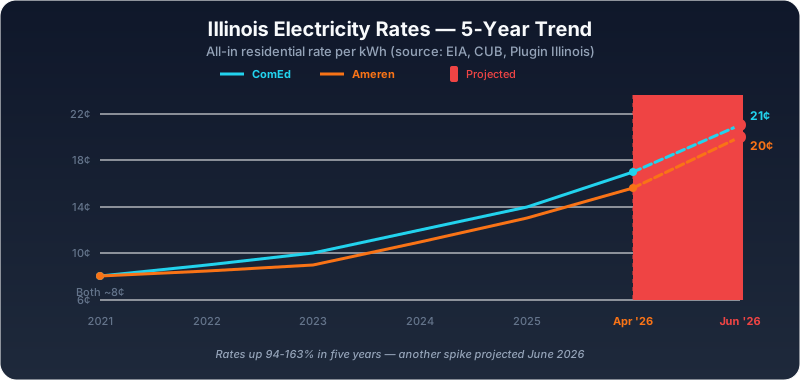
- All-in residential rate: approximately 17¢/kWh with delivery charges
- The ICC approved a $243 million delivery rate hike effective January 2026
- The ~$13/month IRA rate-relief credits expired May 31 — right as the summer rate kicked in
- Full year-by-year history: ComEd rates breakdown
Ameren Illinois (central and southern Illinois):
- The summer Price to Compare jumped to 11.326¢/kWh, up from the 8.769¢ supply rate that applied through May
- News outlets also report a temporary ~20% delivery-charge increase that began June 1
- All-in summer rates reach roughly 20¢/kWh (June through September) — up 94% since 2021
- The ICC approved a $48 million delivery rate increase for 2026
- Full year-by-year history: Ameren Illinois rates breakdown
For context, both utilities were around 8¢/kWh all-in in 2021. That was just five years ago.
What's Driving the Increases
It's not one thing — it's three things happening simultaneously.
1. Capacity Auction Prices Exploded
This is the biggest single driver, and most people have never heard of it.
Your utility doesn't generate its own electricity. It buys power on wholesale markets run by regional grid operators — PJM for ComEd territory and MISO for Ameren territory. These operators run annual "capacity auctions" where power generators bid to supply electricity. The clearing price flows directly into your rate.
Those auctions have gone haywire:
| Auction | Previous Price | Current Price | Increase |
|---|---|---|---|
| PJM (ComEd) | $28.92/MW-day | $329.17/MW-day | +1,038% |
| MISO Summer (Ameren) | $30/MW-day | $666.50/MW-day | +2,122% |
These aren't typos. PJM capacity costs went up ten-fold in two years. MISO summer capacity went up twenty-two-fold in a single year.
There's no buffer between these auction prices and your bill. When the clearing price goes up, your rate goes up — typically at the next June reset.
2. Data Centers Are Eating the Grid
Illinois has approved 27 of 28 applications for tax-exempt data center status. Another 30+ facilities are planned. These aren't small buildings — a single large data center can consume 600 megawatts, roughly equivalent to powering an entire mid-size city.
Data centers now consume 5.43% of all Illinois electricity. PJM's Independent Market Monitor found that 70% — or $9.3 billion — of the capacity cost increase was driven by data center demand.
The Illinois Power Agency projects capacity shortfalls beginning in 2029 for northern Illinois and 2031 for southern Illinois. Governor Pritzker has proposed a two-year suspension of data center tax incentives starting July 2026 — but the facilities already approved aren't going away.
For a deeper dive on this, see our earlier analysis: Data Centers Drove 70% of Illinois's Capacity Cost Spike.
3. Global Energy Instability
The Iran conflict has sent oil to $112/barrel and disrupted 20% of global LNG supply. Illinois is somewhat insulated because 53% of our electricity comes from nuclear power — but the 17% that comes from natural gas is exposed to global price swings.
More importantly, the next utility procurement auctions will reflect a world where energy is more expensive everywhere. If the conflict isn't resolved before June, elevated gas futures will get baked into the rates you pay for the next 6-12 months.
What the June 1 Reset Means for Your Bill
The June reset is when the 2026-2027 capacity auction prices took effect. Here's how it lands:
ComEd customers: The Price to Compare reset to 10.399¢/kWh on June 1 — and the ~$13/month IRA credits that softened the blow expired the day before it hit. Combined with the new capacity charge, summer bills could reach an estimated $180-220/month for a typical household.
Ameren customers: The summer Price to Compare is 11.326¢/kWh through September 30, and a temporary delivery-charge increase began the same day. With the record MISO auction prices baked in, the CUB warns summer bills could hit $200+/month for average homes.
Neither utility expects relief anytime soon. CUB's assessment: rates will stay elevated "for at least the next few years" due to structural demand growth from data centers and infrastructure investment.
How Illinois Compares to the Rest of the Country
Despite the increases, Illinois is still slightly below the national average — but the gap is closing fast.
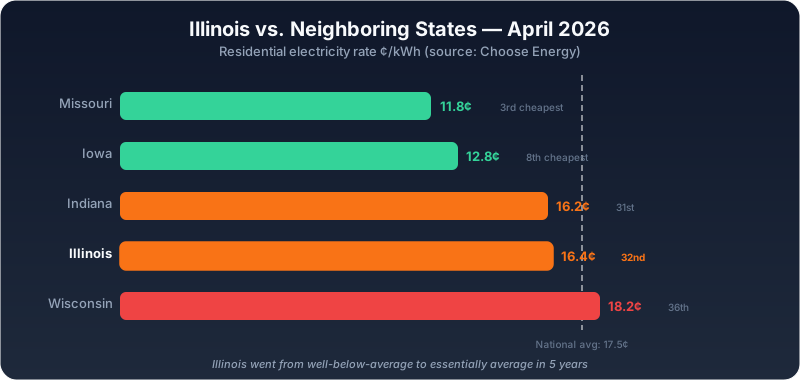
| State | Rate (Apr 2026) | Rank |
|---|---|---|
| Missouri | 11.8¢/kWh | 3rd cheapest |
| Iowa | 12.8¢/kWh | 8th cheapest |
| Indiana | 16.2¢/kWh | 31st |
| Illinois | 16.4¢/kWh | 32nd |
| Wisconsin | 18.2¢/kWh | 36th |
| National avg. | 17.5¢/kWh | — |
Source: Choose Energy, April 2026
Illinois went from well-below-average to essentially average in just a few years. And with summer rates pushing toward 20¢+, Illinois could land above the national average by July.
When Will Rates Come Back Down?
The honest answer: probably not for a while. Here's why:
- Data center demand is structural — those facilities run 24/7 for decades. The 27 already approved aren't going away.
- Grid infrastructure costs money — aging transmission lines, new capacity to meet demand, and reliability upgrades all get baked into delivery charges.
- Capacity auctions look forward — even if gas prices stabilize, the auctions are pricing in tight supply margins through at least 2028.
- The Iran conflict — if it persists, global energy costs stay elevated and trickle into US markets.
CUB and industry analysts broadly agree: expect elevated rates through at least 2028-2029, with the possibility of marginal relief if data center growth slows or new generation capacity comes online.
What You Can Do Right Now
You have three realistic options to control your electricity costs:
1. Solar — A predictable rate for 25 years
Solar eliminates your exposure to all three forces pushing rates up. Once panels are on your roof, your energy cost is predictable — no auctions, no data center demand, no geopolitical risk.
- Lease ($0 down): Predictable monthly payment for 25 years, typically lower than your current bill. Battery backup included.
- Cash purchase: Own the system. The utility DG rebate + Illinois SREC payments — now with a new $20/REC owner adder — bring the payback to 8-10 years, then very low-cost power for 15+ more.
- Solar for All: Income-qualified? The state installs solar at zero cost. No credit check.
2. Energy efficiency — Reduce your usage
This won't stop rate increases, but it reduces the volume they apply to:
- Air-seal and insulate your attic (biggest bang for the buck)
- Smart thermostat programming
- LED lighting throughout
- High-efficiency HVAC when it's time to replace
3. Alternative supply — Shop your rate
Illinois is a deregulated market. You can choose an alternative electricity supplier through the ICC's Plug In Illinois site. Fixed-rate plans can lock in your supply cost — but read the fine print on contract terms and cancellation fees.
The Bottom Line
Illinois electricity rates are up 47-94% since 2021 — and the June 1, 2026 reset just pushed summer rates to new highs. The forces driving it — data centers, capacity auctions, and global energy instability — aren't temporary.
You can wait and absorb each increase, or you can take control of your energy cost now. The incentives are still available, and the math gets better every time rates go up.
See what solar saves in your city →
Sources
- Plug In Illinois — Illinois Commerce Commission supplier and rate information
- Plug In Illinois — Ameren Illinois Price to Compare
- Plug In Illinois — ComEd Price to Compare
- Citizens Utility Board — CUB's report on 2026 electric rates
- Citizens Utility Board — CUB warns Ameren customers of June 1 electricity price spike
- Citizens Utility Board — How data centers are raising our bills in Illinois
- PJM — Regional grid operator for ComEd territory
- MISO — Regional grid operator for Ameren Illinois territory
Ryan Cook is the founder of Ltd Solar Consulting, helping Illinois homeowners navigate solar options across Ameren and ComEd territory. Questions? Get a free quote or call (618) 217-2001.