What Solar Panels Really Cost in Illinois in 2026 (Honest Numbers, No Lead-Selling)
guide5 min read

What Solar Panels Really Cost in Illinois in 2026 (Honest Numbers, No Lead-Selling)

Ryan Cook

Search "how much do solar panels cost in Illinois" and you'll get a dozen confident answers that don't agree with each other. One says $15,000. Another says $28,000. A third quotes a tidy monthly figure. They can't all be right, and most of them aren't built to be right about your house. Let me give you honest numbers and explain why the ranges are so wild.

The Real Numbers

For a system you buy outright, most Illinois homes land roughly between $20,000 and $30,000 before incentives, depending on size — figure around $3 per watt installed. A typical 8–10 kW home system sits in that band.

The big 2026 change is what comes off that price. The 30% federal homeowner tax credit ended December 31, 2025. A cash buyer no longer subtracts thousands the way they did last year. If you see a cost page still doing "minus 30%" on an owned system, it's working from old rules. A lot of the top results still are.

What's still there in Illinois:

  • Illinois Shines SREC payments — your system earns roughly $70 per REC in Ameren territory and about $81 per REC in ComEd territory for the 2026–27 program year, returning thousands over a 15-year contract. How that works → · Estimate your REC value →
  • A new customer-owned adder of about $20 per REC for cash or financed systems that don't claim a federal credit — which now includes most 2026 cash buyers.

For a $0-down lease, the "cost" question changes shape entirely. There's no purchase price — just a fixed monthly rate around $0.10/kWh on average, with battery backup and maintenance included, that still reflects federal value through the company that owns the system. See how a lease prices out → or read what a lease costs per month.
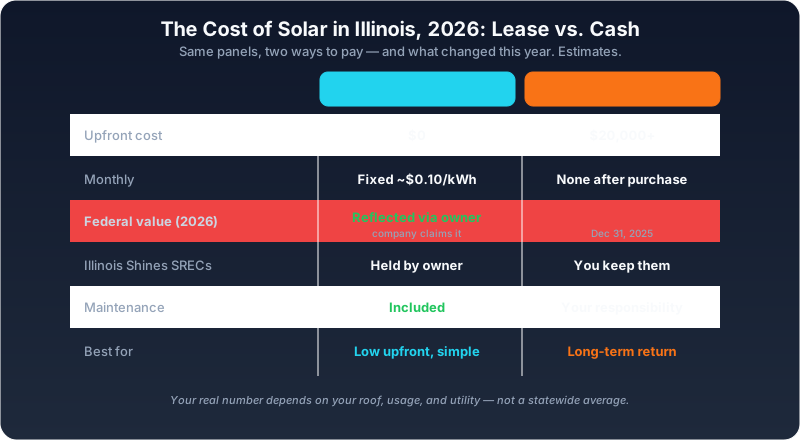
Comparison table of the cost of solar in Illinois in 2026 showing $0-down lease versus cash purchase across upfront cost, monthly payment, federal value, Illinois Shines SRECs, maintenance, and what each is best for

Why the Online Numbers Are All Over the Map

Three reasons the estimates swing by thousands of dollars:

Size. A small home and a big all-electric house need very different systems. Any single "average" mashes them together.

Your roof and your sun. Southern Illinois gets more usable sun than the cloudier north, and a simple roof installs cheaper than a cut-up one with dormers and shade. Geography alone moves the number. That's exactly why we built per-city numbers. Find your city → and you'll see figures based on your local sun hours and home values, not a statewide blur.

This is the one most people miss. A lot of the sites quoting solar costs aren't installers at all. They're lead-generation businesses. Fill out their form and your contact info gets sold to several companies at once. Their "average" is engineered to get you to submit, not to match your roof. That's why two polished sites can be $10,000 apart.

We Don't Sell Your Information

Here's our difference, said plainly. We're a local Illinois company, not a lead broker. When you reach out to us, you talk to us — me or someone on our team — not a call center, and your details don't get auctioned to five strangers who'll blow up your phone for a week.

That matters for the number, too. Since we're not building a form for resale, we can give you a figure based on your actual bill and roof. Bring your most recent electric bill (your usage and utility are the two biggest inputs) and we'll show you cash, lease, and Solar for All side by side. Check your roof in about a minute →

A Quick Reality Check on "Cost"

The sticker price is only half the story, and arguably the less important half. The real question isn't "what do panels cost." It's "what does not going solar cost?"

Illinois rates are up roughly 90% in five years and climbing. Whatever you spend on solar is a known, fixable number. What you'll spend renting power from the utility over the next 15 years is an unknown number that's only gone up. When you weigh the cost of solar, weigh it against that, not against zero. Our savings calculator puts both side by side.

My Take

I'd rather lose your business to a fair comparison than win it with a lowball number that falls apart on your roof. So here's the honest version. Solar in Illinois costs real money up front if you buy, or a fixed monthly rate if you lease, and the right choice depends on your home and your goals, not on whichever average ranked first on Google.

For the deeper cost breakdown by system size and financing, I wrote a full piece here: the real cost of solar panels in Illinois. And when you want a number that's actually about your house, grab a free estimate or call me. No form-selling, no pressure — just your real math.


Ryan Cook is the founder of Ltd Solar Consulting, helping Illinois homeowners compare solar options across Ameren and ComEd territory. Get an honest quote or call (618) 217-2001.

Interactive Tool

Calculate Your Solar Savings

Enter your monthly electric bill for an instant lease-vs-utility estimate built on your numbers — not a national average.

$Enter Your Information

$
$

Default: $0.16/kWh (ComEd & Ameren average)

Conservative (2%)Historical Average (6%)Aggressive (10%)

How We Calculate Your Savings

This calculator uses your custom utility rate (default $0.16/kWh for Illinois) with a 4.5% annual escalator compared to our fixed lease rate of $0.10/kWh (avg.) plus battery backup for 15 years. A low-escalator option is also available for a lower starting payment. After the 15-year lease, you can keep the system for a low fair-market buyout — then your electricity cost drops to near-zero for the remaining life of the panels (25+ years). Your actual savings may vary based on your specific usage patterns and system size.

Frequently Asked Questions

For a system you buy outright, most Illinois homes land somewhere in the range of roughly $20,000 to $30,000 before incentives, depending on size — typically around $3 per watt installed. A common 8–10 kW home system falls in that band. The number that's changed in 2026 is what comes off the top: the 30% federal homeowner tax credit ended December 31, 2025, so a cash buyer no longer subtracts that from the price. Illinois SREC payments through the Illinois Shines program still apply and return thousands over 15 years, and cash buyers may now qualify for a new customer-owned adder. A $0-down lease changes the question entirely — there's no purchase price, just a fixed monthly rate around $0.10/kWh. Your real number depends on your roof, usage, and utility, which is why a quick estimate beats any statewide average.
Three reasons. First, system size — a small condo and a big all-electric home need very different systems, so any single 'average' blends them together. Second, your roof and location — sun exposure in southern Illinois differs from cloudier northern counties, and a complex roof costs more to install on than a simple one. Third, and this is the one people miss: many of the sites quoting cost numbers are lead-generation businesses, not installers. Their job is to capture your contact info and sell it to several companies, so their 'average' is built to get you to fill out a form, not to match your house. That's why two reputable-looking sites can show numbers thousands of dollars apart. The only figure that means anything is one calculated from your actual roof and usage.
For systems you own, no — not in 2026. The Residential Clean Energy Credit, the 30% credit cash and loan buyers used to claim, ended for systems placed in service after December 31, 2025. Any cost page still subtracting 30% for an owned system is using outdated math. There's a catch worth knowing, though: with a lease or power purchase agreement, the company that owns the panels can still claim the federal commercial credit and factors that value into your price, so a $0-down lease can still reflect federal savings this year. Illinois's own incentives are also intact — Illinois Shines still pays for your renewable energy credits, and cash buyers who don't claim a federal credit may now qualify for an added per-REC amount. So the cost picture changed, but it didn't empty out.
It depends on what 'cheaper' means to you. A $0-down lease is cheaper to start — no upfront cost, a fixed monthly rate, maintenance and usually battery backup included, and it still reflects federal value through the company that owns the system. A cash purchase costs $20,000-plus upfront and no longer gets the 30% federal homeowner credit, but you own the panels, keep the SREC payments, and eventually reach years of very low-cost power, so it's often cheaper over the full lifespan. Financing splits the difference with a monthly loan payment and ownership. There's no universal winner. If avoiding upfront cost and keeping things simple matters most, leasing usually wins; if long-term return and ownership matter most, buying usually does. We'll run both for your home so you're comparing real numbers.
Go straight to a local installer instead of a comparison or quote-aggregator site. When you fill out a form on many national cost pages, your contact information is sold to several companies at once, which is why one form turns into a week of calls and texts. A local company you contact directly answers you, not a call center, and doesn't resell your details. Bring your most recent electric bill — it shows your usage and utility, which are the two biggest inputs to an accurate number. From there a good estimate accounts for your roof's sun exposure, your actual consumption, your utility's rates, and the incentives you qualify for in 2026. That's the difference between a real quote for your house and a national average that was never about your house in the first place.

More Illinois Solar Guides

Illinois Electric Rates Keep Climbing — Does Solar Finally Make Sense in 2026?Ameren and ComEd rates are up ~90% in five years and still climbing. Here's how to see what you're on track to overpay — and whether solar finally makes sense.Illinois Net Metering Changed in 2025 — What It Costs You and How to Protect Your SavingsIllinois ended full retail net metering on Jan 1, 2025. Here's what the switch to net billing actually costs solar owners — and how to protect your savings.The 30% Solar Tax Credit Ended — Here's How Illinois Homeowners Still Get It in 2026The 30% federal tax credit ended for homeowner-owned systems on Dec 31, 2025. Here's how Illinois homeowners can still capture federal solar value in 2026.How Much Does a Solar Lease Cost Per Month in Illinois? (2026)What does a solar lease actually cost per month in Illinois? Real 2026 numbers, what's included, and how a fixed lease rate compares to a rising utility bill.ComEd Is 1.5¢/kWh More Than Ameren in 2026 — Full Rate BreakdownComEd averages ~17¢/kWh, Ameren Illinois ~15.5¢/kWh. See the full 2026 breakdown: supply charges, delivery fees, summer spikes, and how much it costs per month.Ameren Illinois Summer Electric Rates Up June 1: Now 11.3¢/kWhAmeren Illinois summer rates rose June 1, 2026: 11.326¢/kWh Price to Compare. ComEd is now 10.399¢. What your summer bill looks like — and how to cap your rate.The Iran War Is Sending Oil Prices Through the Roof — Will Your Illinois Electric Bill Follow?Oil is at $112/barrel after the Strait of Hormuz blockade. Here's how the Iran conflict could push Illinois electricity rates even higher — and what you can do now.Why Your Ameren Bill Keeps Going Up (and What MISO Has to Do With It)Ameren bills jumped 18-22% last summer and another increase is coming. Here's why MISO capacity auctions are driving your rates up and what you can do about it.The Real Cost of Solar Panels in Illinois: 2026 BreakdownWhat do solar panels actually cost in Illinois in 2026? Real numbers for cash purchase, lease, and Solar for All — from an installer who gets prices below the state average.Selling a House With Solar Panels in Illinois — Leased or OwnedSelling a house with solar panels or a lease in Illinois? Here's how the transfer works, what buyers actually think, and why it's not the problem most people expect.Solar Lease vs Buying Panels: I Did the Math for IllinoisShould you lease or buy solar panels in Illinois? I broke down the real numbers for both paths using current 2026 prices, incentives, and Ameren/ComEd rates.Data Centers = 70% of Illinois's Rate Spike (Here's What It Costs You)Data centers drove 70% of Illinois's capacity-cost spike in 2026. See the PJM/MISO mechanism, the per-household cost impact, and what to do to protect your bill.ComEd's June 2026 Rate Is Live: 10.399¢/kWh — Here's Your New BillComEd's June 2026 rate is official: 10.399¢/kWh Price to Compare, up from ~9.66¢ this winter. See what your new summer bill looks like — and how to cap your rate.Illinois Electricity Rates Have Nearly Doubled Since 2021 — Here's What That Means for Your BillIllinois electricity rates have surged 90%+ since 2021. Here's what's driving the increases, what to expect next, and how to protect your household.Illinois Solar Incentives 2026: 7 Programs Worth $12,000-$18,000+$12,000-$18,000+ in Illinois solar incentives for 2026: Illinois Shines RECs, DG rebate ($300/kW), battery rebate, Solar for All (ILSFA), property tax exemption.Solar Battery Backup in Illinois — What It Actually Powers and Whether It's Worth ItWhat does a solar battery actually run during an outage? How much does it cost with the $300/kWh rebate? Here's the honest breakdown for Illinois homeowners.

41 panels, $10/month electric bills. Ryan stayed on top of the project from start to finish.

Bruce Brooks
Bruce BrooksShiloh, IL

$10/month Ameren bills since June 2023. Outstanding knowledge and responsiveness.

Rod Hinrichs
Rod HinrichsFreeburg, IL

Ryan is knowledgeable, caring, and a really good listener. I highly recommend discussing solar with him.

LH
Linda HaycraftShiloh, IL

Ready to See Your Numbers?

This article covers the big picture. For savings specific to your home, get a free consultation.

Lease, cash, or Solar for All — explore your options

Every month on rising utility rates is money you could be saving.