Illinois Net Metering Changed in 2025 — What It Costs You and How to Protect Your Savings
If you've been reading older solar guides for Illinois, there's a good chance they're describing a program that no longer exists. On January 1, 2025, the state ended full retail net metering for new solar customers. I still talk to homeowners who think they'll get paid the full rate for every kilowatt-hour they send to the grid. That deal is gone. Let me explain what replaced it and, more importantly, what you do about it.
What Actually Changed
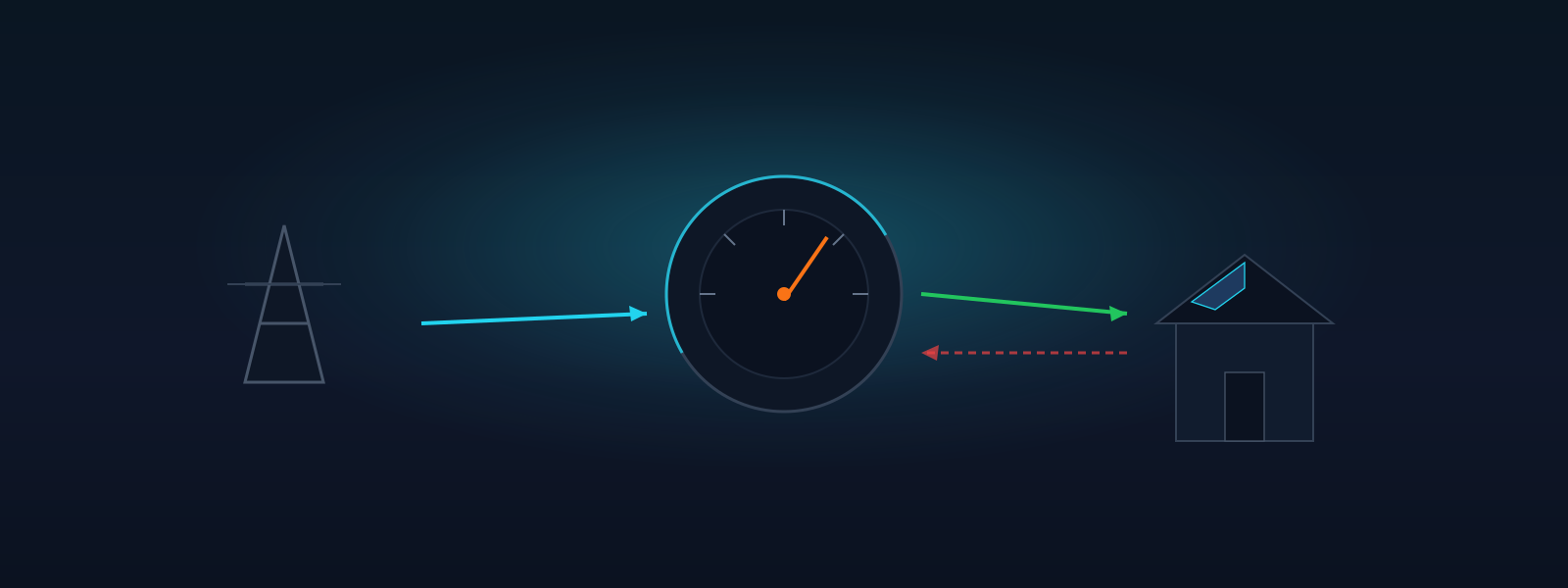
Under the old rules, full retail net metering meant every unit of electricity your panels exported to the grid earned a credit worth the entire retail rate — supply, delivery, and transmission combined.
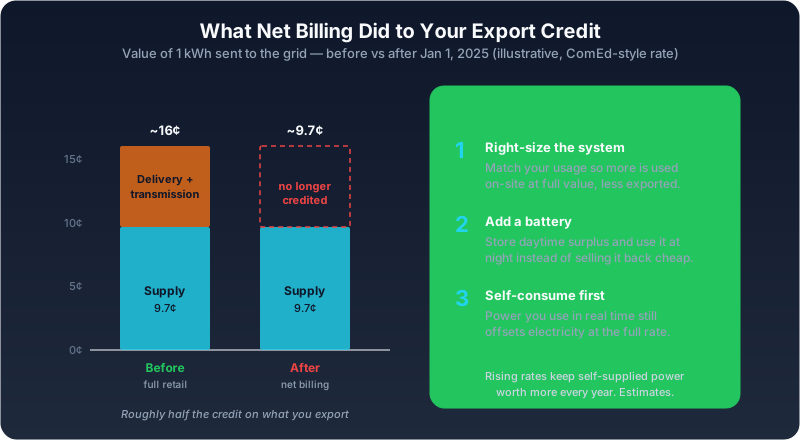
Under the new model, called net billing, new customers are credited only for the supply portion of exported electricity. The delivery and transmission pieces are no longer credited on what you send back.
The practical effect: the credit for the surplus you export is worth roughly half of what it used to be.
Let me be clear about what this does not touch, because the headlines get it wrong. The power your panels make that you use right now, in real time, still offsets electricity at the full rate. Net billing only reduces the value of the extra you push back onto the grid. That distinction is the whole game.
What It Costs You — In Plain Terms
Say your panels make more than you're using at noon on a sunny day. That surplus flows to the grid. Under the old rules, you banked a full-rate credit and pulled it back later at night for free. Under net billing, you bank a smaller credit for that surplus, then buy nighttime power back at the full rate, delivery charges and all — the same charges you weren't credited for on the way out.
So the leak is the gap between what you're paid for exports and what you pay to buy power back. Overbuild a system for big export credits the old way, and a chunk of that value now drains out through that gap.
The fix isn't to give up. It's to stop designing systems for a program that ended.
How to Protect Your Savings
Three moves keep your savings intact under net billing:
1. Right-size the system. Instead of overbuilding to sell big surpluses, you size closer to what your home actually uses. More of your production gets consumed on-site at full value, less gets exported at the reduced credit. Our calculator estimates the right size for your usage →
2. Add battery storage. A battery stores your extra daytime production and lets you use it at night, instead of selling it back cheap and buying it back at full price. Storage went from "nice to have" to "often worth it" the day net billing started. It also keeps your lights on during outages, which matters more every year as data center demand strains the Illinois grid. On many of our leases, battery backup is included or available for a modest monthly add. No big upfront check. Here's a deeper look at solar battery backup in Illinois.
3. Understand the smart inverter rebate trade-off. Both Ameren Illinois and ComEd offer a one-time $300/kW rebate for systems with a qualifying smart inverter — a battery isn't required, but adding storage earns a separate $300/kWh on top. In Ameren territory especially, how you take that rebate can change how your credits are calculated. Whether the rebate or the higher export credit wins depends on your specific setup, so it's worth running both before you decide.
Ameren vs. ComEd — A Quick Note
The net billing framework applies statewide, but the dollars differ because the rates differ. ComEd's all-in rate runs higher (around 17¢/kWh on average), so self-consumed solar is worth more per kilowatt-hour there. Ameren's summer rates spike hard (around 20¢/kWh), which makes summer self-supply especially valuable in central and southern Illinois. The ComEd rate breakdown and Ameren rate breakdown show the full picture for each territory.
My Take
The 2025 net metering change made a lot of people think solar in Illinois got worse. I see it differently. It got more dependent on doing it right.
The old full-retail program was forgiving. You could overbuild and still come out fine. Net billing rewards a system sized for your home, with storage that captures your own production. Designed well, the savings are still very real, because the thing driving those savings — rising utility rates — keeps getting worse, not better.
Designed poorly, you leave money on the table. That's the actual risk now, and it's why I'd rather walk you through the design than have you guess. Check what your roof can do or get a free, no-pressure estimate.
Ryan Cook is the founder of Ltd Solar Consulting, helping Illinois homeowners compare solar options across Ameren and ComEd territory. Questions about net billing? Get a free quote or call (618) 217-2001.