How Much Does a Solar Lease Cost Per Month in Illinois? (2026)
guide5 min read

How Much Does a Solar Lease Cost Per Month in Illinois? (2026)

Ryan Cook

"How much is a solar lease per month?" might be the question I hear most. The honest answer is the one nobody likes: it depends. But that's a cop-out unless I show you what it depends on. Let's put real Illinois numbers to it.

The Short Answer

Most solar leases in Illinois aren't a flat fee. They're priced by what your system produces, usually around $0.10 per kWh on average, with $0 down.

What that becomes per month depends on three things: how big your system is, how much sun your roof gets, and how much electricity you use. A household paying $180–$220 a month to ComEd or Ameren today often sees a lease payment land in a similar range. Sometimes lower. The difference that matters isn't the starting number. It's that the lease rate is fixed for 15 years while your utility rate keeps climbing.

Want a real figure for your address instead of a range? Run your numbers in the calculator →

Why "It Depends" Is Actually the Point

A 6 kW system in sunny southern Illinois produces more than the same system under cloudier northern skies, so the monthly cost shifts with your roof. A bigger home that runs central air all summer needs more panels than a tidy ranch. That's why a national site quoting "$79 a month" can mislead you. It's their cheapest example, not your house.

Here's the comparison that actually matters. Your utility bill is a rate you rent, and the landlord raises it almost every year. Ameren and ComEd rates are up roughly 90% over five years, and both utilities have more increases lined up. A fixed lease rate doesn't move. So even if month one looks similar, month one of year ten won't. See the full Ameren rate history and ComEd rate history for how steep that climb has been.
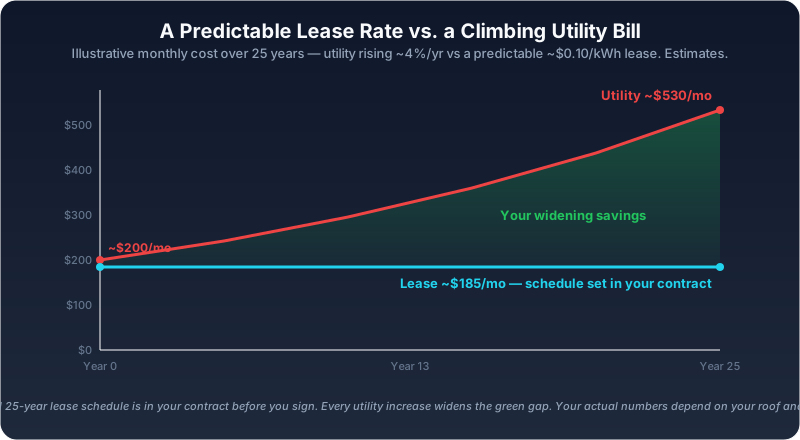
Line chart comparing a fixed solar lease payment that stays flat for 15 years against a utility bill that climbs each year, with the widening gap shaded as savings

What You're Actually Paying For

A lease payment in Illinois usually bundles a lot more than panels:

  • The equipment and installation — no upfront cost to you
  • Monitoring, maintenance, and repairs for the full term, since the company owns the system
  • Battery backup, included on many plans or available for a modest additional monthly amount, so essential circuits stay on during an outage
  • A transfer option — if you sell your home, the agreement is easily transferable, usually in minutes, not months

What you're not paying for is ownership. You don't get the panels' resale value, or the very-low-cost power years a cash buyer eventually reaches. That's the trade. No upfront cost and a hands-off term, in exchange for the long tail of ownership.

The One Thing to Check Before You Sign: Escalators

If you take one thing from this page, make it this. Some national leases include an annual escalator — often around 2.9% — that raises your payment every single year. Others, including the plans I work with, have no escalator: the rate stays flat for all 15 years.

That's not a small detail. An escalator quietly recreates the rising-cost problem you went solar to escape. When you compare offers, ask straight out: Is there an escalator? What's my payment in year one versus year fifteen? A flat rate is worth real money over the life of the contract.

How It Stacks Against Buying

For a quick gut check on the bigger decision, here's the structure:

$0-Down Lease Cash Purchase
Upfront cost $0 $20,000+
Monthly payment Fixed, ~$0.10/kWh (avg.) None after purchase
Federal value in 2026 Reflected via system owner Homeowner credit ended Dec 2025
SREC payments Held by owner You keep them
Maintenance Included Your responsibility
Best for Low upfront cost, simplicity Long-term return, ownership

If you want the deeper side-by-side, I wrote a full breakdown here: solar lease vs. buying panels in Illinois.

My Take

When people ask me for the monthly number, what they're really asking is, "Will this actually save me money, or is it a gimmick?" Fair question.

The way I look at it, a lease isn't about a magic low payment. It's about trading a rate that rises every year for one that doesn't. In an Illinois that just saw rates jump again this summer, that trade has gotten a lot more attractive, especially now that buying no longer comes with the 30% federal credit.

The only way to know your real number is to look at your actual roof and bill. Check if your roof qualifies in about a minute, or grab a free estimate and I'll get you a straight answer. No pressure, no national-average guesswork.


Ryan Cook is the founder of Ltd Solar Consulting, helping Illinois homeowners compare solar options across Ameren and ComEd territory. Get your monthly number or call (618) 217-2001.

Interactive Tool

Calculate Your Solar Savings

Enter your monthly electric bill for an instant lease-vs-utility estimate built on your numbers — not a national average.

$Enter Your Information

$
$

Default: $0.16/kWh (ComEd & Ameren average)

Conservative (2%)Historical Average (6%)Aggressive (10%)

How We Calculate Your Savings

This calculator uses your custom utility rate (default $0.16/kWh for Illinois) with a 4.5% annual escalator compared to our fixed lease rate of $0.10/kWh (avg.) plus battery backup for 15 years. A low-escalator option is also available for a lower starting payment. After the 15-year lease, you can keep the system for a low fair-market buyout — then your electricity cost drops to near-zero for the remaining life of the panels (25+ years). Your actual savings may vary based on your specific usage patterns and system size.

Frequently Asked Questions

Most Illinois solar leases are priced by what you produce, not a flat fee — typically around $0.10 per kWh on average, with no money down. What that turns into per month depends on your system size and how much sun your roof gets. A home that currently pays $180–$220 a month to the utility often sees a lease payment in a similar or lower range, with the key difference being that the lease rate is fixed for 15 years while the utility rate keeps climbing. Some plans bundle battery backup for an added monthly amount. The honest answer is that there's no single price, because your roof, your usage, and your utility all change the number. A five-minute estimate gives you a real figure for your address instead of a national average that won't match your bill.
Yes — a true $0-down lease means no upfront cost to put panels on your roof. You're not buying the equipment, so there's no large check, no loan, and no down payment. The company that owns the system installs and maintains it, and you pay a monthly amount for the power it produces. That's the trade-off: you give up ownership and the long-term return that comes with it, in exchange for immediate savings and zero upfront risk. Maintenance, monitoring, and most repairs are handled by the owner during the term. For homeowners who don't want to spend $20,000-plus on a cash system — especially now that the federal homeowner tax credit has ended — a $0-down lease is often the most practical way to lock in a lower, fixed electricity rate without touching savings.
A typical Illinois lease bundles more than just panels. The monthly payment generally covers the solar equipment, installation, system monitoring, maintenance, and repairs for the length of the term — usually 15 years. Many plans also include battery backup, either built into the rate or for a modest additional monthly amount, which keeps essential circuits running during an outage. Because the leasing company owns the system, they carry the responsibility for keeping it producing, so you're not on the hook for a failed inverter or a panel issue down the road. What's not included is ownership — you don't get the equipment's resale value or the long-term low-cost-power years a cash buyer eventually reaches. For a lot of homeowners, trading that long tail for no upfront cost and a worry-free term is a fair deal.
Not always — and this is the single most important thing to check before you sign. Some national solar leases include an annual escalator, often around 2.9%, that raises your payment every year for the life of the contract. Others, including the kind of plans I work with in Illinois, are structured with no escalator, so the rate stays flat for the full 15-year term. A flat rate is a big deal, because the whole point of going solar is to escape rising costs — an escalator partially recreates the problem you're trying to solve. When you compare lease offers, ask directly: is there an escalator, and what's the rate in year one versus year fifteen? If a salesperson dodges that question, that tells you something. Always read the term before you sign.
Per month, a lease and a financed purchase often land close, but the structure is different. A $0-down lease usually has the lowest barrier — no upfront cost, a fixed monthly rate, maintenance included — and it still reflects federal value through the company that owns the system. A loan-financed purchase may have a similar monthly payment, but you own the panels, keep the SREC payments, and eventually reach years of very low-cost power once the loan is paid off. Paying cash removes the monthly payment entirely but ties up $20,000-plus upfront, and as of 2026 a cash buyer no longer gets the 30% federal homeowner credit. So 'cheaper per month' usually favors the lease early on, while ownership wins over the long haul. The right pick depends on whether you value low upfront cost or long-term return.

More Illinois Solar Guides

What Solar Panels Really Cost in Illinois in 2026 (Honest Numbers, No Lead-Selling)What solar panels actually cost in Illinois in 2026 — real per-watt and per-system numbers, what changed this year, and why we don't sell your info to five callers.Illinois Electric Rates Keep Climbing — Does Solar Finally Make Sense in 2026?Ameren and ComEd rates are up ~90% in five years and still climbing. Here's how to see what you're on track to overpay — and whether solar finally makes sense.Illinois Net Metering Changed in 2025 — What It Costs You and How to Protect Your SavingsIllinois ended full retail net metering on Jan 1, 2025. Here's what the switch to net billing actually costs solar owners — and how to protect your savings.The 30% Solar Tax Credit Ended — Here's How Illinois Homeowners Still Get It in 2026The 30% federal tax credit ended for homeowner-owned systems on Dec 31, 2025. Here's how Illinois homeowners can still capture federal solar value in 2026.ComEd Is 1.5¢/kWh More Than Ameren in 2026 — Full Rate BreakdownComEd averages ~17¢/kWh, Ameren Illinois ~15.5¢/kWh. See the full 2026 breakdown: supply charges, delivery fees, summer spikes, and how much it costs per month.Ameren Illinois Summer Electric Rates Up June 1: Now 11.3¢/kWhAmeren Illinois summer rates rose June 1, 2026: 11.326¢/kWh Price to Compare. ComEd is now 10.399¢. What your summer bill looks like — and how to cap your rate.The Iran War Is Sending Oil Prices Through the Roof — Will Your Illinois Electric Bill Follow?Oil is at $112/barrel after the Strait of Hormuz blockade. Here's how the Iran conflict could push Illinois electricity rates even higher — and what you can do now.Why Your Ameren Bill Keeps Going Up (and What MISO Has to Do With It)Ameren bills jumped 18-22% last summer and another increase is coming. Here's why MISO capacity auctions are driving your rates up and what you can do about it.The Real Cost of Solar Panels in Illinois: 2026 BreakdownWhat do solar panels actually cost in Illinois in 2026? Real numbers for cash purchase, lease, and Solar for All — from an installer who gets prices below the state average.Selling a House With Solar Panels in Illinois — Leased or OwnedSelling a house with solar panels or a lease in Illinois? Here's how the transfer works, what buyers actually think, and why it's not the problem most people expect.Solar Lease vs Buying Panels: I Did the Math for IllinoisShould you lease or buy solar panels in Illinois? I broke down the real numbers for both paths using current 2026 prices, incentives, and Ameren/ComEd rates.Data Centers = 70% of Illinois's Rate Spike (Here's What It Costs You)Data centers drove 70% of Illinois's capacity-cost spike in 2026. See the PJM/MISO mechanism, the per-household cost impact, and what to do to protect your bill.ComEd's June 2026 Rate Is Live: 10.399¢/kWh — Here's Your New BillComEd's June 2026 rate is official: 10.399¢/kWh Price to Compare, up from ~9.66¢ this winter. See what your new summer bill looks like — and how to cap your rate.Illinois Electricity Rates Have Nearly Doubled Since 2021 — Here's What That Means for Your BillIllinois electricity rates have surged 90%+ since 2021. Here's what's driving the increases, what to expect next, and how to protect your household.Illinois Solar Incentives 2026: 7 Programs Worth $12,000-$18,000+$12,000-$18,000+ in Illinois solar incentives for 2026: Illinois Shines RECs, DG rebate ($300/kW), battery rebate, Solar for All (ILSFA), property tax exemption.Solar Battery Backup in Illinois — What It Actually Powers and Whether It's Worth ItWhat does a solar battery actually run during an outage? How much does it cost with the $300/kWh rebate? Here's the honest breakdown for Illinois homeowners.

41 panels, $10/month electric bills. Ryan stayed on top of the project from start to finish.

Bruce Brooks
Bruce BrooksShiloh, IL

$10/month Ameren bills since June 2023. Outstanding knowledge and responsiveness.

Rod Hinrichs
Rod HinrichsFreeburg, IL

Ryan is knowledgeable, caring, and a really good listener. I highly recommend discussing solar with him.

LH
Linda HaycraftShiloh, IL

Ready to See Your Numbers?

This article covers the big picture. For savings specific to your home, get a free consultation.

Lease, cash, or Solar for All — explore your options

Every month on rising utility rates is money you could be saving.