ComEd Now Charges Four Different Prices a Day — Who Wins on Time-of-Day Pricing
ComEd's Time-of-Day pricing is worth it for households that are empty from 1 p.m. to 7 p.m. on summer afternoons and for EV owners who charge overnight; it costs more for anyone running central air through that Mid-Day Peak window. The flat-rate alternative it's competing with is ComEd's 10.399¢/kWh summer supply price, in effect June 1 through September 30, 2026, which resets October 1. ComEd launched the delivery-only version of the rate on February 11, 2026, then on July 23, after a month of heat, announced the full version that varies both supply and delivery, and I've had customers ask me whether they should switch. Some of you should. Some of you would pay more. Here's how to tell which one you are, and how the rate stacks up against ComEd's other option, Hourly Pricing, which picked up an expensive new line item this year.
Updated September 10, 2026: folded in the Hourly Pricing capacity-charge math, ComEd's published per-window prices, and the October 1 supply reset.
Four windows, four prices
Time-of-Day pricing splits every day into four fixed windows. Per ComEd's announcement, both the delivery and supply portions of your bill change with the clock:
- Morning, 6 a.m. to 1 p.m. — middle-priced
- Mid-Day Peak, 1 p.m. to 7 p.m. — the most expensive hours of the day
- Evening, 7 p.m. to 9 p.m. — middle-priced
- Overnight, 9 p.m. to 6 a.m. — the cheapest window
Enrollment is free, canceling is free, and ComEd says a request can take two to three billing cycles to take effect. That lag matters: sign up in August and you may not see the new rate until October, when the summer peak that motivated you is already over.
ComEd doesn't put the prices in the press release, but its rate sheets have them, and they depend on your delivery class — how your home is set up and heated. For a single-family home without electric heat, the supply price this summer runs from 2.829¢/kWh overnight to 16.594¢/kWh in the Mid-Day Peak, and the delivery charge from 3.345¢ overnight to 11.852¢ at the peak. Add those together and the peak window costs roughly 28¢/kWh all-in versus about 6¢ overnight. The only way to see what that does to your bill is to log into My Account and run the Rates Comparison tool against your own usage history. I'd treat that step as mandatory before switching. For scale, the flat-rate alternative is ComEd's standard supply price of 10.399 cents per kWh through September 30, 2026, plus a delivery charge of about 6.333 cents per kWh on bills since April 2026, before the fixed monthly customer and meter charges.
| Item | Figure | Effective |
|---|---|---|
| Time-of-Day windows | Morning 6 a.m.–1 p.m. · Mid-Day Peak 1–7 p.m. · Evening 7–9 p.m. · Overnight 9 p.m.–6 a.m. | Every day; delivery-only version launched Feb. 11, 2026 |
| Time-of-Day supply price, summer (single-family, non-electric heat) | Morning 3.778¢ · Mid-Day Peak 16.594¢ · Evening 5.793¢ · Overnight 2.829¢ per kWh | June–Sept. 2026 billing periods (ComEd Rate BEST sheet) |
| Time-of-Day supply price, non-summer | Morning 4.768¢ · Mid-Day Peak 14.699¢ · Evening 6.009¢ · Overnight 3.394¢ per kWh | Oct. 2026–May 2027 billing periods |
| Time-of-Day delivery charge (single-family, non-electric heat) | Morning 4.475¢ · Mid-Day Peak 11.852¢ · Evening 4.185¢ · Overnight 3.345¢ per kWh | Bills from April 2026 (ComEd delivery charge guide) |
| Enrollment | Free to join, free to cancel; ComEd says 2–3 billing cycles to take effect | Per ComEd |
| EV credit on Time-of-Day | $2/month per vehicle, up to 24 months, up to two vehicles; forfeited if you cancel early | Per ComEd |
| ComEd flat supply rate (Price to Compare) | 10.399¢/kWh | June 1–Sept. 30, 2026; resets Oct. 1 |
| ComEd flat delivery charge | ≈ 6.333¢/kWh plus fixed customer ($15.50) and meter ($3.87) charges | Bills from April 2026 |
| Hourly Pricing capacity charge | $10.11236 per kW-month June–Aug. 2026; $10.10121 per kW-month Sept. 2026–May 2027, × your Peak Load Contribution × PJM adjustment factors | ComEd Informational Sheet No. 4, effective Aug. 21, 2026 |
| Hourly Pricing rejoin rule | No fee to join or leave; opt out and you can't rejoin for 12 months | Per ComEd |
The 1-to-7 problem
Every time-based rate lives or dies on one question: can you actually move your usage out of the expensive hours?
Dishwasher, laundry, pool pump, EV charger — sure. Those shift to overnight without changing your life. That's the easy win, and it's real.
Air conditioning is the problem. The Mid-Day Peak runs 1 to 7 p.m., which is precisely when a July afternoon in Aurora or Joliet forces your AC to do its heaviest work. Cooling is the biggest single summer load in most homes, and you can't schedule the weather. If someone is home on summer afternoons with the thermostat at 72, this rate is working against your largest expense during its most expensive window.
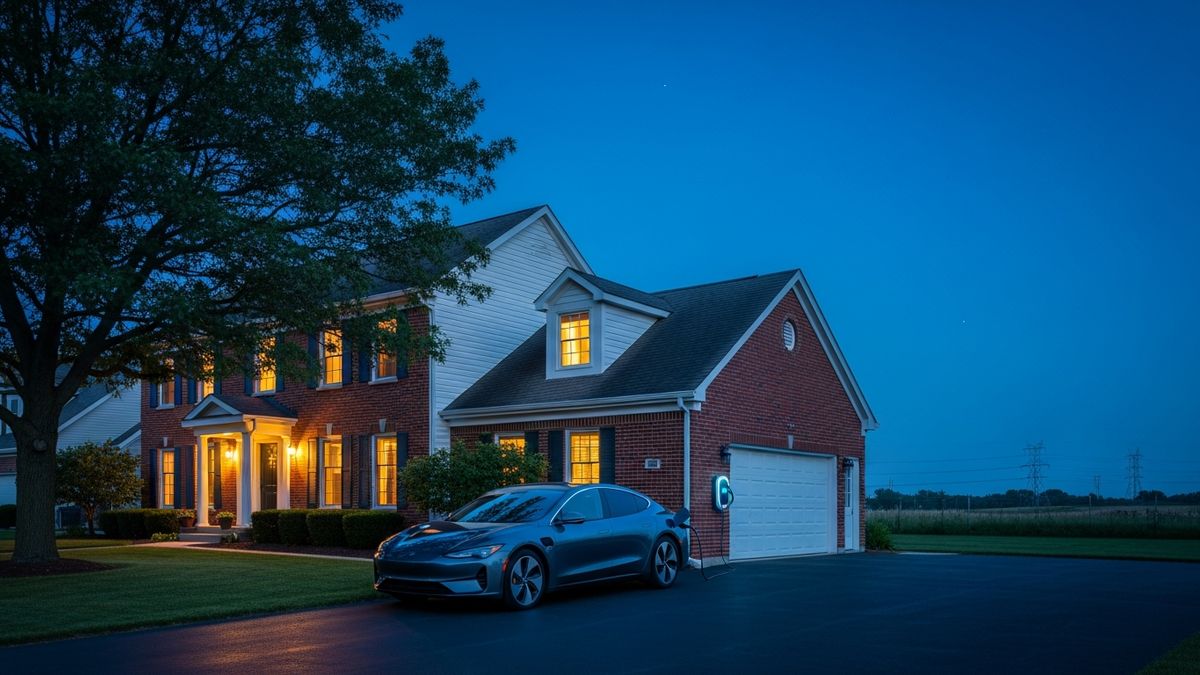
My take after looking at the structure: this rate is built for households that are empty from 1 to 7 p.m. — commuters, retirees who summer elsewhere, night-shift workers — and for EV owners, who get the clearest win of anyone. Charging a car is the one huge load that moves to 3 a.m. with zero sacrifice, and ComEd adds a $2 monthly bill credit per vehicle for up to 24 months, two vehicles max. Small print worth knowing: cancel the rate early and you forfeit whatever EV credits remain.
Time-of-Day vs. Hourly Pricing vs. doing nothing
ComEd now offers three basic paths for your supply, and I think of them as a spectrum of predictability.
The default flat rate is one price all day — 10.399 cents through September 30, then a new non-summer price from October 1 — and asks nothing of you. Hourly Pricing floats your cost on the live wholesale market, hour by hour: cheap most of the time, occasionally brutal on the very afternoons when the grid is stressed, and you carry that spike risk. Time-of-Day sits in the middle: fixed windows, known in advance, no app-watching. You trade away the market's cheapest hours in exchange for never being surprised.
That predictability is genuinely worth something. The reason I've never pushed customers hard toward hourly rates is that the households most exposed to afternoon price spikes — home all day, big AC load — are the same ones least able to dodge them. Time-of-Day at least tells you the rules up front.
The Hourly Pricing catch nobody reads about: the capacity charge
Hourly Pricing has a real track record. ComEd says participants have saved an average of 19% on supply costs since the program launched in 2007, there's no fee to join or leave, and overnight EV charging on hourly market prices is about the cheapest electricity a ComEd customer can buy. But 2026 added a line item that changes the math for a lot of houses.
On the flat rate, the cost of reserving power plants for peak days is buried inside the 10.399-cent supply price. On Hourly Pricing it's billed separately, every month, as a capacity charge, and it's personal. ComEd looks at how much power your house was drawing during ten peak hours last summer, calls that your Peak Load Contribution, and multiplies it by PJM's adjustment factors and the monthly capacity rate on its rate sheet — $10.11236 per kilowatt-month for June through August 2026 bills, and $10.10121 per kilowatt-month from September 2026 through May 2027. Using the factors the Citizens Utility Board walked through in June (0.97854 and 0.9291), a home with a 1.5 kW peak load contribution pays an estimated $14 a month, roughly $165 a year, before it buys a single kilowatt-hour. The rate resets each June off the PJM capacity market, and this year's reset followed a record-setting capacity auction that consumer advocates tie largely to data-center demand. You can look up your own Capacity PLC in ComEd's usage data tool, and I would do that before enrolling in anything.
Two more details people miss. Opt out of Hourly Pricing and you can't rejoin for 12 months. And if you have solar, hourly net-metering credits are valued at the market price at the moment you export, which for a rooftop system is midday, when prices often sag to an estimated 2 to 4 cents. On the flat rate that same exported kilowatt-hour offsets supply priced at 10.399 cents. Time-of-Day doesn't carry a separate capacity charge, which is one more reason it's the more predictable of the two.
Downstate on Ameren Illinois, the equivalent hourly program is Power Smart Pricing, and the same logic applies against Ameren's 11.326-cent summer supply price for the first 800 kWh, also through September 30.
If your bill pain is less about when you use power and more about the rate itself climbing — and after this June's supply increase that's most of the ComEd territory — timing games only get you so far. The rate pages track where the numbers stand.
Where solar fits this picture
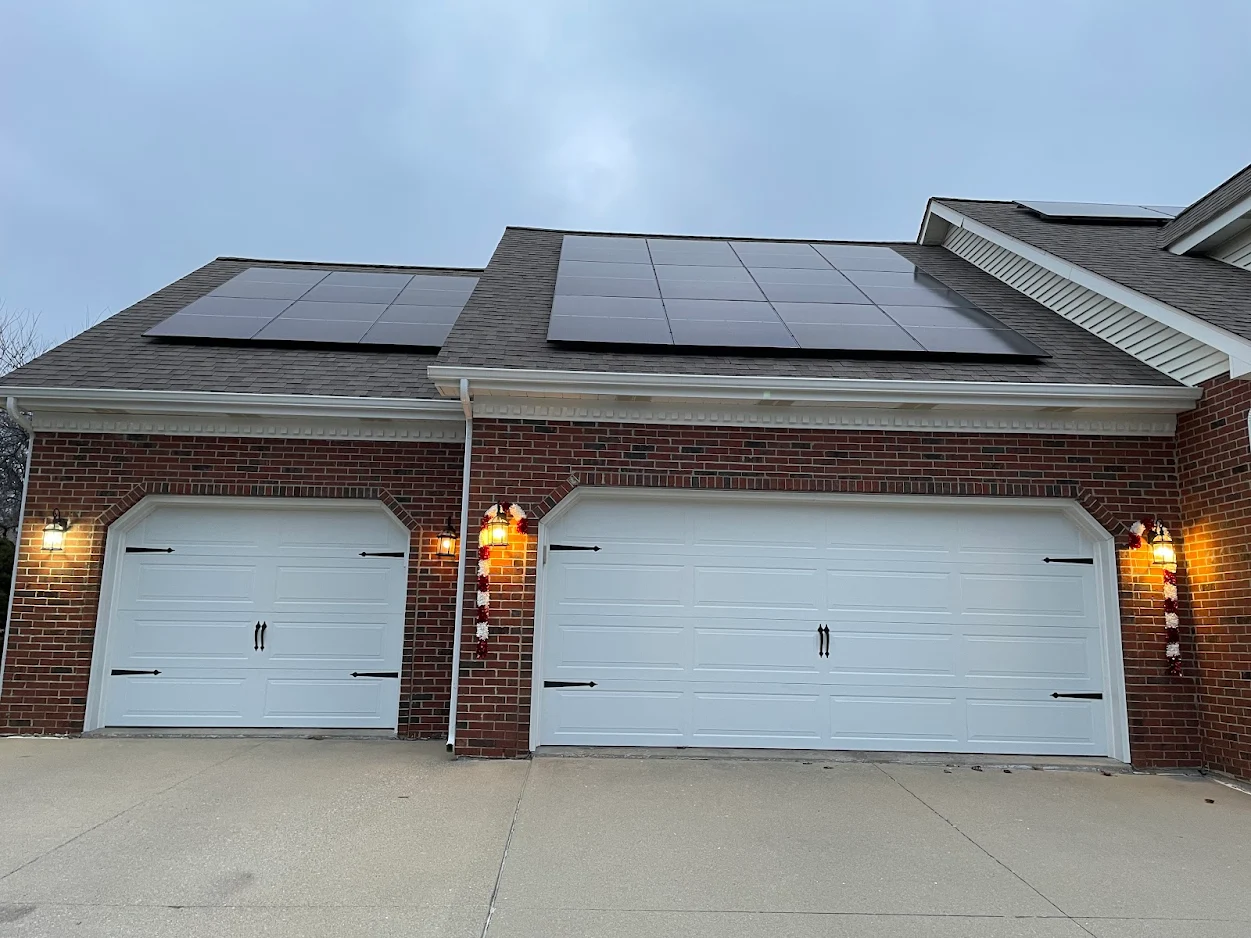
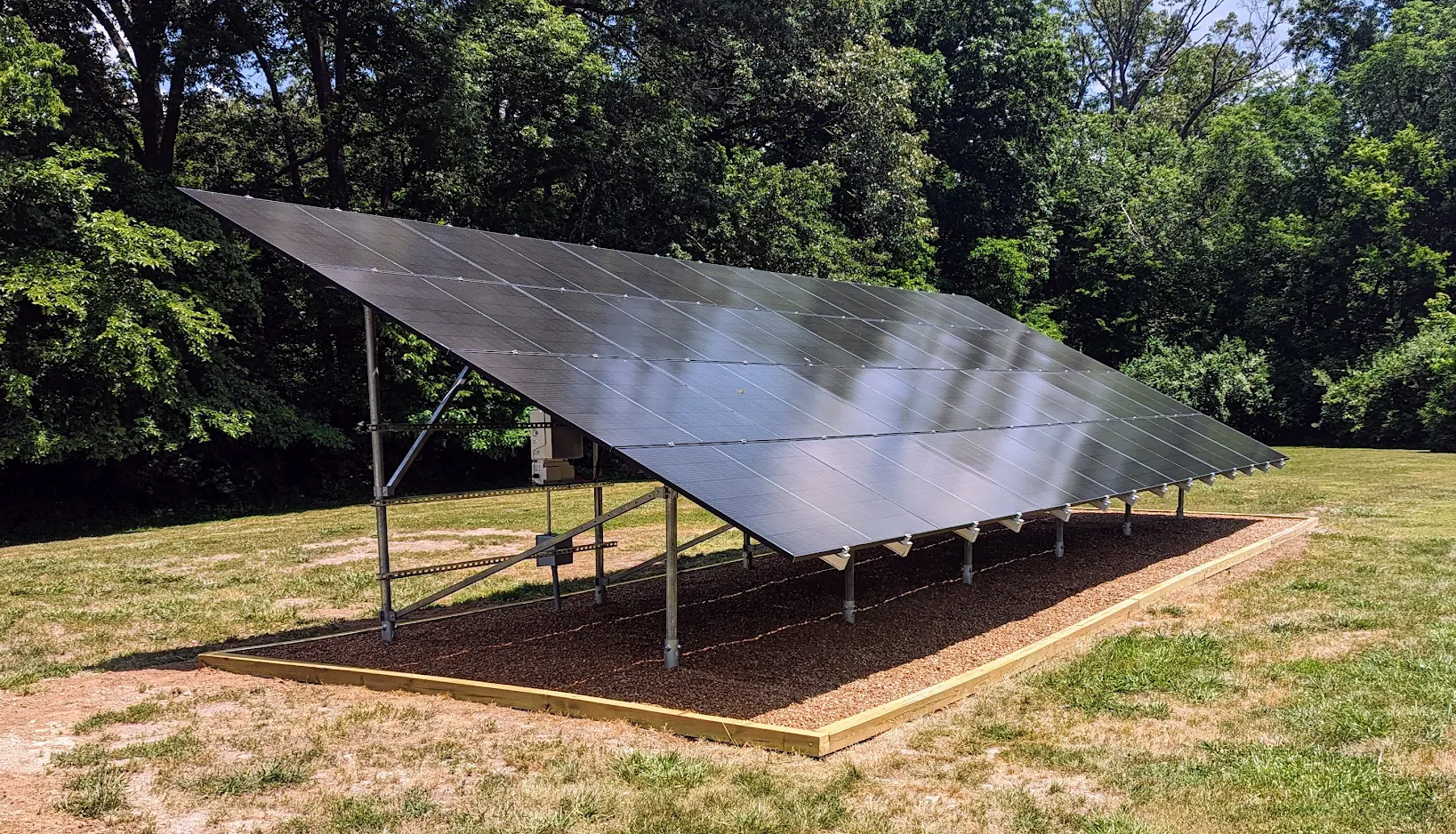
Notice what the expensive window is: early afternoon. Notice when a rooftop solar system produces the most: the middle of the day, running into that same window. Time-of-day rates and rooftop solar attack the same hours — one by asking you to avoid them, the other by generating through them.
A home battery stacks on the same logic, charging overnight in the cheapest window and covering the 1-to-7 peak — I walked through the Illinois battery picture in this post. One caution I give every customer considering solar on a time-variant rate: ask how your net metering credits get valued before you sign anything, because the answer differs by rate plan and it changes the payback math.
And if the whole four-windows chess game sounds like more attention than your electric bill deserves, that's a fair reaction. A solar lease takes the opposite approach: a predictable rate as low as 10 cents per kWh for the power your roof produces, with the full 25-year rate schedule set in your contract before you sign, and stop caring what time it is. No enrollment windows, no forfeited credits, no checking an app in August.
What I'd actually do
Run the comparison before you believe anyone — including me. Pull up ComEd My Account, open the Rates Comparison tool, and let it score Time-of-Day against your last twelve months of real usage. If you drive an EV and the house is empty on summer afternoons, I'd expect the tool to show you a win. If you work from home with central air, I'd expect it to show you a loss. Either way you'll know in ten minutes, and it costs nothing to be wrong — enrollment and cancellation are both free.
If the answer comes back 'your problem is the rate, not the schedule,' that's the conversation I have every week. Run your roof through our savings calculator, or call me at (618) 217-2001 and I'll tell you honestly whether solar beats rate-shuffling for your house — or reach out here. Every savings figure in that conversation is an estimate until we've looked at your actual bill, and I'll say so then too.
Sources
- ComEd, Time-of-Day Pricing program page (windows, EV credit, delivery class, Rates Comparison tool): https://www.comed.com/ways-to-save/for-your-home/manage-my-energy/time-of-day-pricing
- ComEd, Rate BEST Supply Charges Informational Sheet No. 70 (Time-of-Day supply prices, June 2026–May 2027; effective May 16, 2026): https://azure-na-assets.contentstack.com/v3/assets/blt3ebb3fed6084be2a/blt05c0a20ca37bcb9d/117_Rate%20BEST%20Supply%20Charges_Informational%20Sheet_Info%20Sheet%2070mpt.pdf
- ComEd, A Guide to the Retail Customer's Billed Delivery Service Charges (Time-of-Day delivery prices, 6.333¢/kWh flat delivery, $15.50 customer charge, $3.87 meter charge, bills from April 2026): https://www.comed.com/cdn/assets/v3/assets/blt3ebb3fed6084be2a/blt7904befea93c3525/6a74ab1af8608b565710881f/A_Guide_to_the_Retail_Customer_s_Billed_Delivery_Service_Charges.pdf
- ComEd, Capacity Charge Informational Sheet No. 4, Supplement to Rate BESH (Monthly Capacity Charge $10.11236 June–Aug. 2026, $10.10121 Sept. 2026–May 2027; effective Aug. 21, 2026), in the ICC's current ComEd informational sheets book: https://icc.illinois.gov/downloads/public/tariff/currentbooks/1/Electric%20Informational%20Sheets%20Ill.%20C.%20C.%20No.%2010[186]..pdf
- ComEd Hourly Pricing FAQ (19% average savings since 2007, no fee, 12-month rejoin rule, net metering at hourly market price, capacity charge components): https://hourlypricing.comed.com/faqs/
- ComEd press releases: "ComEd Launches New Delivery Time-of-Day Rate" (Feb. 11, 2026) and "Following Month of High Temps, ComEd Announces Time-of-Day Pricing Rate" (July 23, 2026): https://www.businesswire.com/news/home/20260211295140/en/ and https://www.businesswire.com/news/home/20260723691738/en/
- Citizens Utility Board, "ComEd's Hourly Pricing: How to calculate your capacity charge" (June 23, 2026; PLC adjustment factors): https://www.citizensutilityboard.org/blog/2026/06/23/comeds-hourly-pricing-how-to-calculate-the-customer-capacity-charge/
- Plug In Illinois, ComEd Price to Compare (10.399¢/kWh, June 1–Sept. 30, 2026): https://plugin.illinois.gov/understanding-the-price-to-compare/price-to-compare-comed.html
- Plug In Illinois, Ameren Illinois Price to Compare (11.326¢/kWh, 0–800 kWh, June 1–Sept. 30, 2026): https://plugin.illinois.gov/understanding-the-price-to-compare/price-to-compare-ameren-illinois.html
- Ameren Illinois, Power Smart Pricing (hourly market-based residential supply program): https://www.ameren.com/bill/rates/power-smart-pricing