Told Your Roof or Electrical Panel Rules Out Solar? Illinois Solar for All Paid for 79 Roof Replacements Last Year
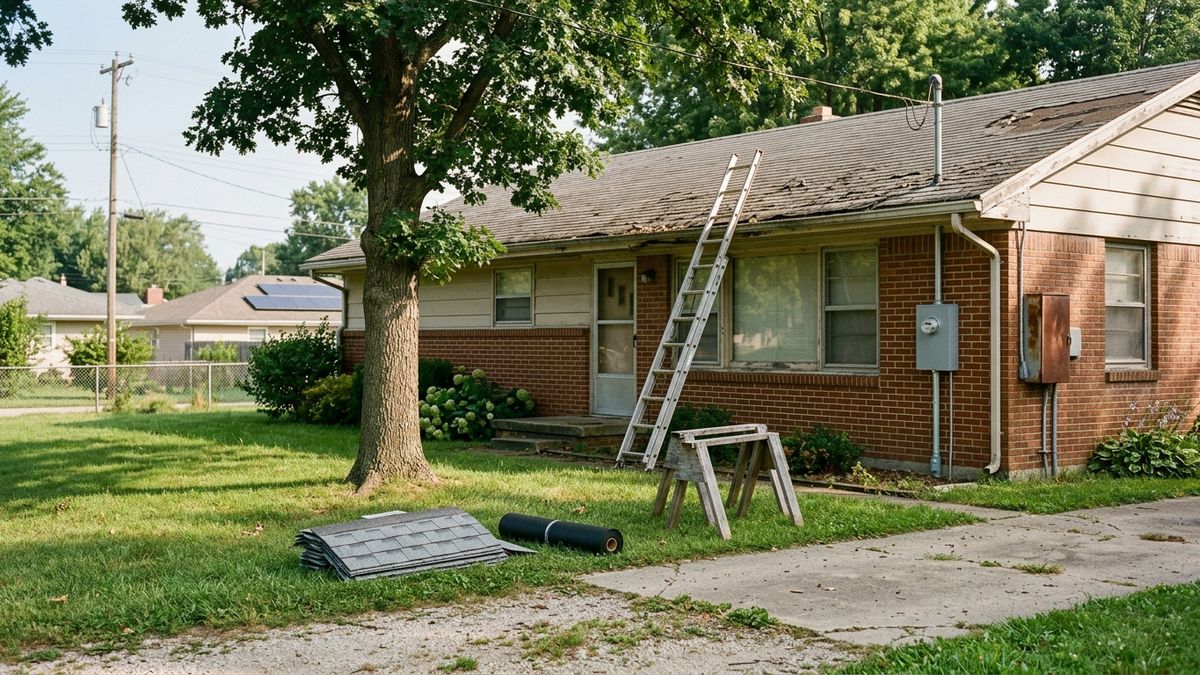
I hear a version of this story every month. A solar company came out, looked at the roof, and said call us back after you replace it. Or the electrician opened a 100-amp panel from 1978 and nobody wanted to touch it. For a lot of families in Decatur, East St. Louis, and Rockford, that's where solar ends.
In late August the Illinois Power Agency published a report that says it doesn't have to end there, and for once it put real dollar figures on it. The 2025-26 Home Repairs and Upgrades Initiative report went up on the Illinois Solar for All site August 19, and almost nobody outside the program has read it. I did. Here's what's in it, and why the next three weeks matter.
What the state actually paid for last year
The Home Repairs and Upgrades Initiative lives inside Illinois Solar for All's Residential Solar (Small) sub-program, the part that serves income-eligible, owner-occupied homes at no upfront cost. Since 2023 it has paid Approved Vendors extra to fix the roof and electrical problems that would otherwise stop a solar install cold.
In the 2025-26 program year:
- 215 repair projects were submitted and 160 moved forward, representing about $1.49 million in home repairs.
- The average repair came to $8,885 per home, up a little from $8,613 the year before.
- Of the 160: 82 needed electrical work only, 47 needed roofing only, 31 needed both.
- The state paid for 79 full roof replacements (it was one, total, in the program's first year).
- It also paid for 73 main service panel replacements, 74 meter-and-riser replacements, and 63 water grounding jobs.
Those are the numbers I've been missing on the porch for three years. When someone in Peoria tells me their roof is too old for solar, I can now say the state paid to replace 79 of them last year.
What the money covers, line by line
For 2025-26 the caps were up to $6,550 for electrical repairs and up to $15,000 for roofing and structural work, with a combined ceiling of $22,000 per home (that includes a $450 administrative fee on every project). The line items:
- Main service panel replacement or upgrade: up to $3,300
- Meter and riser replacement or upgrade: up to $1,850
- Water grounding: up to $700 (100 amp) or $1,400 (200 amp)
- Solar-related roof work: up to $200 per square foot, up to $3,500
- Full roof replacement: up to $12,000
- Sister rafters or decking: up to $100 per rafter or $5 per square foot, up to $3,000
One thing I want to be plain about, because the report is. This money goes to the installer as an add-on to the solar incentive. It is not a check to the homeowner. In practice that means the installer arranges the repair and the adder is supposed to cover it. But one participant in the state's survey said they financed their own roof and got half of it back from the vendor. Before you sign anything, ask in writing whether any repair cost ends up on your side.
The catch: it ran out in two weeks
This is the part that should change how you plan. Last year's single-family window ran June 16 to July 1, 2025. In those two weeks, eight Approved Vendors submitted 186 repair projects, which was 56% of every single-family project submitted to Illinois Solar for All in that window. The repair budget was gone before the window closed. The administrator set up a waitlist of 18 projects and told vendors to stop. Twenty-nine more repair projects came in after the rolling window opened July 9, and none of them were even considered.
Vendors who answered the state's survey were blunt about why they hesitate:
- Roofing quotes run "typically double" the assistance, and most solar companies have electricians on staff but not roofers.
- One vendor said they decided "to not even submit" repair projects because the odds of funding were too low, and instead absorb electrical upgrades when they can and skip the house when they can't.
- Vendors reported passing on anywhere from a handful to as many as 60 projects each because of repair needs they couldn't fund.
In the state's prior-year vendor survey, 92% said they regularly walk into income-eligible homes that need roof or electrical work before solar can go on, most of them in 25% to 75% of the houses they assess. That's not a niche problem. That's the default condition of an older house in Granite City or Danville.
And outside help is thin. As of this summer the state tracks 34 other home-repair programs across Illinois, and 26 of them have waitlists, many of which ran one to two years when the state last checked. Across the Initiative's first two years, only two homeowners managed to land outside repair funding.
Where the projects are
Fifty-four percent of last year's repair projects were in the Chicago area, which is normal for this program. But the report calls out growing clusters around Rockford, the Metro East near St. Louis, Decatur, and Peoria. In my experience that tracks: the housing stock in central and southern Illinois is older, the roofs are older, and the panels in the basement are older. This program was built for downstate whether it meant to be or not.
What to do before September 25
The Residential Solar (Small) window for 2026-27 opens September 14 and closes September 25, 2026, 9 a.m. to 5 p.m. Central. That's the window where a house with roof or electrical issues gets submitted with the repair adder attached; last year, anything that came in after the initial window closed wasn't even considered. The state has said it's continuing the Initiative, and the report recommends keeping it capped at 25% or less of the single-family incentive budget, so expect the same squeeze.
Updated September 16, 2026: the Residential Solar (Small) window opened September 14 and is open through September 25, 2026, per the Illinois Solar for All 2026-27 vendor calendar.
If your roof or panel is the reason you've been told no, here's the order I'd do things in:
- Check the income line first. Illinois Solar for All uses 80% of Area Median Income for your county. The 2026 income limits are here.
- Get the problem documented now. Photos of the roof, the panel, the meter base. An installer can quote a repair in a day if the pictures are good.
- Ask every vendor one direct question: "Are you participating in the Home Repairs and Upgrades Initiative this year, and will you submit my house in the September window?" If the answer is a shrug, move on.
- Fill out the Home Repairs and Upgrades form on the Illinois Solar for All website. It's how the program administrator knows you exist, and they can steer you toward participating vendors.
- Ask what isn't covered. The administrator has ruled tree trimming and removal outside the program, and vendors flagged trenching as another cost the adder doesn't reach. If a big maple shades the south roof, that's a separate conversation.
I'll say the honest part too. Demand beats budget in this program every year, and a September submission is a real shot, not a promise. If your income is above the line, a lease with a current roof-age check is still the faster route for most families, and our roof check takes about a minute. Either way, start with the roof, because that's where the state says most of these projects live or die.
If you want help figuring out which path your house fits, call me at (618) 217-2001 or send a note. I'll tell you straight whether it's a Solar for All house, a lease house, or a wait-and-fix-the-roof house. The full incentives rundown and our Solar for All page cover the rest.
Source: Illinois Power Agency, "Home Repairs and Upgrades Initiative Report, Program Year 2025-2026," posted on illinoissfa.com August 19, 2026; Illinois Solar for All 2026-27 program year announcement and vendor calendar. Re-checked September 2, 2026. All dollar figures are program caps and averages from that report, not quotes for your home.