July Was the Hottest Month in U.S. History. Your August Ameren or ComEd Bill Is Where It Lands.
news7 min read

July Was the Hottest Month in U.S. History. Your August Ameren or ComEd Bill Is Where It Lands.

Ryan Cook

NOAA made it official on August 10: July 2026 was the hottest month ever recorded in the contiguous United States. Not the hottest July — the hottest month, period, in a record that goes back to 1895. The average came in at 76.9°F, about 3.3°F above the 20th-century norm, edging out the Dust Bowl summer of 1936.

That's a climate headline. Here's the household version. On August 19, ComEd's senior vice president of customer operations said plainly that July's heat waves "are now showing up on customers' August bills." Ameren Illinois customers are opening the same envelope this week.

I've been getting texts from customers in Belleville and O'Fallon who thought something was wrong with their meter. Nothing's wrong with the meter. This is what a record July costs at a summer rate.

The part of the record nobody mentions: the nights

Daytime highs get the headlines, but the number that actually drives a bill is the overnight low. NOAA says July's average minimum temperature was 64.2°F, 3.7°F above normal — the warmest nighttime average on record, beating July 2022 by a clear margin.

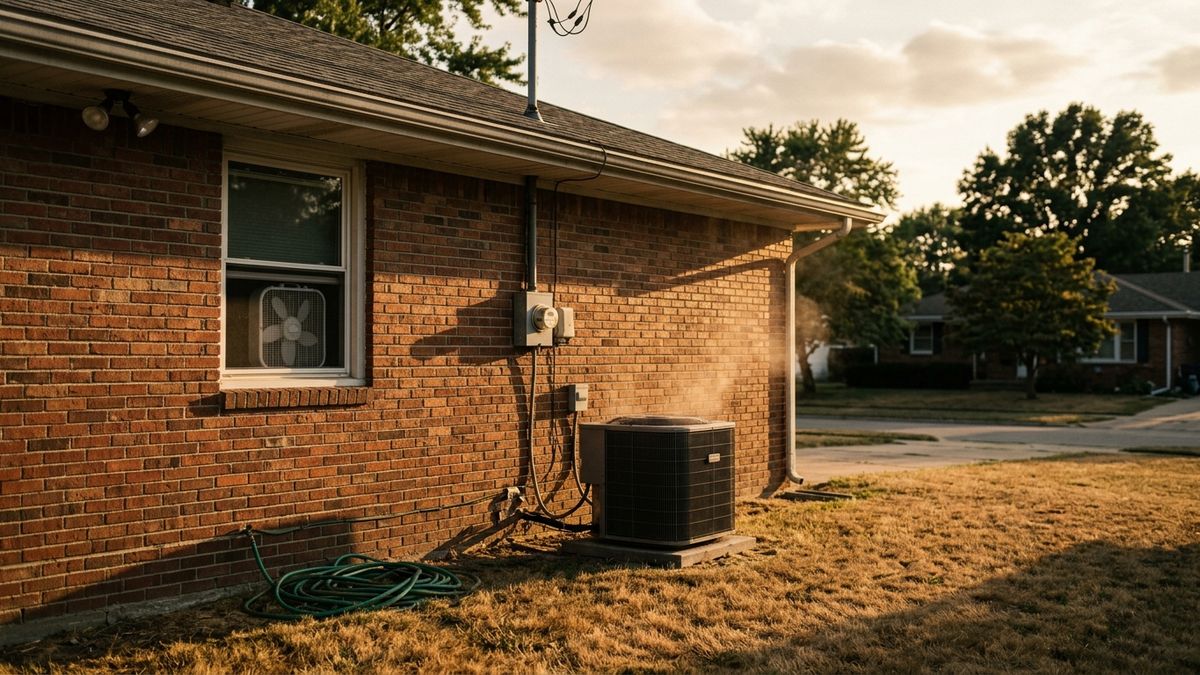
Why that matters: a central air conditioner in a brick ranch in Springfield is sized to catch up overnight. When it's 78°F at 2 a.m., it never catches up. It just runs. In my experience, a stretch of hot nights adds more kilowatt-hours to a bill than one brutal afternoon does, because the compressor is cycling for eight extra hours nobody's awake to notice.

The math on an Illinois bill

Let's do a rough autopsy on a typical central Illinois home. These are estimates, not your bill.

  • Ameren Illinois' supply rate reset on June 1 from 8.769¢ per kWh to 11.326¢ — a 29% jump before you used a single extra kilowatt-hour. ComEd's summer price is 10.399¢. Add delivery charges and fees and most Illinois homes are paying somewhere around 20¢ per kWh all-in this summer.
  • A home that normally uses 900 kWh in July and used 1,200 kWh in a July like this one — which is a plausible jump for a house that never got to rest overnight — picked up roughly $60 in extra charges. A bigger house with two AC units could be well past $100.
  • That's on top of the June 1 rate reset, which by itself added something like $20–$25 a month to an ordinary bill compared with May.

Stack the two and an August bill that's $80–$120 higher than May isn't a billing error. It's arithmetic. I wrote up the June 1 summer rate reset when it happened, and the longer story of why Ameren bills keep climbing if you want the background.

What changes on October 1 (and what doesn't)

Here's the honest calendar for anyone staring at a bill they can't comfortably pay.

October 1 — the rate resets. Ameren's 11.326¢ summer price runs through September 30, then drops to a non-summer price. The non-summer price that ran through May was 8.769¢ (it was 8.402¢ from October through December before a January adjustment); the new one isn't finalized yet. ComEd's summer price also ends September 30. I covered the October rate drop in detail — short version, a meaningful dip, not a return to 2021.

October 1 — LIHEAP reopens. This is the one that stings. The 2026 LIHEAP year closed on August 15, four days before ComEd told everyone their August bills would hurt. The 2027 program year opens October 1 for priority households — adults 60+, people with disabilities, families with kids five and under, and anyone disconnected or holding a shut-off notice — and November 1 for everyone else who qualifies. There's a real change buried in this year's rules: for Ameren Illinois and ComEd customers, the income limit moves to 300% of the Federal Poverty Guidelines, roughly $3,990 a month for one person. That's a wider door than last year.

Right now — the bridge. Between now and October there's no LIHEAP, but there is a deferred payment arrangement, and under ICC rules the utility has to offer one to most customers who haven't defaulted on a prior arrangement. It's typically 25% down and the rest over 4 to 12 billing cycles, and the utility is allowed to take less up front. ComEd also offers a 21-day extension, budget billing, and a Low-Income Discount for households at or below 300% of the poverty level. Ameren Illinois has Warm Neighbors Cool Friends (up to $500 for households earning roughly 200% to 300% of the poverty level) and a Supplemental Arrearage Reduction Program (up to $2,000 a year in credits against a past-due balance, if you've applied for LIHEAP). And if you think the bill itself is wrong, the Citizens Utility Board will review it for free.

What doesn't change. The delivery side of the bill — the poles-and-wires charges the ICC approved in December for both utilities — stays put. And the capacity costs inside the supply price, the thing that spiked last summer, are already priced in through next May.

Cheap things that actually help in September

None of these fix the rate. All of them trim the usage, and September still has hot weeks in it.

  • Nudge the thermostat up two degrees and let ceiling fans cover the difference — the compressor is the whole bill, and every degree it doesn't have to chase is real money.
  • Change the AC filter. A clogged filter makes the system run longer for the same result.
  • Push laundry, the dishwasher, and the dryer to after dark, when the house isn't fighting the sun and the AC isn't already maxed.
  • Pull the blinds on the west side of the house in the afternoon.
  • Ask for budget billing so next August's bill is spread across twelve months instead of landing all at once.

One more thing worth knowing if you're behind: Illinois limits disconnections during extreme heat, and there's a specific gap in the shut-off rules in September that catches people every year.

Where solar actually fits in a summer like this

I'll say the quiet part: a record-heat July is the single best argument for rooftop solar, and also the month people are least able to think about it because they're busy being angry at the bill in their hand.

The argument is simple. The hottest month on record was also a very sunny one. A rooftop system in Champaign or Decatur produced the most it will all year in exactly the weeks the air conditioner pulled the most. With a lease, those kilowatt-hours are billed at a predictable rate set in your contract — as low as $0.10/kWh — instead of the utility's 11.326¢ or 10.399¢ summer supply price with capacity charges riding inside it. Your full rate schedule is set before you sign, so the next record July doesn't get to surprise you.

What solar doesn't do: it won't touch the delivery charges, it won't make the fixed monthly fees go away, and it can't shrink a bill that's already printed. A solar home still gets a bill in August. It's a smaller, more predictable one.

If you want to see what that looks like for your address, run it through our savings calculator — it's an estimate, and I'd rather you see a realistic number than a sales number. The solar lease page explains how the predictable rate works. And if you're an Ameren or ComEd customer who wants the current numbers for your territory, I keep Ameren's rates and ComEd's rates updated.

The bottom line

July 2026 set a 132-year record, and your August bill is the receipt. The rate jumped 29% on June 1 for Ameren customers, the heat added a few hundred kilowatt-hours on top, and the help program that exists for exactly this moment was closed for the season. October 1 brings a rate drop and LIHEAP's reopening; until then, call your utility and set up a payment arrangement before it turns into a shut-off notice.

If you'd rather not do this again next summer, call me at (618) 217-2001 or send a note. I'll give you a realistic estimate for your roof, with all the options on the table.

Frequently Asked Questions

Two things stacked. First, July 2026 was the hottest month ever recorded in the contiguous United States — NOAA puts it at 76.9°F, about 3.3°F above the 20th-century average, with the warmest overnight lows on record too. Air conditioners in Belleville, Springfield, and Joliet ran more hours than in any July in memory, and the August bill is where July's usage shows up. Second, the price per kilowatt-hour was already at its summer peak: Ameren Illinois' supply rate went from 8.769¢ to 11.326¢ on June 1, and ComEd's summer price is 10.399¢. Stack record usage on a summer rate and you get the biggest bill of the year. My rough estimate for a typical central Illinois home: every extra 100 kWh of cooling cost roughly $20 all-in. Three hundred extra kilowatt-hours, which is plausible for a July like this one, is about $60 on top of a normal summer bill.
The rate part should, the usage part already is. Ameren Illinois' summer supply price of 11.326¢ per kWh runs June 1 through September 30. On October 1 it resets to a non-summer price, which historically drops into the 8¢–9¢ range, though Ameren has not finalized the October 2026 number yet. ComEd's 10.399¢ summer price also ends September 30, and its October price gets published in late September. On top of the rate reset, September and October usage falls off sharply as the AC finally shuts off, so two things move in your favor at once. What doesn't change on October 1 is the delivery side of the bill — the poles-and-wires charges the ICC approved in December — or the capacity costs baked into supply. I'd expect a real drop in the October and November bills, but not a return to what you paid in 2021.
Not right now — and the timing is rough. The 2026 LIHEAP year closed August 15, and the 2027 program year opens October 1, 2026. Starting October 1, priority groups can apply: adults 60 and older, people with a disability, families with children five and under, and households that are disconnected or holding a disconnection notice. Everyone else who qualifies can apply starting November 1. One real change this year: for Ameren Illinois and ComEd customers, the income limit moves to 300% of the Federal Poverty Guidelines, which is $3,990 per month for a single person, a wider door than last year's 60%-of-state-median test. Apply through your county's community action agency or at helpillinoisfamilies.com, or call 1-833-711-0374. Until October, the bridge options are a deferred payment arrangement with your utility and the utility-run programs listed in this post.
More than most people use. Both utilities must offer a deferred payment arrangement under Illinois Commerce Commission rules: typically 25% down, and the balance spread across 4 to 12 billing cycles, with the utility allowed to take less up front. ComEd also advertises a 21-day payment extension, budget billing, its Catch Up and Save program with monthly credits toward past-due balances, and a Low-Income Discount for households at or below 300% of the federal poverty level, about $99,000 for a family of four. ComEd says nearly 140,000 customers have tapped more than $60 million in assistance so far in 2026. Ameren Illinois runs Warm Neighbors Cool Friends, up to $500 in bill help for households earning roughly 200% to 300% of the poverty level, just above LIHEAP's old cutoff, plus a Supplemental Arrearage Reduction Program with up to $2,000 a year in credits against a past-due balance for customers who've applied for LIHEAP. Call the number on your bill and ask.
On the supply side, yes — and honestly, that's the side that hurt. The hottest July on record was also a sunny one, which is when a rooftop system produces the most, so a solar home in Decatur or Peoria offset a large share of the kilowatt-hours its air conditioner pulled. With a solar lease, the electricity the panels make is billed at a predictable rate set in the contract, as low as $0.10/kWh, instead of the utility's 11.326¢ or 10.399¢ summer supply price plus the capacity charges inside it. What solar doesn't do is erase the delivery charges or the fixed monthly fees, and it can't retroactively shrink a bill that's already on the kitchen table. My honest framing: solar makes the next record July smaller and more predictable, not free. Run your own address through our savings calculator and see what the estimate looks like for your roof.

More Illinois Solar Guides

Naperville Solar in 2026: The City Runs Its Own Utility, the $1,750 Rebate Is Spent, and Credits Pay 4.9¢ If You OversizeNaperville isn't ComEd. The city utility charges 11.968¢/kWh plus $21.52 a month, its $1,750 solar rebate ran out June 26, 2026, and extra credits pay 4.9¢.How Big a Battery Do You Need to Run a House in Illinois? A Sizing Guide With Real 2026 NumbersThe average Illinois home uses about 23 kWh a day. How to size a home battery for one night, a full day, or whole-home backup, and what each costs after rebate.Your Ameren Illinois Bill Explained (2026): Every Line, the Real Price Per kWh, and What Resets October 1Ameren Illinois supply is 11.326¢/kWh through Sept 30, 2026, plus 7.811¢/kWh summer delivery and $14.51 in fixed charges. Every bill line, with 2027 rates.Is Homefield Energy Cheaper Than Ameren? 245 of 260 Illinois Town Power Deals Cost More Than the Utility RateAs of Sept 15, 2026, 245 of 260 priced town aggregation deals in Ameren Illinois territory cost more than Ameren's 11.326¢ rate. Find your town, then opt out.ComEd's Delivery Charge Is 6.333¢/kWh Now — The Full 2026 Breakdown, and the Part Solar Can't TouchComEd's residential delivery charge moved to 6.333¢/kWh plus $19.37 in fixed monthly charges with April 2026 bills. Every line item, a worked example, and what solar offsets.Yes, There's a Solar Surcharge on Your Illinois Electric Bill — Here's Who Gets the MoneyA commentary running in Illinois papers says you fund solar farms through bill surcharges. It's true — and homeowners can get on the receiving side of the fund.Did Your Electric Rate Really Go Up Again? Every ComEd and Ameren Increase Since 2021, DatedEvery ComEd and Ameren Illinois rate increase since 2021, with dates, docket numbers and figures, plus the changes already scheduled for late 2026 and 2027.Illinois Bought 600 MW of Grid Batteries (It Wanted 1,038) — When Does Your Bill Feel It?Illinois' first CRGA battery buy closed Sept 1: 600 MW awarded of a 1,038 MW target, five projects, four in Ameren country. The honest timeline for your bill.Your Illinois Solar Output Falls About 45% by December — Here's the Month-by-Month CurveIllinois solar output falls roughly 45% from August to December. Here's the real month-by-month curve for Ameren and ComEd homes — and how to tell normal from broken.A Squirrel Under Your Solar Panels Can Chew Through a Wire in a Weekend — and Homeowners Insurance Usually Won't PaySquirrels and birds nest in the gap under Illinois solar panels. Standard homeowners policies exclude the damage. What a critter guard costs and who pays.Bad Roof for Solar in Illinois? A Ground Mount Works, Even on a $0-Down LeaseRoof won't work for solar? In Illinois a ground mount usually will, and $0-down leases cover it with a size minimum and a per-watt adder. 2026 costs inside.Told Your Roof or Electrical Panel Rules Out Solar? Illinois Solar for All Paid for 79 Roof Replacements Last YearThe state's new report: Illinois Solar for All paid for 79 full roof replacements and 73 electrical panel upgrades last year, up to $22,000 per home. The single-family window runs Sept 14–25, 2026.Buying an Illinois House With Solar? Odds Are the Seller Doesn't Own the PanelsBuying an Illinois home with solar panels? Who owns the system decides what you inherit — a lien on title, a lease credit check, or grandfathered net metering.Behind on Your Ameren or ComEd Bill? The Shut-Off Season Actually Starts in SeptemberIllinois utilities can't disconnect you on 95-degree days, and winter protection starts December 1. The gap in between — September to November — is shut-off season.Your Illinois Solar Credits Can Expire in October — Check Which Date Your Installer PickedIllinois solar owners on pre-2025 net metering lose unused kWh credits every April or October. Here's how to find out which date is on your account before it hits.Illinois Shines Promised to Fix Its Solar Backlog by Mid-August. It Just Moved That to October.Illinois Shines said Part I reviews would be back to two weeks by mid-August. Its August 6 update moved that to mid-October. As of August 28, Part I is still a 10-week wait.Budget Billing Didn't Save You From the June 1 Rate Hike — Ameren Settles Up in May or NovemberAmeren and ComEd budget billing spread your payments — they don't lower the rate. Here's when the June 1 increase actually shows up on your Illinois bill.The 'Price to Compare' on Your Illinois Bill: What It Covers, What It Leaves Out, and Why It Isn't What You PayThe Price to Compare is the supply rate Ameren and ComEd publish so you can judge any offer. Here's what it covers, what it leaves out, and how to use it right.Denied for Solar in Illinois? Federal Law Says They Owe You a Real ReasonNo published credit score gets you solar in Illinois — but if you're denied, federal law entitles you to the specific reason, a free credit report, and a dispute right.Illinois Homes Lost $2.3 Billion to Electric Supplier Switching — Check One Line on Your BillState data shows Illinois families paid $2.3 billion extra to alternative electric suppliers since 2015 — Ameren customers hit hardest. Here's the bill line to check.Want Out of a Solar Contract in Illinois? The State Put Your Exit Rights in WritingIllinois gives you at least three calendar days to rescind a solar contract and get your deposit back. Here's every exit the state wrote down, step by step.Solar Installed but Still Dark? Illinois Gives Your Utility 15 Business DaysYour panels are up but the bill hasn't moved. Illinois Part 466 and Ameren's own guide set real deadlines — 15 business days for a Level 1 witness test.Solar Won't Zero Out Your Illinois Electric Bill — the State's Own Example Shows WhySolar offsets the supply half of your Illinois bill, not the delivery half. The state's own net metering example shows which kilowatt-hours you still pay for.Does Illinois Homeowners Insurance Cover Solar Panels? The $14,000 vs $4,000 Roof ClauseIllinois insurers are moving roofs to actual cash value. The state's own example pays $14,000 on one roof and $4,000 on another. Here's what that does to solar.Illinois Will Pay About $4,050 Toward a Home Battery — Here's What ComEd and Ameren Want in ReturnComEd and Ameren both pay $300 per kWh toward home battery storage in Illinois. The rebate is real — but each utility attaches conditions almost nobody mentions.Your Illinois HOA Can't Ban Solar — and It Has 30 Days to Answer YouIllinois law bars an HOA from prohibiting solar panels, caps design rules at a 10% production loss, and gives boards 30 days to process your application.ComEd Now Charges Four Different Prices a Day — Who Wins on Time-of-Day PricingComEd's Time-of-Day pricing splits the day into four price windows, cheapest overnight. Who actually saves, who pays more, and how solar fits in.Illinois Will Help Churches, Food Pantries, and Libraries Go Solar — Applications Open August 3Illinois Solar for All opens its Non-Profit and Public Facilities window August 3, 2026. Who qualifies, what it costs, and why the date matters.Your Illinois Electric Rate Drops October 1 — Why Your Bill Won't Drop as MuchIllinois summer supply rates expire September 30. Ameren's fell 31% last October — but supply is only half your bill. Here's what actually drops.Who Fixes Your Solar Panels in Illinois When Something Breaks?Who actually fixes solar panels in Illinois? Maintenance costs, what a lease covers, and what to do if your installer stopped answering the phone.Will Your Illinois Electric Bill Go Back Down? PJM Just Locked In Prices Through 2029PJM's July 2026 capacity auction cleared at $325/MW-day for 2028-29 — the third straight auction at the price cap. Why your Illinois bill isn't dropping soon.Illinois Logged 832 Solar Complaints in 2025 and Has Paid $473,000 Back to Burned Customers — What Actually Went Wrong, and Who Gets PaidIllinois logged 832 solar complaints in 2025, and its restitution fund has paid 170 customers nearly $473,000. Here's what goes wrong and who gets paid.Do You Need a New Roof Before Solar in Illinois? (2026 Roof-Age Rules)Old roof, new panels? Pulling solar off for a roof job runs an estimated $2,800-$6,000. The Illinois roof-age rule, and how to sequence both jobs to pay once.Can You Rent Solar Panels in Illinois? What Actually Exists in 2026There's no such thing as renting solar panels in Illinois. But there is Community Solar — a state-vetted subscription that gets you bill credits without any equipment. Here's how it actually works.New Illinois Laws: A Family of Four Earning $99,000 Can Now Get Help With Their Electric BillPritzker signed HB 4456 and HB 5524 on July 9. One raises energy-assistance income limits to 300% of poverty. The other itemizes every charge on your bill.Do Solar Panels Increase Your Property Taxes in Illinois? (2026)Adding solar raises your home's value — so will your property taxes jump too? In Illinois, no. The state's special solar assessment keeps that value off your tax bill.New Illinois Solar for All Income Limits (2026): $97,200 for a Cook County Family of FourIllinois Solar for All raised its income limits on June 1, 2026. A family of four can earn $97,200 in Cook County and still qualify. Here are the county numbers.Will Illinois Have Rolling Blackouts? What ComEd's 'Critical Level' Alerts Mean (2026)ComEd told parts of Chicagoland the grid hit a 'critical level' during the July heat wave. Here's the honest answer on rolling blackout risk in Illinois — and what you can control.Freedom Forever Filed for Bankruptcy — What Illinois Solar Customers Should Do NowFreedom Forever filed Chapter 11 in April 2026. If your Illinois solar system is installed, unfinished, or under quote — here's exactly what to do next.ComEd & Ameren Want Another Rate Hike — CUB Found $1 Billion in Questionable SpendingComEd filed a $15.3B grid plan and Ameren wants millions more — CUB found over $1 billion in questionable spending. What the next IL rate hikes mean for you.What Solar Panels Really Cost in Illinois in 2026 (Honest Numbers, No Lead-Selling)What solar panels actually cost in Illinois in 2026 — real per-watt and per-system numbers, what changed this year, and why we don't sell your info to five callers.Illinois Electric Rates Keep Climbing — Does Solar Finally Make Sense in 2026?Ameren and ComEd rates are up ~90% in five years and still climbing. Here's how to see what you're on track to overpay — and whether solar finally makes sense.Illinois Net Metering Changed in 2025 — What It Costs You and How to Protect Your SavingsIllinois ended full retail net metering on Jan 1, 2025. Here's what the switch to net billing actually costs solar owners — and how to protect your savings.The 30% Solar Tax Credit Ended — Here's How Illinois Homeowners Still Get It in 2026The 30% federal tax credit ended for homeowner-owned systems on Dec 31, 2025. Here's how Illinois homeowners can still capture federal solar value in 2026.How Much Does a Solar Lease Cost Per Month in Illinois? (2026)What does a solar lease actually cost per month in Illinois? Real 2026 numbers, what's included, and how a predictable lease rate compares to a rising utility bill.Ameren vs ComEd 2026: Which Costs More Per kWh? (ComEd Runs ~1.5¢ Higher)ComEd averages ~17¢/kWh, Ameren Illinois ~15.5¢/kWh. See the full 2026 breakdown: supply charges, delivery fees, summer spikes, and how much it costs per month.Ameren Rate Increase 2026: Summer Price to Compare 11.326¢/kWh (ComEd 10.399¢) — Through Sept 30Updated September 2026: the Ameren rate increase put the summer Price to Compare at 11.326¢/kWh (ComEd 10.399¢) through September 30. See the average Illinois electric rate now, why bills jumped June 1, and what resets October 1.The Iran War Is Sending Oil Prices Through the Roof — Will Your Illinois Electric Bill Follow?Oil is at $112/barrel after the Strait of Hormuz blockade. Here's how the Iran conflict could push Illinois electricity rates even higher — and what you can do now.Why Your Ameren Bill Keeps Going Up (and What MISO Has to Do With It)Ameren bills jumped 18-22% in summer 2025 and rose again June 1, 2026. Here's why MISO capacity auctions are driving your rates up and what you can do about it.The Real Cost of Solar Panels in Illinois: 2026 BreakdownWhat do solar panels actually cost in Illinois in 2026? Real numbers for cash purchase, lease, and Solar for All — from an installer who gets prices below the state average.Selling a House With Leased Solar Panels in Illinois (2026 Guide)Selling a house with leased solar panels in Illinois? Here's how the lease transfer works, what buyers actually think, and why it's not the problem most people expect — owned systems too.Solar Lease vs Buying Panels: I Did the Math for IllinoisShould you lease or buy solar panels in Illinois? I broke down the real numbers for both paths using current 2026 prices, incentives, and Ameren/ComEd rates.Data Centers = 70% of Illinois's Rate Spike (Here's What It Costs You)Data centers drove 70% of Illinois's capacity-cost spike in 2026. See the PJM/MISO mechanism, the per-household cost impact, and what to do to protect your bill.ComEd Rate Increase 2026: 10.399¢/kWh Through Sept 30 — What Changes Oct 1Updated Sept 2026: ComEd's 2026 rate increase put the Price to Compare at 10.399¢/kWh through September 30. What changed June 1, what resets October 1, the ICC delivery increases that don't reset, and your all-in cost per kWh.Illinois Electricity Rates Have Nearly Doubled Since 2021 — Here's What That Means for Your BillIllinois electricity rates have surged 90%+ since 2021. Here's what's driving the increases, what to expect next, and how to protect your household.Illinois Solar Incentives 2026: 7 Programs Worth $12,000-$18,000+Illinois solar incentives 2026: Illinois Shines RECs, the new $20/REC customer-owned adder, $300/kW DG rebate, battery rebate, net metering, and property tax exemption — worth $12,000-$18,000+ on an owned system. Plus no-cost Solar for All for income-eligible households.Solar Battery Backup in Illinois — What It Actually Powers and Whether It's Worth ItWhat does a solar battery actually run during an outage? How much does it cost with the $300/kWh rebate? Here's the honest breakdown for Illinois homeowners.

41 panels, $10/month electric bills. Ryan stayed on top of the project from start to finish.

Bruce Brooks
Bruce BrooksShiloh, IL

$10/month Ameren bills since June 2023. Outstanding knowledge and responsiveness.

Rod Hinrichs
Rod HinrichsFreeburg, IL

Ryan is knowledgeable, caring, and a really good listener. I highly recommend discussing solar with him.

LH
Linda HaycraftShiloh, IL

Ready to See Your Numbers?

This article covers the big picture. For savings specific to your home, get a free consultation.

Lease, cash, or Solar for All — explore your options

Every month on rising utility rates is money you could be saving.