Illinois Will Pay About $4,050 Toward a Home Battery — Here's What ComEd and Ameren Want in Return
The rebate is real. That is the first thing worth saying, because a lot of what is written about Illinois battery incentives is either out of date or quietly wrong, and homeowners have started calling me to ask which version to believe.
Here is the version that comes straight off the utilities' own pages.
What ComEd and Ameren Illinois Actually Pay
Both utilities run a Distributed Generation rebate. For residential and small commercial customers, the numbers are the same on both sides of the state:
| What you install | Rebate | On a typical system |
|---|---|---|
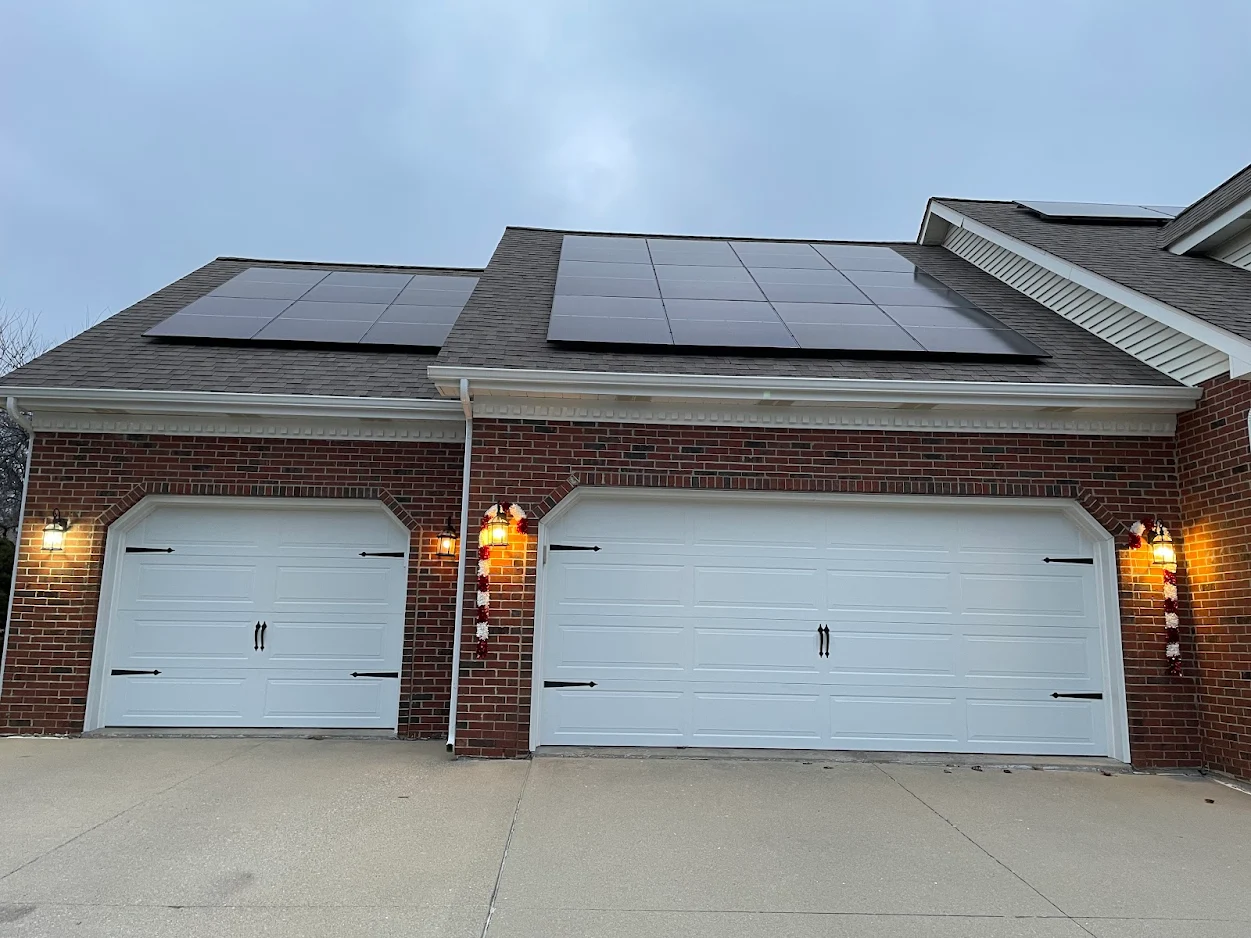
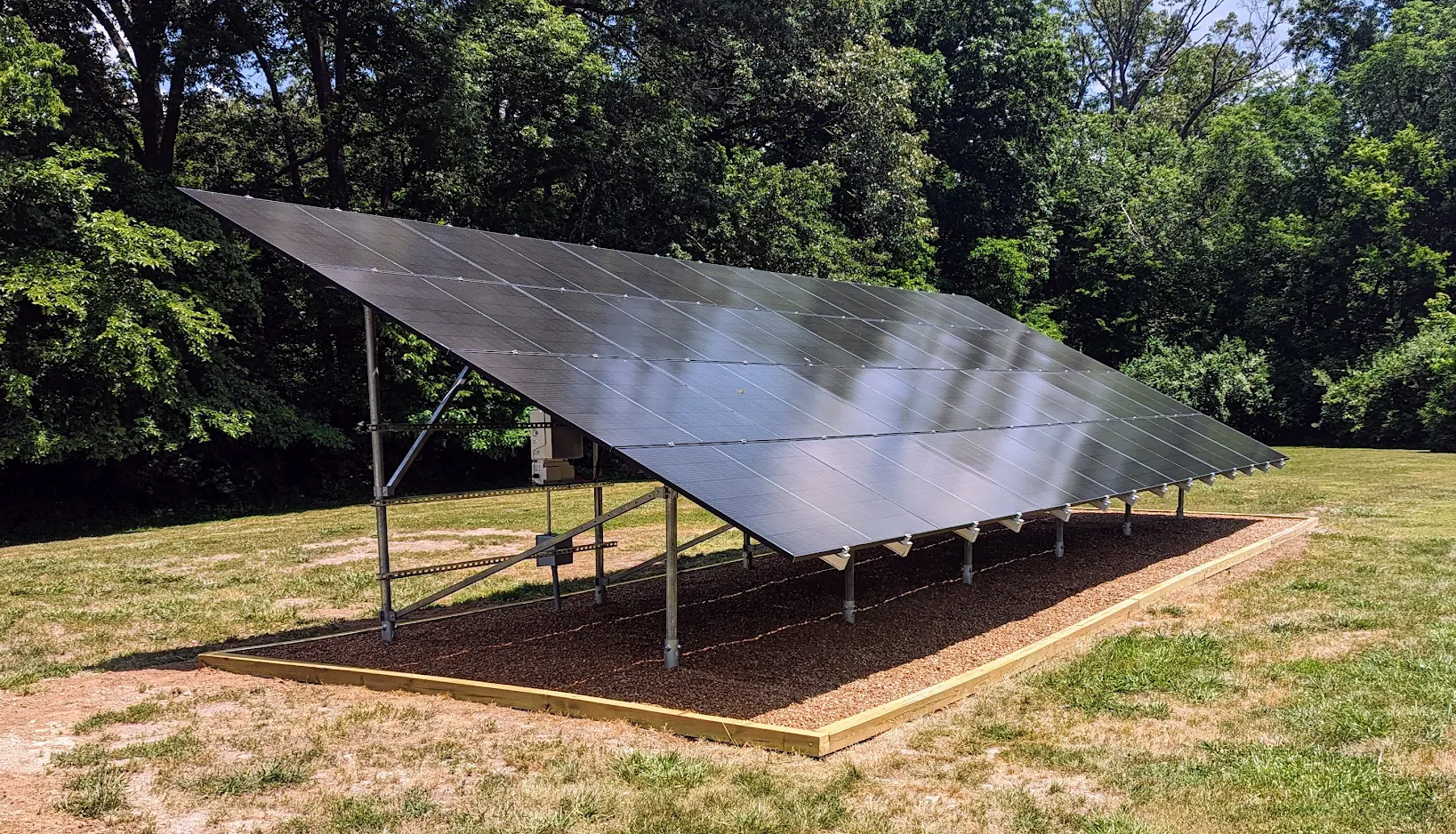
| Solar array | $300 per kW-DC | ~$2,250 on 7.5 kW |
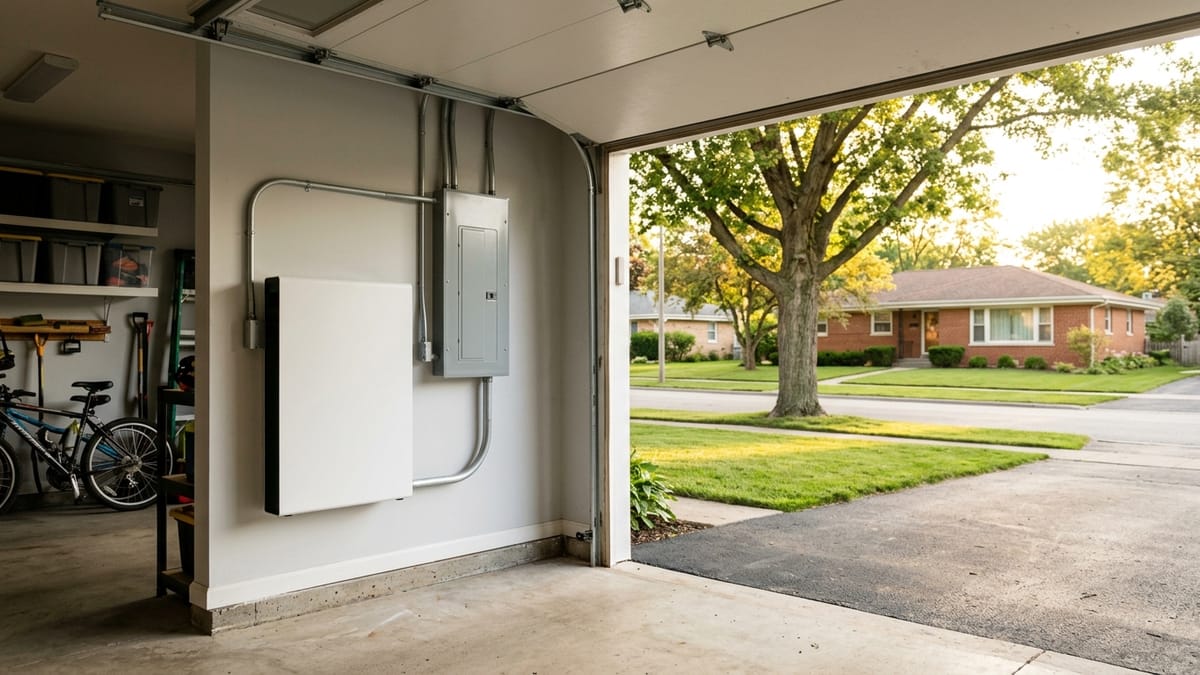
| Battery storage | $300 per kWh | ~$4,050 on 13.5 kWh |
| Two batteries | $300 per kWh | ~$8,100 on 27 kWh |
ComEd publishes those figures for customers interconnected at a residential or small commercial premise up to 100 kW. Above 100 kW, the rate drops to $250 per kW and $250 per kWh. Community solar owners and operators get $250 as well — and ComEd notes that community solar subscribers are not eligible for these rebates at all, which is a distinction worth catching if you are already subscribed to a farm.
Ameren Illinois describes the same structure for DS-1 residential and DS-2 small commercial customers: $300/kW-DC for the inverter connecting a generator, $300/kW-hour for the inverter connecting an energy storage system. Ameren adds something useful — the rebate is available to customers who already have equipment installed, not just to people buying new.
That is the part everybody quotes. Here is the part that rarely gets written down.
ComEd Wants Your Rate Plan and Your Battery's Schedule
ComEd attaches two conditions to the storage rebate specifically, and both of them cost you something real.
The first is a Qualifying Utility Product. ComEd's rebate page says residential and small commercial customers claiming the storage rebate must enroll in one, and lists three ways to satisfy it: Basic Electric Service Hourly Pricing, Delivery Time-of-Day Pricing, or Residential Supply plus Delivery Time of Day. Every one of those replaces a flat rate with a price that moves during the day.
That is not automatically bad. For a household that is empty from eight to five and charges an EV overnight, moving off flat pricing can be a win on its own. For a family running central air through a July afternoon in Decatur, it can go the other way. The rebate does not change that calculation — it just means you cannot separate the two decisions anymore.
The second condition is bigger. In ComEd's own words on the same page: the customer must agree to participate in ComEd's Scheduled Dispatch Virtual Power Plant program for the required term in order to qualify for the rebate. A virtual power plant means the utility draws on your battery when the grid needs it, on a schedule you agreed to.
I do not think that is a scandal. Pooled home batteries are a genuinely sensible way to shave a peak, and you are being paid up front for the privilege. But "here is $4,050 for your battery" and "here is $4,050 and ComEd gets scheduled access to it for years" are two different offers, and only one of them is what you are actually signing.
ComEd also notes that effective June 1, 2026, new requirements were established for storage rebates, and that every residential and small commercial applicant has to be enrolled in net metering to apply at all.
The Virtual Power Plant You're Agreeing To Doesn't Open Until 2027
Here is the timing detail that gets glossed over at the kitchen table. The program ComEd is asking you to commit to is Rider SDVPP, the Scheduled Dispatch Virtual Power Plant. Public Act 104-0458, the Clean and Reliable Grid Affordability Act, required each utility to file that tariff by June 1, 2026 and the Illinois Commerce Commission to approve it by June 30, 2026. ComEd filed on June 1 with an effective date of July 16, 2026, and announced ICC approval on June 30. Ameren Illinois has its own Rider SDVPP under the same law and has already published a bulletin on how it changes battery rebate applications. But ComEd's tariff says customers can begin taking service under it no later than March 1, 2027 — the program is approved, not open.
That means a homeowner taking the rebate in 2026 is signing a five-year participation commitment to a program that will not start taking participants until 2027.
What ComEd's approved tariff does spell out:
| Term | What the approved tariff says |
|---|---|
| Dispatch window | 4:00 to 6:00 p.m. Central, Monday through Friday |
| Season | June 1 through September 30 each year |
| Ongoing payment | $10 per kW-Season, paid once a year after the season, based on your average injections across the window (state law sets $10/kW as the floor) |
| Commitment | Five years if you take the storage rebate on or after June 1, 2026; voluntary participants can leave with notice, effective December 31 |
| Rebate amount | $300/kWh through December 31, 2029; state law sets $250/kWh from January 1, 2030 |
Two things I want said plainly. First, on a typical home battery that can push about 5 kW, that $10-per-kW rate works out to something like $50 a season — an estimate, not a bill-killer. The upfront rebate is where the value sits. Anyone quoting you firm 2027 virtual power plant earnings is building on a floor figure plus their own assumptions, so ask which part is which.
Second, the tariff dispatches your battery to the grid on a schedule; it does not change what your system does in an outage, when the inverter cuts off from the grid and serves your house. The softer question is whether the battery will be full when a July storm hits at 5 p.m. The tariff says there is no minimum commitment — you set your injection level in the participant agreement — so how much stays in the tank at 6 p.m. is something to settle in writing before you sign, not something to assume.
Ameren's Conditions Are Different — and One of Them Is a Dealbreaker
Ameren does not require an hourly or time-of-day rate. In fact Ameren says that as of June 1, 2026, net metering customers can choose from all five rate options. Central and southern Illinois customers keep more flexibility than their ComEd counterparts here.
What Ameren has instead is a hard eligibility wall. Its guidance states that any storage system included in a smart inverter rebate application must be charged by an on-site generator using a renewable resource. A standalone battery that fills up from the grid at night does not qualify. If you are in Ameren territory and your plan was "battery now, panels later," the rebate is not available for the first half of that plan.
Then there is the one I make sure customers hear out loud. Ameren states that for customers on net metering prior to January 1, 2025 who take a rebate on their generator, credits for excess generation pushed to the grid will no longer be applied to their delivery service charges — supply and transmission crediting continues, delivery crediting stops.
Read that twice if you installed solar before 2025. You would be trading a permanent reduction in the value of every kilowatt-hour you export for a one-time payment. Whether that trade is worth it depends entirely on how much you export, and it is exactly the kind of thing worth modeling against your actual bills before anyone submits paperwork. Our net metering breakdown covers how those credits work in the first place.
Who Gets the Check
Ameren answers this directly: Illinois law specifies that the owner of the generator, storage system, or inverter applies for and receives the rebate, and if you lease the equipment from a third party, your contract determines who claims it.
On a lease, that is the company that owns the hardware — not you. I would rather say that in a blog post than have a customer find out at signing. The value of a third-party-owned system reaches you through the monthly payment instead, which for the systems I quote is a predictable rate as low as $0.10/kWh, with the full 25-year rate schedule set in the contract before you sign. Any savings figure is an estimate until we have looked at your actual usage. If having the rebate money land in your own bank account is what matters to you, that is a real argument for buying, and I will tell you so.
What the New Energy Law Did and Didn't Do
You will find articles crediting the Clean and Reliable Grid Affordability Act with creating or expanding this rebate. It didn't.
CRGA was signed as Public Act 104-0458 on January 8, 2026 and took effect June 1, 2026. Per the Illinois Power Agency's implementation page, what it actually established was a 3,000 MW energy storage target by 2030, an initial 1,038 MW procurement that was due no later than August 26, 2026, and authority for the IPA to evaluate a new Illinois Storage for All program that would put storage alongside Illinois Solar for All projects. The Act lets the IPA direct up to 25% of the Solar for All budget toward it.
That residential program does not exist yet. The IPA says its design will be governed by an Energy Storage Procurement Plan with a draft not due until June 1, 2027. The $300 per kWh rebate, meanwhile, has been available to ComEd customers who interconnected since August 11, 2022.
Worth knowing, because the two get blurred together constantly, and a homeowner who thinks the rebate is a brand-new benefit from a brand-new law may also assume it is about to expire. Nothing on either utility's page says that.
The Federal Piece Is Gone
For a homeowner buying a battery outright, the federal residential credit that used to cover a chunk of it is not available for property placed in service after December 31, 2025. There is no phase-down to catch. Third-party-owned systems still capture federal value through the owner, which is a large part of why the lease-versus-buy comparison shifted the way it did this year — I walked through that in detail in our piece on the tax credit ending.
My Take
If you are in Ameren territory and already planning solar, the storage rebate is close to free money — as long as you are not on pre-2025 net metering, in which case run the delivery-credit math first.
If you are with ComEd, treat the rebate and the rate change as one decision, not two. The $4,050 is real, and so is the fact that you are handing over both your rate plan and scheduled access to your battery to get it.
And if anyone tells you this rebate is new, expiring, or created by the 2026 energy law, they have not read the utility's page. That is usually a sign about how carefully the rest of their numbers were checked, too.
What a battery does during an actual outage is a separate question with a separate answer — I covered what a battery really powers when the lights go out previously.
Want the numbers run against your own bill and your own utility? Try the savings calculator, or call me at (618) 217-2001. Every figure here is an estimate until we have looked at your actual usage — but the rebate rules aren't estimates. They are published, and I will show you where.
Sources
- ComEd Distributed Generation Rebates — ComEd rebate page, accessed September 3, 2026
- ComEd Rider SDVPP tariff filing — filed June 1, 2026, effective July 16, 2026
- ComEd DG Rebate Terms and Conditions — 2026 edition
- ComEd receives approval for its first virtual power plant program — ComEd press release, June 30, 2026
- Ameren Illinois Customer-Owned Solar — Rebates — Ameren Illinois, accessed September 3, 2026
- Ameren Illinois DER Bulletin 2026-4, CRGA implications for ESS rebates and SD VPP — Ameren Illinois, 2026
- 220 ILCS 5/16-107.6, distributed generation rebates and scheduled dispatch program — Illinois Compiled Statutes, as amended by Public Act 104-0458
- Public Act 104-0458 Implementation — Illinois Power Agency, accessed September 3, 2026
- Residential Clean Energy Credit — IRS, property placed in service after December 31, 2025 not eligible