Does Illinois Homeowners Insurance Cover Solar Panels? The $14,000 vs $4,000 Roof Clause
Usually, yes. Roof-mounted panels that are permanently attached are typically covered under the dwelling portion of an Illinois homeowners policy, and ground-mounted arrays under Other Structures. The bigger money question is the roof underneath: the Illinois Department of Insurance's own 2026 claims guide shows the same $15,000 roof paying $14,000 under a replacement cost policy and $4,000 under an actual cash value policy.
Most people ask me about the panels. The panels are rarely the problem.
Solar goes on a roof, and the roof is the part of an Illinois house that insurance companies have spent the last few years quietly rewriting. If you are thinking about solar in Belleville or Decatur or anywhere in the hail belt between them, the most valuable ten minutes you can spend has nothing to do with kilowatts. It is reading one page of your homeowners policy.
Here is what you are looking for, and why it matters more than anything a salesperson tells you.
| What to check | What it means for a solar roof | Source |
|---|---|---|
| Roof-mounted panels | Typically part of the dwelling, covered under dwelling coverage | Progressive, GEICO consumer guidance |
| Ground-mounted panels | Other Structures coverage (lower limits); may need a rider | GEICO guidance; IL Dept. of Insurance |
| Replacement cost vs. actual cash value | $15,000 roof, $1,000 deductible: RCV pays $14,000, ACV pays $4,000 | IL Dept. of Insurance 2026 Post-Disaster Claims Guide |
| 20-year-old roof on ACV | May pay as little as 20% of replacement cost (useful life about 25 years) | Same guide |
| Wind/hail deductible | Flat dollar or a percentage; 1% of $300,000 = $3,000 | Same guide; Troxell (Sept. 2025) |
| Ordinance and Law | Without it, a standard policy doesn't cover code-upgrade costs | Same guide |
Where solar panels actually live in a policy
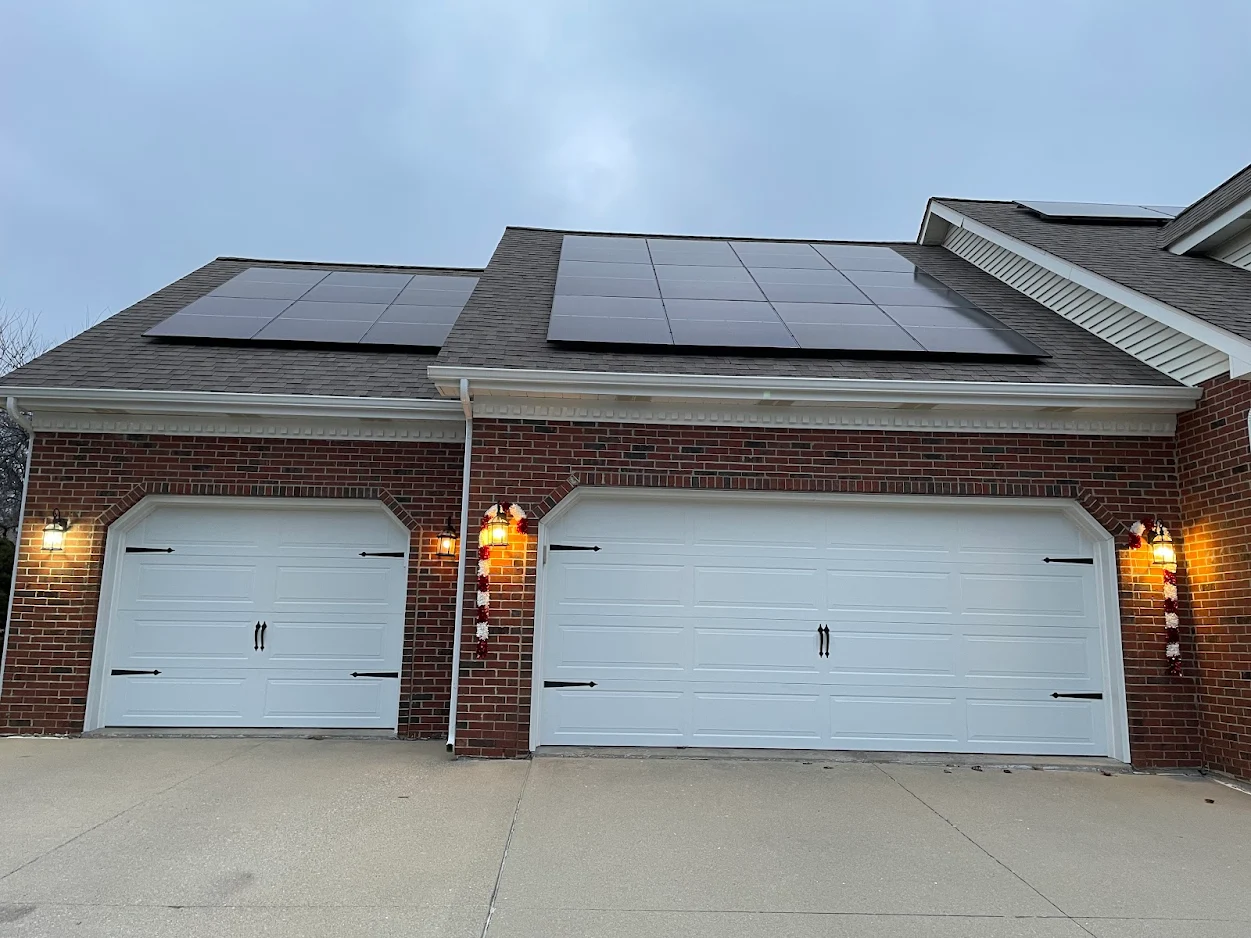
Roof-mounted panels that are permanently attached are generally treated as part of the house. Consumer guidance published by Progressive and GEICO lands in the same place: a rooftop array typically falls under dwelling coverage, the same coverage protecting your walls and your rafters.
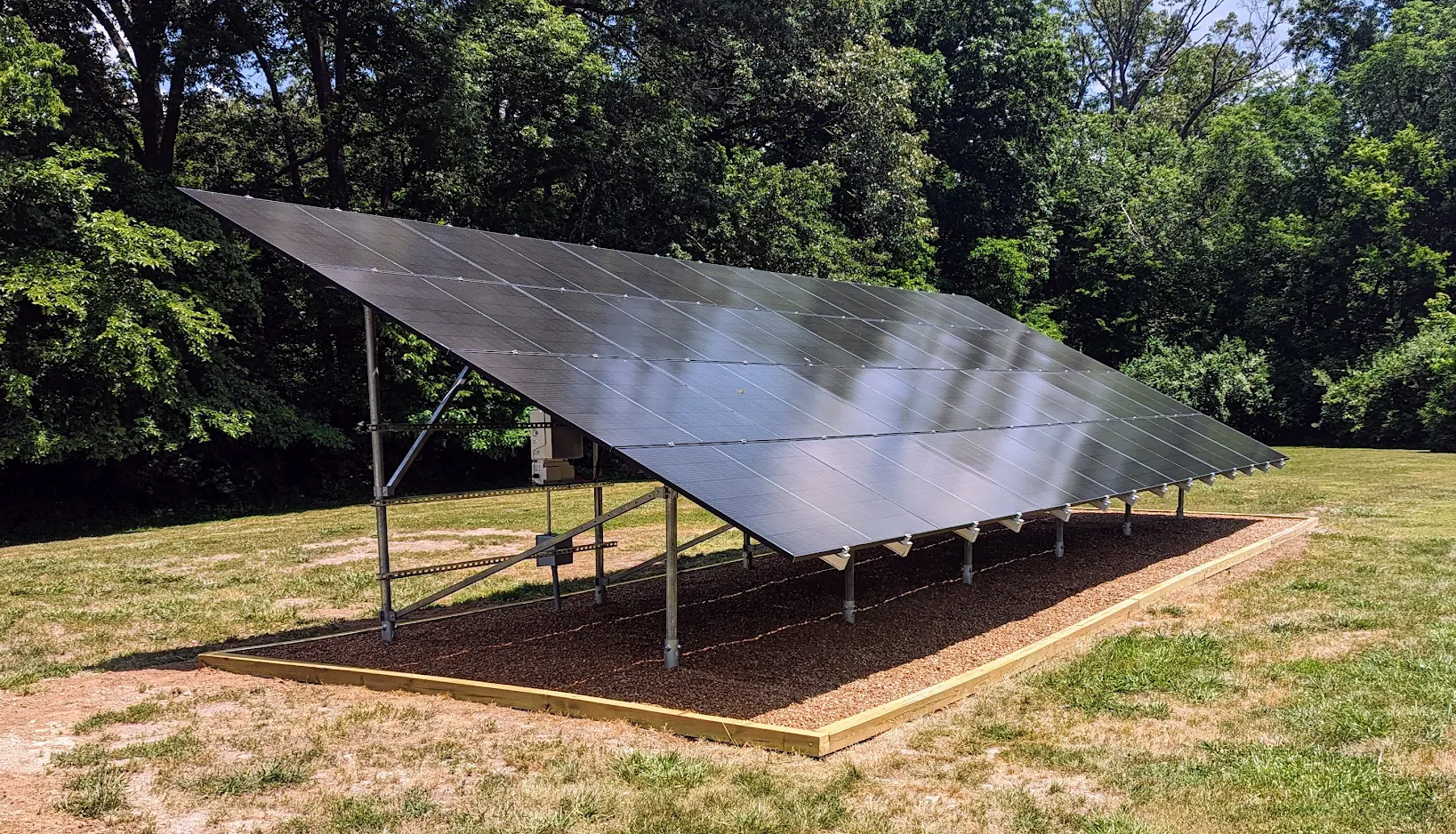
Ground-mounted systems are a different animal. Those usually get sorted into Other Structures, which the Illinois Department of Insurance describes as the coverage for a detached garage, work shed, or fencing. Those limits run a fraction of your dwelling limit, and GEICO's guidance says a ground-mount may not be covered at all under a standard policy without a rider or a separate policy. If a designer sketches an array out in the side yard because your roof faces wrong, that is a good design decision and a real insurance question at the same time.
One more thing from the same carrier guidance: tell your insurance company you installed panels. Progressive puts it plainly — whether you buy or lease, you should always tell your insurer. Every version of this that ends badly starts with a system nobody reported.
The line that decides the money
Illinois publishes its own explanation of this, and it is blunter than anything a carrier will hand you.
Replacement cost, per the Department of Insurance's 2026 Post-Disaster Claims Guide, means your policy "will pay the cost to repair or replace your damaged property without deducting for depreciation." Actual cash value means it "will pay the depreciated cost to repair or replace your damaged property."
The guide then works two examples side by side, the Smiths and the Johnsons. Two roofs, same storm, same damage. Both cost $15,000 ten years ago. Both have a $1,000 deductible.
The replacement cost policy pays $14,000.
The actual cash value policy, depreciating at $1,000 a year, pays $4,000.
Ten thousand dollars, same storm, same roof, different sentence on a page nobody reads. The guide adds a detail that catches people who thought they were safe: even under a replacement cost policy, "there may be other limits on what the policy will pay for damage to certain surfaces, such as roofs. In some cases, the policy may pay ACV on your roof, but RCV on the rest of your home and property." For a 20-year-old roof, the guide says an actual cash value policy "may pay as little as 20% of the cost to replace the roof, since the useful life of a roof is usually about 25 years."
What Illinois agents say is changing
The state describes how these mechanics work. Agencies in Central Illinois have been describing which way the market is moving, and it is moving in one direction.
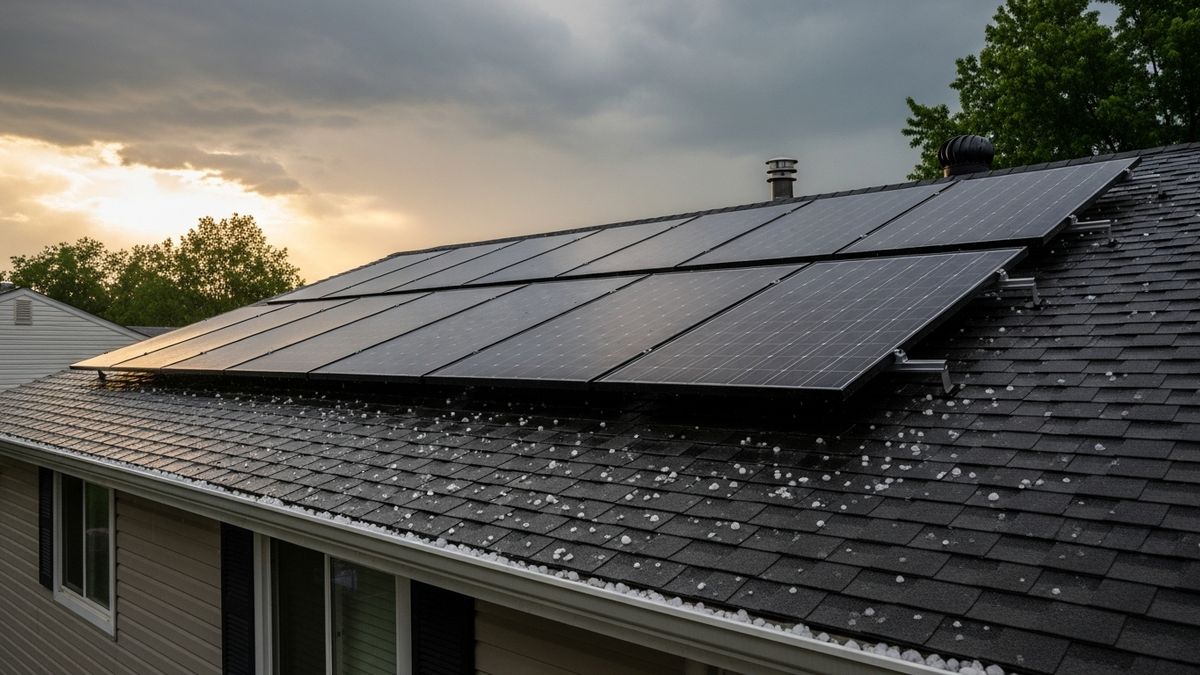
A September 2025 post from Troxell, a Springfield-based agency, lists three shifts its clients are running into: carriers moving roof claims from replacement cost to actual cash value, especially for roofs older than ten years; cosmetic damage exclusions that decline hail dents when the surface still functions; and percentage-based wind and hail deductibles replacing the flat dollar amount people are used to. On a $300,000 home, a one percent deductible is $3,000 before a dollar is paid. The same post notes a national carrier raised Illinois homeowner rates by an average of 27%, and that another carrier made a 1% wind/hail deductible mandatory statewide, citing Illinois hail frequency as second only to Texas.
That is one agency's account of its own book of business, not a state finding, and I would treat it that way. It also matches what I hear in kitchens across the Metro East, which is why it is here.
Why this lands harder on a solar house
A roof with an array on it is a more expensive roof to work on. If shingles need replacing, the panels come off and go back on, and that labor is real money on top of the roofing itself. Every dollar your settlement falls short is a dollar that has to come from somewhere.
There is a second trap in the same claims guide. Ordinance and Law coverage pays the added cost of bringing a rebuild up to current code, and the department states plainly: "Unless you have Ordinance and Law coverage, a standard homeowners policy doesn't cover that added expense." The guide names electrical wiring and roofing materials among the things that may need updating. A roof rebuild under a solar array is the kind of job that runs straight into current code.
None of this is an argument against solar. It is an argument for knowing your roof's insurance position before you put anything on it, which is the same advice I give people who are only thinking about a new roof and not solar at all.
The lease question, answered honestly
On a lease or a power purchase agreement, you do not own the panels. The company that owns the system does.
Carrier guidance describes both arrangements that follow from that. GEICO says the leasing company typically insures the system itself. Progressive says some leasing companies carry their own insurance for the panels, while others may require you to insure them, through your homeowners policy or a separate policy the leasing company offers.
I bring this up because it cuts genuinely both ways. When the equipment owner carries the coverage, hardware risk is not sitting on your policy, and that is a real advantage of leasing that nobody puts in a brochure. When the contract pushes it back to you, you need to know that before storm season, not during. A lease can put a system on an Illinois roof at a predictable rate as low as $0.10/kWh — but the insurance paragraph deserves the same attention as the rate.
If you are weighing structures generally, I laid out the tradeoffs in lease versus buying, and the resale side in selling a house with leased panels.
Five things to check before you sign anything
- Your roof's valuation. Replacement cost or actual cash value? It is on the declarations page.
- Your wind and hail deductible. Flat dollar or a percentage of your dwelling limit? Do the multiplication.
- Cosmetic damage. Excluded or not? Ask directly.
- Ordinance and Law. Do you carry it, and at what limit?
- Who insures the array. Yours, or the system owner's? Get the paragraph.
Then call your agent and say the words "I am adding a rooftop solar array." The Department of Insurance's offices are at (312) 814-2420 in Chicago and (217) 782-4515 in Springfield, with a toll-free consumer hotline at 866-445-5364, if your carrier gives you a runaround. If you cannot find coverage at all, the Illinois FAIR Plan exists for homeowners who have made three unsuccessful attempts to buy a policy in the standard market.
I am not an insurance agent and nothing here is insurance advice — your policy and your agent govern. What I can do is make sure the roof under a system is the right age and condition before anyone puts panels on it, and that the financing structure we pick fits what your policy actually says.
Run your own numbers on the savings calculator, and if you want a real look at your roof and your bill, call me at (618) 217-2001 or reach out through the contact page. Every savings figure I give you is an estimate. The line on your declarations page is not.
Sources
- Illinois Department of Insurance, Post-Disaster Claims Guide (2026 edition)
- Illinois Department of Insurance, Homeowners Shopping Tips and Information
- Illinois Department of Insurance, Contact Us (office and hotline numbers)
- Progressive, Does home insurance cover solar panels?
- GEICO, Does home insurance cover solar panels?
- Troxell Insurance, Home Insurance in 2025: What's Changing in Central Illinois (Sept. 15, 2025)