Do You Need a Panel Upgrade for Solar in Illinois? The 40-Amp Rule, the $4,000–$6,000 Service Upgrade, and Cheaper Fixes
Most Illinois homes with a 200-amp panel and a 200-amp main breaker don't need an upgrade for solar. Under the National Electrical Code's 120% rule, that panel can take a solar breaker of up to 40 amps, enough for about 7.7 kW of inverter output, and the average Illinois home needs a system of about 6 kW. Homes with 100-amp service are where upgrades come up: the same rule caps them at a 20-amp solar breaker, about 3.8 kW. A full service upgrade typically ran $4,000 to $6,000 in a 2022 study done for ComEd, but there are usually cheaper ways around it.
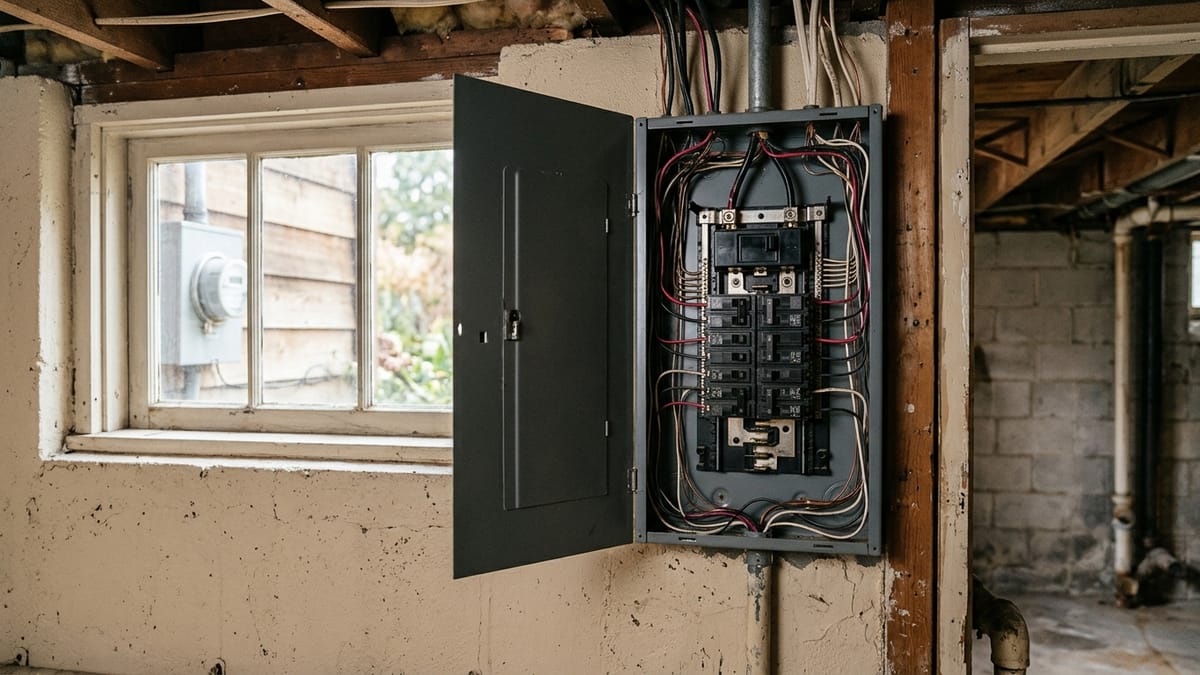
It's a common story. A solar company comes out, the electrician opens the panel in the basement, and the quote comes back with a $5,000 line item nobody explained. Sometimes that line item is real. Sometimes it's the easiest answer for the installer, not the cheapest one for you. Here's how to tell the difference.
The key numbers
| What | Figure | Source |
|---|---|---|
| Largest solar breaker, 200 A busbar with 200 A main | 40 A (240 − 200) | IAEI, 120% rule explainer (Dec 2019) |
| Inverter output that fits a 40 A breaker | 32 A, about 7.7 kW at 240 V | 40 A ÷ 1.25, our math |
| Largest solar breaker, 100 A busbar with 100 A main | 20 A, about 3.8 kW of inverter output | Same rule, our math |
| ComEd homes with 100 A or smaller service | About two-thirds, roughly 2.2 million | Study for ComEd (Oct 21, 2022) |
| Amperage service upgrade, typical cost | $4,000 – $6,000 | Same study (2022 dollars) |
| New panel, no service upgrade, typical cost | About $1,000 | Same study (2022 dollars) |
| ComEd disconnect/reconnect wait electricians reported | About 4 weeks (overhead service) | Same study |
| Illinois Solar for All cap, panel replacement or upgrade | Up to $3,300 (2025-26 program year) | IPA report (Aug 2026) |
| Federal HEAR rebate, electrical panel | Up to $4,000 — not open in Illinois | U.S. DOE; Illinois EPA (Oct 2026) |
The 120% rule, in plain English
Your main panel has a copper or aluminum bar inside, the busbar, that every breaker clips onto. It has an amp rating. So does the main breaker at the top. When you add solar through a normal breaker, power can now flow into that bar from two directions: the utility through the main, and your panels through the solar breaker. The code limits how much extra the bar is allowed to carry.
The International Association of Electrical Inspectors puts it simply: take 120% of the busbar rating, subtract the main breaker, and that's the biggest solar breaker you can backfeed. The solar breaker also has to sit at the far end of the bar from the main.
Here's what that looks like on common panel setups:
| Panel (busbar / main) | Biggest solar breaker | Inverter output it supports |
|---|---|---|
| 200 A / 200 A | 40 A | 32 A ≈ 7.7 kW |
| 200 A / 175 A (main derated) | 65 A | 52 A ≈ 12.5 kW |
| 225 A / 200 A | 70 A | 56 A ≈ 13.4 kW |
| 125 A / 100 A | 50 A | 40 A ≈ 9.6 kW |
| 100 A / 100 A | 20 A | 16 A ≈ 3.8 kW |
Inverter output = breaker ÷ 1.25, at 240 volts. The code uses 125% of the inverter's rated output current.
The average Illinois home needs about a 6 kW system, as I worked out in how many solar panels you need in Illinois. A 6 kW inverter puts out 25 amps, and 125% of that is 31.25, so it lands on a 35-amp breaker. That fits a 200/200 panel with room to spare. It doesn't come close on a 100/100 panel.
That's the whole story for most houses. The number stamped on your main breaker tells you which row you're likely in, and the panel's label lists the busbar rating your installer will check.
How common 100-amp service is
More common than people think. A 2022 study done for ComEd's energy efficiency program found that roughly two-thirds of ComEd residential customers, about 2.2 million homes, have 100-amp or smaller service. I haven't found a matching number for Ameren territory.
A 100-amp house isn't a dead end. It just means the installer has to do more than drop a breaker in.
Four ways around a full service upgrade
These are the options I'd want an installer to walk through before quoting a $4,000-plus service upgrade:
1. Derate the main breaker. Swap a 200-amp main for a 175-amp one and the solar limit jumps from 40 to 65 amps. This only works if a load calculation shows the original main was oversized for your house. Homes with big electric loads, like electric heat or an EV charger, are less likely to pass.
2. New panel, same service. A panel with a bigger busbar than its main breaker, like a 125-amp bar with a 100-amp main, raises the limit without touching the utility side. The ComEd study put a panel replacement without a service upgrade at about $1,000 in 2022 dollars, far less than a full upgrade.
3. Supply-side connection. The solar ties in between the meter and the main breaker, so the 120% busbar limit doesn't apply, though the code still caps it at your service rating. Some all-in-one meter-main panels can't legally be tapped this way, so whether it's allowed depends on your equipment, your utility and your town's inspector. Ask rather than assume.
4. A meter collar adapter. This is a ring that plugs in between the meter and the meter socket and gives solar its own connection point outside the panel. Ameren Illinois's November 2025 requirements list one approved solar collar, the ConnectDER Solar, approved October 1, 2025, and point to Ameren's construction services page for the current list. The same document rules out 320/400-amp services, CT-rated services, button or puck sockets, and sockets with existing violations, and says Ameren screens photos of your meter socket during the interconnection application. If you're in ComEd territory, have your installer confirm ComEd's current approved list before counting on one.
When you really do need the upgrade
Sometimes the honest answer is yes. These are the cases where I'd expect it:
- You're electrifying too. The ComEd study found most 100-amp homes can add two of the three common gas appliances (range, dryer, water heater), but doing all three would likely require 200-amp service, and a fully electric home almost certainly will. If a heat pump or an EV charger is on your list in the next few years, doing the upgrade once, alongside solar, can make more sense than doing it twice.
- The panel or meter socket is the problem. Fuse boxes, damaged sockets and panels an inspector won't sign off on usually get replaced either way. Ameren won't add a meter collar to a socket with existing deficiencies or violations. Ameren's requirements say a rejected meter collar application can be fixed with a meter socket or service upgrade that includes an outdoor main service disconnect.
- You want a big system or a battery. A battery that sends power back through the panel adds to the same math. If you're sizing a battery, read how big a battery you need and have the installer include it in the panel calculation.
Plan for time, too. Electricians interviewed for the ComEd study said a ComEd disconnect and reconnect took about four weeks for overhead service and a little longer for underground. That can push your install date, which matters if you're trying to beat a rate change or a program deadline.
Who pays for it
On a cash purchase, it's a line item, and you should see it itemized. Whether you lease or buy, ask one question in writing: is the electrical work in the price, or will it come back as a change order after the site survey? I'd rather you hear about a panel problem on the first visit than on install day.
If your income qualifies, there's real help. Illinois Solar for All's Home Repairs and Upgrades Initiative gives Approved Vendors extra incentives for roof and electrical repairs needed for solar. In its 2025-26 program year it capped panel replacement or upgrade at $3,300, meter and riser work at $1,850, and electrical repairs at $6,550 per home. The average electrical repair that year cost about $2,100, and installers submitted 73 panel replacement or upgrade projects that year. The budget is tight, and I covered how fast it ran out in Solar for All's roof and electrical repair money. Our Solar for All page covers who qualifies.
The federal HEAR program is the one people ask about. Under the Department of Energy's rules it can pay up to $4,000 for an electrical panel upgrade (DOE calls it a load service center) and $2,500 for wiring, with up to 100% of costs covered for households under 80% of area median income. Illinois hasn't opened it. As of October 2026, the Illinois EPA says its application hasn't been processed by the Department of Energy, and the state doesn't plan to pay retroactive rebates. If your panel is failing, don't wait on it.
Questions to ask before you sign
- What's my busbar rating and main breaker size, and what's the biggest solar breaker that allows?
- What's the inverter's rated output current, and does it fit without changes?
- If it doesn't fit, did you price a main derate, a new panel, a supply-side tap and a meter collar before a full service upgrade?
- Is any utility work needed, and how long does my utility take to schedule it?
- Is the electrical work in the quoted price?
If an installer can't answer the first two in a minute, that tells you something.
Our roof check and savings calculator will tell you whether solar makes sense on your house before anyone opens the panel. When you're ready, call me at (618) 217-2001 or send a note. I'll tell you straight whether your panel is a non-issue, a smaller fix or a real upgrade. For the full cost picture, see what solar really costs in Illinois.
All costs are estimates and typical ranges from the sources below, not quotes for your home. Panel limits assume a standard load-side breaker connection; your installer's design and your local inspector decide what's allowed.
Sources
- John Wiles, "PV Questions From The Field," IAEI Magazine (International Association of Electrical Inspectors), posted December 17, 2019 — https://iaeimagazine.org/columns/photovoltaic/pv-questions/
- Slipstream for Commonwealth Edison Company, "Home Infrastructure Upgrades to Enable Residential Electrification — Executive Summary," released October 21, 2022 — https://innovate.comed.com/wp-content/uploads/2023/05/ComEd-Emerging-Tech-Home-Electrical-Upgrades.pdf
- Ameren Illinois, "Meter Collar Adapter Requirements," Version 5, November 2025 — https://www.ameren.com/-/media/files/resources-and-support/construction/illinois/meter-collar-adaptor-installation-requirements.ashx
- Illinois Power Agency, "Illinois Solar for All Home Repairs and Upgrades Initiative Report, Program Year 2025-2026," posted August 2026 — https://ipa.illinois.gov/content/dam/soi/en/web/ipa/documents/20260818-ilsfa-home-repairs-upgrades-report-py25-26.pdf
- U.S. Department of Energy / ENERGY STAR, "Home Efficiency Rebates & Home Electrification and Appliance Rebates" (HEAR maximum rebate amounts) — https://energystar.gov/sites/default/files/asset/document/Home%20Efficiency%20Rebates%20%26%20Home%20Electrification%20and%20Appliance%20Rebates.pdf
- Illinois EPA, Energy Rebates (HEAR status, no retroactive rebates), accessed October 31, 2026 — https://epa.illinois.gov/topics/energy/energy-rebates.html