Is Ameren Power Smart Pricing Worth It in 2026? Last October Averaged 3.5¢, but One Peak Hour Can Erase the Savings
Ameren Power Smart Pricing can beat the standard rate this fall. Its posted hourly prices averaged 3.50¢ per kilowatt-hour last October, and Ameren's standard energy charge starting October 1, 2026 is 7.310¢ for the first 800 kWh. But whether it pays off for your house depends on a second number most people never hear about. That number is how much power you're pulling during the single busiest hour on Ameren's system each month. Hourly customers pay transmission on that one hour, about $10.37 per kilowatt for a 30-day month, instead of 2.765¢ on every kWh.
That gives you two tests. Can you buy most of your energy in cheap hours? And can you keep your house quiet when the whole region is pulling its hardest? I pulled every hourly price Ameren posted from October 2025 through February 2026, plus July and September 2026, and read the tariff sheets behind the program. Here's what they show.
The key numbers
| Item | Figure | Effective |
|---|---|---|
| Standard (BGS-1) energy charge, summer | 8.200¢/kWh | June 1 – Sept 30, 2026 |
| Standard (BGS-1) energy charge, non-summer | 7.310¢ first 800 kWh, 5.131¢ above | October 2026 |
| Power Smart Pricing supplier (capacity) charge | 2.803¢/kWh in summer; 0.306¢ on the first 800 kWh and 0¢ above in October | Sept. and Oct. 2026 rate sheets |
| Charges added to the posted hourly price | 0.033¢ ancillary services + 0.004¢ market settlement | October 2026 |
| Transmission, standard rate | 2.765¢/kWh | Effective June 2026 |
| Transmission, hourly customers | $0.34582 per kW per day, on your load at the monthly system-peak hour (about $10.37 per kW for 30 days) | Effective June 2026 |
| Participation charge | $2.25 per month | Tariff effective Jan 17, 2025 |
| Rejoin lockout after leaving | 12 months | Tariff effective Jan 17, 2025 |
| Average posted hourly price, October 2025 | 3.50¢ all hours; 2.61¢ midnight–6 a.m. | Oct 1–31, 2025 |
| Average posted hourly price, July 2026 | 6.78¢ all hours; 3.03¢ midnight–6 a.m.; 14.55¢ 3–8 p.m. | July 1–31, 2026 |
| Worst days last winter | 36.08¢ and 40.92¢ daily averages | Jan 24 and 25, 2026 |
The hourly averages are my own math from the prices Ameren publishes on its Power Smart Pricing chart. They're simple averages of posted prices, not anyone's actual bill. Past prices don't predict this winter's prices.
Test one: the energy price
On the standard rate, Ameren bundles energy and capacity into one number. On Power Smart Pricing, the bundle gets split. You pay the posted hourly price plus two small market charges, and a separate supplier charge that covers capacity.
That supplier charge swings hard by season. In summer it was 2.803¢ on every kWh, so the hours you bought in had to average under about 5.4¢ to beat the 8.200¢ standard charge. In October it drops to 0.306¢ on your first 800 kWh and zero above that. The break-even rises to about 7.0¢ on the first 800 kWh. Above 800 kWh it's about 5.1¢, because the standard charge falls to 5.131¢ there.
Last fall, the hourly market cleared those bars easily. Posted prices averaged 3.50¢ in October 2025, 3.78¢ in November, and 4.35¢ in December. Only 37 of October's 744 hours were priced above 7.0¢. Even the worst October stretch, the 5-to-7 p.m. hours, averaged only about 7.1¢.
Summer is a different animal. July 2026 averaged 6.78¢ across all hours and about 20¢ from 6 to 8 p.m. On July 15, the 7-to-8 p.m. hour posted at 89.88¢. September 1–29, 2026 averaged 5.86¢, with the 3-to-8 p.m. block at 12.88¢.
Test two: the peak-hour transmission charge
This is the part most write-ups skip. Ameren's transmission tariff bills hourly customers in dollars per kilowatt per day. It's applied to your load at the time of the peak system load in each billing period. The tariff doesn't say which hour that will be in advance. It's whichever hour Ameren's system is pulling hardest that month. Ameren's own program page says heat waves and prolonged freezes drive demand up, so expect that hour to land in one of them.
Here's a quick rule from the numbers. For a 30-day month, hourly transmission costs about $10.37 for each kilowatt your house draws in that hour. Standard transmission costs 2.765¢ on every kWh you use. Divide your monthly kWh by 375. If your house draws less than that many kilowatts at the system peak, hourly transmission costs you less. If it draws more, you pay more.
| Monthly use | Standard transmission | Break-even load at the peak hour |
|---|---|---|
| 750 kWh | $20.74 | 2.0 kW |
| 1,000 kWh | $27.65 | 2.7 kW |
| 1,500 kWh | $41.48 | 4.0 kW |
My rough estimates: a gas-heated house on a mild fall evening might sit around 1 to 2 kW. A house with central air running full tilt on the hottest afternoon of July can pull well over 3 kW. A house with electric resistance heat on a subzero morning can pull several times that.
ComEd handles this differently. ComEd bills hourly customers a capacity charge based on their own usage during past peak hours. Ameren spreads capacity across all hourly customers as a flat per-kWh charge, but it makes transmission personal. I covered ComEd's version in my breakdown of ComEd's time-of-day and hourly options.
Three households, run through both tests
These are my estimates. They use posted prices from past months and the 2026–27 rate sheets, and they leave out delivery and taxes, which are the same on both rates.
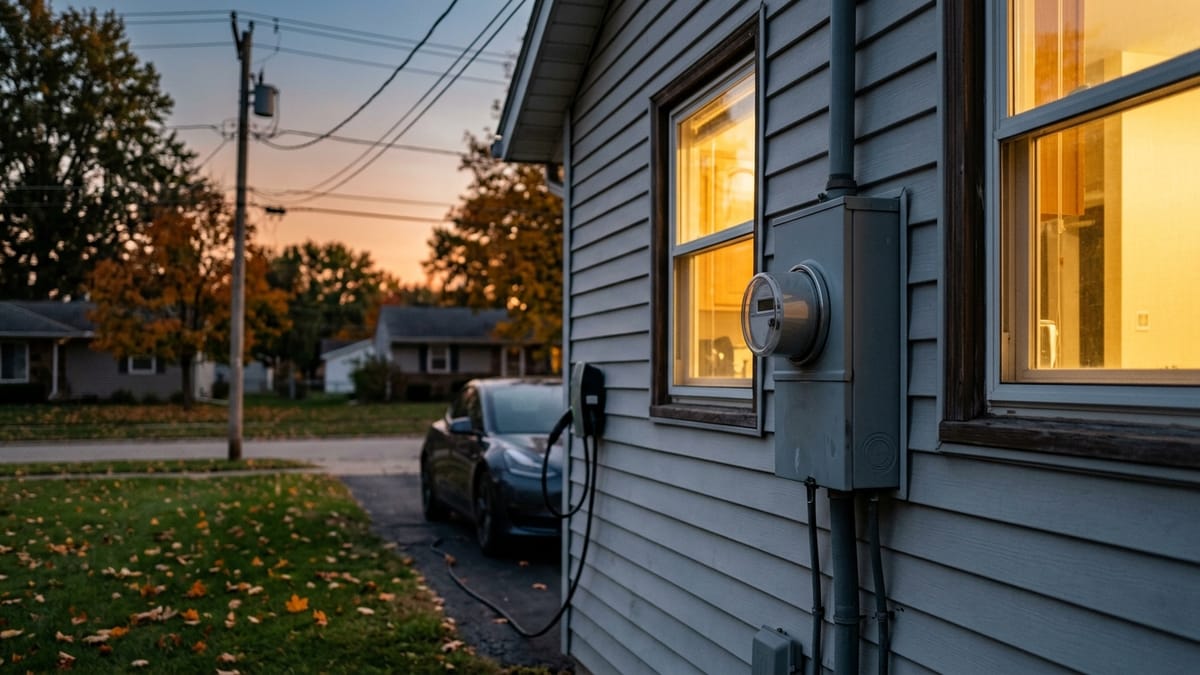
An EV owner with gas heat, in an October like last year's. Say 900 kWh a month, with 300 kWh of overnight EV charging at last October's 2.61¢ overnight average. The rest of the usage is spread across the day at 3.50¢. Energy runs an estimated $32 on Power Smart Pricing against $64 on the standard rate. If the house draws 1.5 kW at the monthly peak, transmission is about $16 against $25. Net, after the $2.25 fee: roughly $39 a month saved. At 3 kW during the peak hour, the savings shrink to about $22. For more on the car side, see what it costs to charge an EV at home in Illinois.
A central-air house in July. Say 1,100 kWh with usage spread around the clock at July's 6.78¢ average, and 3.5 kW at the peak hour. Energy runs about $106 against $90. Transmission is about $38 against $30. Net: an estimated $25 behind for the month, and more if the AC load is concentrated in the late afternoon.
An electric-heat house in a January like 2026. Say 2,500 kWh at January's 9.36¢ all-hours average, and 8 kW at the peak hour. Energy runs about $237 against $146, and transmission is about $86 against $69. That's an estimated $110 behind in one month. That January average was dragged up by the late-January freeze. Six straight days, January 24 through 29, averaged over 21¢, and on January 24 the cheapest hour was 29.25¢. There was no cheap hour to shift into.
The catch: you can't just do fall
Fall is clearly the sweet spot, and Ameren itself says savings tend to be lower in summer and higher when the weather cools. The problem is the exit door. There's no minimum stay, but if you leave Power Smart Pricing, you can't rejoin an Ameren hourly rate for 12 months. Hopping on in October and off in June doesn't work. You're choosing for the whole year, including the next heat wave and the next freeze.
If you have solar, or you're thinking about it
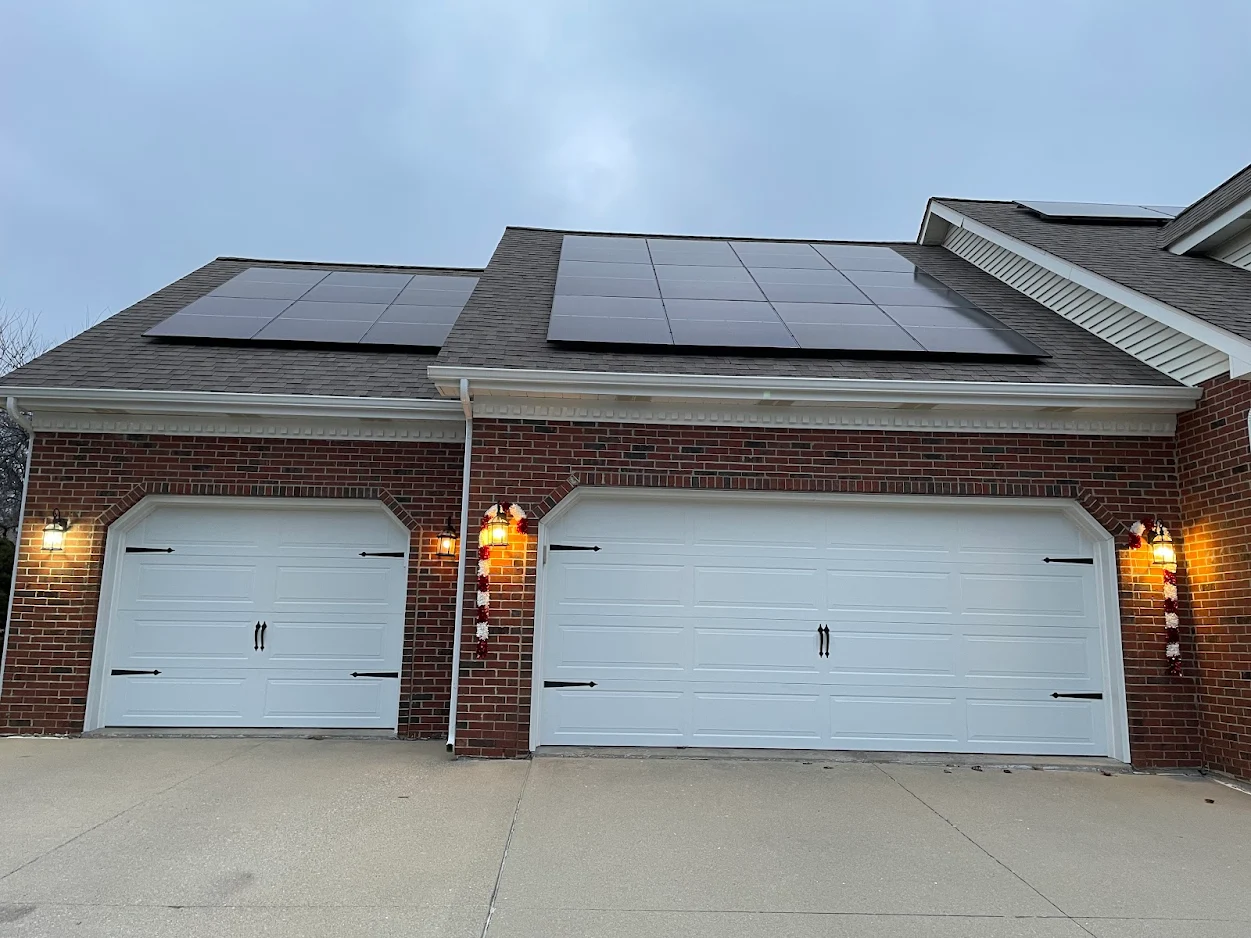
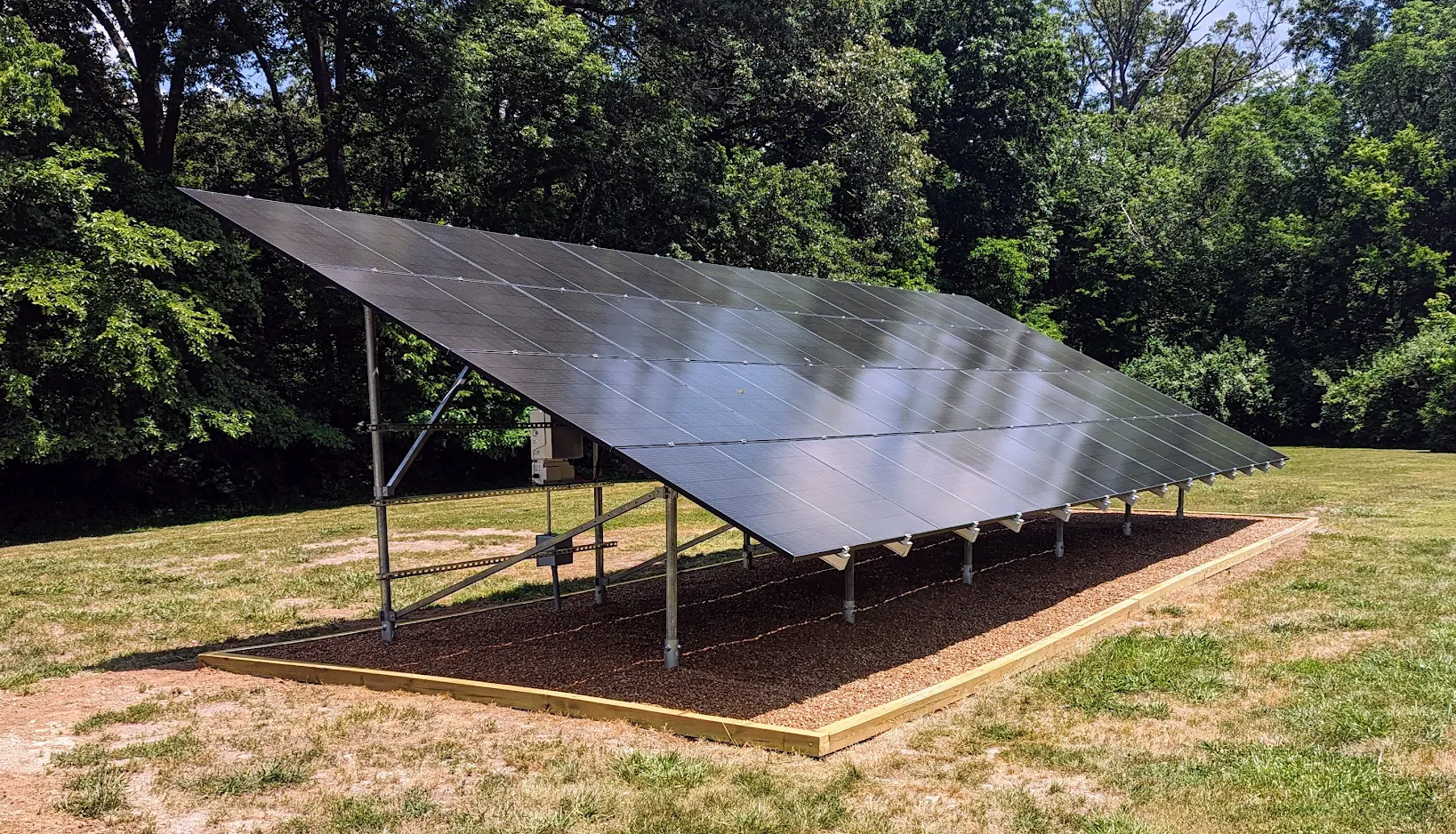
On an hourly rate, Ameren's net metering tariff values your exported power at the price for the hour you produced it. Transmission credits on those exports are figured as if you were on the standard rate, so that part is a wash. The difference is the energy price. Rooftop systems export mostly from late morning to mid-afternoon. Those hours averaged 5.60¢ in July 2026 and 2.90¢ in October 2025. On the standard rate, that same kilowatt-hour offsets energy priced at 8.200¢ in summer or 7.310¢ this fall.
For most solar homes, that makes the standard rate the better pairing. The exception is a battery that soaks up midday solar and covers the evening hours, when summer prices run highest.
There's a bigger point underneath all this. Power Smart Pricing is a way to play defense inside a volatile market. The standard rate rides that same market with a delay, which is a big part of why Ameren bills keep climbing. Solar is how you step partly out of it. The lease programs we work with run as low as $0.10/kWh with a predictable 25-year rate schedule that's set in your contract before you sign, battery included. You can see current Ameren numbers on our Ameren rates page, learn how to check the supply lines on your Ameren bill, or run your own house through the savings calculator.
What I'd do
Enroll if you heat with gas, can run the EV, dryer and dishwasher overnight, and don't have central air pinned on during summer afternoons. That profile passes both tests most of the year. Skip it if you have electric resistance heat. If you're thinking about a heat pump, run the gas-vs-heat-pump math first, because an all-electric house changes your winter peak. And if you do enroll, treat the hottest afternoons and coldest mornings as the hours to keep the house quiet.
One last thing most people don't know. Every Ameren residential customer already pays for this program. The tariff builds an $0.08 monthly Power Smart Pricing charge into everyone's customer charge, whether you enroll or not.
Want a second set of eyes on your bill before you switch? Call or text (618) 217-2001, or send it through our contact page. I'll tell you what I'd do, even if the answer is "stay put."
Sources
- Ameren Illinois, Power Smart Pricing program page (how prices are set, posting time, unenrollment, one-year rejoin rule, seasonal savings, freeze warning), accessed Sept 19, 2026: https://www.ameren.com/bill/rates/power-smart-pricing
- Ameren Illinois, Power Smart Pricing hourly prices chart (posted prices for Oct 2025 – Feb 2026, July 2026, and Sept 1–29, 2026), accessed Sept 19 and Sept 29, 2026: https://www.ameren.com/bill/rates/power-smart-pricing/prices
- Ameren Illinois, Rider PSP – Power Smart Pricing, Ill. C. C. No. 1, Sheet No. 26 (participation charge, 12-month lockout, no minimum service obligation, $0.08 supplemental charge), effective Jan 17, 2025: https://www.ameren.com/-/media/rates/files/illinois/aiel26rdpsp.ashx
- Ameren Illinois, Rider RTP – Real-Time Pricing, Sheet Nos. 27–27.002 (per-kWh supplier charge formula, non-summer supplier charge set to zero above 800 kWh): https://www.ameren.com/-/media/rates/illinois/residential/electric-rates/power-and-energy-supply/aiel27rdrtp.ashx
- Ameren Illinois, Hourly Supply Service Monthly Charges, 123rd Informational Sheet (RTP-1 summer supplier charge 2.803¢, ancillary and settlement charges, seasonal capacity costs), effective September 2026: https://www.ameren.com/-/media/rates/illinois/residential/electric-rates/historical-retail-2016-to-present/2026/aiifhss926.ashx
- Ameren Illinois, Hourly Supply Service Monthly Charges, 124th Informational Sheet (BGS-1 non-summer 7.310¢ / 5.131¢; RTP-1 non-summer supplier charge 0.306¢ / 0.000¢; ancillary 0.033¢ and settlement 0.004¢), effective October 2026: https://www.ameren.com/-/media/rates/illinois/residential/electric-rates/historical-retail-2016-to-present/2026/aiifhss1026.ashx
- Ameren Illinois, Retail Purchased Electricity Charges, 22nd Informational Sheet (BGS-1 summer 8.200¢), effective June 2026: https://www.ameren.com/-/media/rates/illinois/residential/electric-rates/power-and-energy-supply/perannlinfoflg3.ashx
- Ameren Illinois, Rider TS – Transmission Service, Sheet Nos. 50–50.001 (interval-metered transmission charge in $/kW-day applied to load at the time of the peak system load in the billing period): https://www.ameren.com/-/media/rates/illinois/residential/electric-rates/other-charges/aiel50rdts.ashx
- Ameren Illinois, Rider TS Transmission Service Charge, 26th Informational Sheet (DS-1 $0.34582/kW-day interval metered; 2.765¢/kWh non-interval), effective June 2026: https://www.ameren.com/-/media/rates/illinois/residential/electric-rates/historical-rider-ts-charges/2026/aiifts626.ashx
- Ameren Illinois, Rider NMOS – Net Metering for On-Site Generation, Sheet No. 31 (time-of-use credit valuation; transmission credits for RTP and PSP customers), sheets effective Aug 14, 2026: https://www.ameren.com/-/media/rates/illinois/residential/electric-rates/power-and-energy-supply/aiel31rdnmos.ashx