Is a Heat Pump Cheaper Than Gas in Illinois? Only If You Drop the Gas Bill — the 2026 Math for Nicor, Peoples Gas and Ameren
At 2026 prices, a heat pump is not cheaper than a gas furnace per unit of heat anywhere in Illinois. On last winter's average gas prices, a modern furnace makes a therm of heat for roughly 72¢ on Nicor Gas, 98¢ on Peoples Gas, and $1.01 on Ameren Illinois, while a heat pump in ComEd's cheaper electric-heat class costs about $1.30 for the same heat. A heat pump only saves money if switching lets you close the gas account and stop paying the fixed monthly gas charge. On ComEd, it also helps to move the whole house into the lower space-heat delivery class. Do both, and my estimates run from about break-even on Nicor to roughly $190 to $340 a year on Peoples Gas, with Ameren homes landing around $60 to $190.
That's a different answer from the one most heat pump ads give you, and a different answer from the gas industry's too. Both are usually working from national averages. Illinois has three big gas utilities with very different delivery charges, and two electric utilities that price winter electricity very differently. Here's the math for each.
Key facts: heating prices in Illinois, fall 2026
| Line | Figure | In effect |
|---|---|---|
| Nicor Gas, customer charge / distribution | $21.30 a month / 24.44¢ per therm | Rate 1, from Jan 17, 2026 |
| Nicor Gas, gas supply cost | 33¢ per therm; last winter averaged about 44¢ | Sept 2026; Oct 2025 – Mar 2026 |
| Peoples Gas, customer charge / distribution + storage | $25.81 a month / 46.583¢ + 8.257¢ per therm | Current tariff page, Sept 2026 |
| Peoples Gas, gas charge | 31.45¢ per therm; last winter averaged about 38¢ | Sept 2026; Oct 2025 – Mar 2026 |
| Ameren Illinois gas, customer charge / distribution | $23.33 + $0.63 a month / 48.344¢ per therm | GDS-1, from Jan 16, 2026 |
| Ameren Illinois gas charge | 45.235¢ per therm; last winter averaged about 47¢ | Oct 2026; Oct 2025 – Mar 2026 |
| ComEd supply + delivery, electric space heat class (est.) | About 13.3¢ per kWh (16.4¢ in the standard class) | Filed Oct 2026 – May 2027 supply; delivery from April 2026 bills, resets with January 2027 bills |
| Ameren Illinois electric, winter tiers (est.) | About 15.0¢ per kWh on the first 800 kWh, 10.7¢ above | October 2026 rate sheets; delivery rises slightly with January 2027 bills |
| Heat in a therm of gas | 100,000 Btu, about 29.3 kWh | EIA conversion |
| Federal 25C heat pump tax credit | Ended for property placed in service after Dec 31, 2025 | IRS, OBBB FAQ |
Updated September 30, 2026: the Illinois Commerce Commission has now posted the October 1, 2026 – May 31, 2027 Prices to Compare. ComEd's is 10.103¢/kWh (8.413¢ supply plus 1.69¢ transmission), 0.139¢ above the 9.964¢ from ComEd's filed sheets used for the ComEd estimates in this post, so those run about 0.14¢ per kWh low. Ameren Illinois' is 10.441¢ on the first 800 kWh and 8.262¢ above 800, matching the Ameren estimates here.
All the per-therm and per-kWh figures above leave out taxes and the smaller riders and adjustments on both the gas and electric bills, which can add a few cents per therm on a gas bill.
The one number that decides it: cost per therm of heat
A furnace and a heat pump both sell you the same thing, heat, so compare them on the same unit. A therm of gas holds 100,000 Btu. A 95 percent furnace turns 95 percent of that into warm air, so a therm of heat costs the per-therm gas price divided by 0.95.
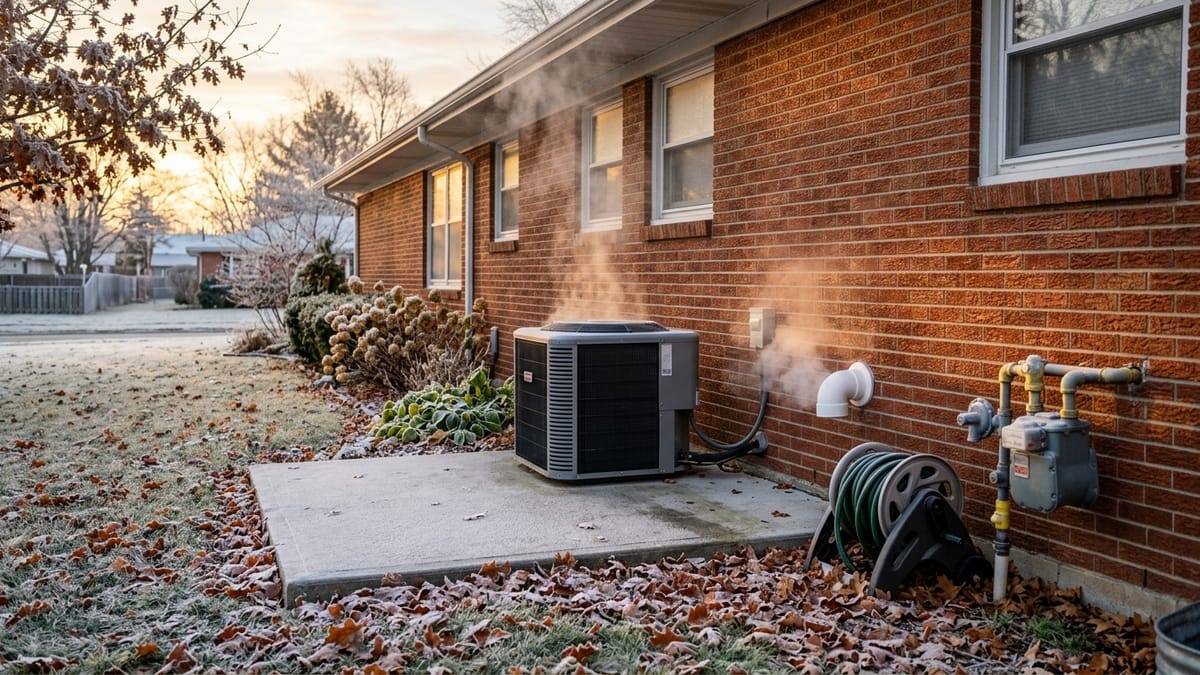
A heat pump moves heat instead of making it, and its efficiency is its coefficient of performance, or COP. A COP of 3 means three units of heat for every unit of electricity. A therm of heat is about 29.3 kWh, so at a COP of 3 it takes about 9.8 kWh of electricity.
| Heating source (last winter's gas prices) | Cost per therm of heat (est.) |
|---|---|
| Gas furnace, 95%, Nicor Gas (24.44¢ + ~44¢) | ~72¢ |
| Gas furnace, 95%, Peoples Gas (54.84¢ + ~38¢) | ~98¢ |
| Gas furnace, 95%, Ameren Illinois (48.344¢ + ~47¢) | ~$1.01 |
| Heat pump, COP 3, Ameren above 800 kWh (10.7¢) | ~$1.05 |
| Heat pump, COP 3, ComEd space heat class (13.3¢) | ~$1.30 |
| Heat pump, COP 3, ComEd standard class (16.4¢) | ~$1.60 |
Flip it around and you get the break-even COP, the season-long efficiency a heat pump would need just to tie the furnace. On Ameren, heating kilowatt-hours past 800 need a COP of about 3.1 to tie Ameren gas. On ComEd's space-heat class, it's about 4.0 against Peoples Gas and about 5.4 against Nicor. The Department of Energy's cold-climate field study found a median COP of 1.9 between 0°F and 5°F, so no heat pump averages 5 through a Chicago winter. Nicor's low 24.44¢ distribution charge is the reason. It makes northern Illinois gas heat the cheapest in the state.
Where the savings actually come from
That doesn't make heat pumps a bad deal. It means the savings come from somewhere other than the heat itself. There are two places.
The fixed gas charge. If the furnace is your last gas appliance and you close the account, the customer charge goes away: about $256 a year on Nicor, $310 on Peoples Gas, and $288 on Ameren. That only works if the water heater, stove, and dryer are electric too, and converting those has its own cost.
ComEd's electric space heat class. A ComEd home that heats entirely with electricity can be billed a delivery charge of 3.215¢ per kWh instead of 6.333¢, on every kilowatt-hour in the house, not just the heating. For a home using about 8,000 kWh a year on everything else, that's worth roughly $211 a year after the class's slightly higher fixed charges. The catch is that ComEd requires the heating to be fully electric, backup included. A heat pump with a gas furnace as backup stays in the standard class. I covered how to check your class in the ComEd electric space heat rate.
Here's how it nets out for a house that burns about 600 therms a year for heat. The EIA puts Midwest space-heating gas use at 48.9 to 74.8 million Btu a year depending on the home's age, roughly 490 to 750 therms, so 600 sits in the middle.
| Territory (all-electric switch) | Gas heat + fixed charge, per year | Heat pump, COP 2.5 / 3.0 | ComEd class discount on other use | Estimated yearly difference |
|---|---|---|---|---|
| Nicor Gas + ComEd | $409 + $256 = $665 | $888 / $740 | ~$211 | About even to ~$136 saved |
| Peoples Gas + ComEd | $556 + $310 = $866 | $888 / $740 | ~$211 | ~$189 to $337 saved |
| Ameren gas + Ameren electric | $574 + $288 = $862 | $802 / $668 | none | ~$60 to $194 saved |
Assumptions, because they matter: last winter's average gas supply prices, a 95 percent furnace, a heat pump averaging a COP of 2.5 to 3.0 over the season, and a blended 12¢ per kWh for Ameren heating use, most of which falls above the 800 kWh winter tier. If you're replacing an old 80 percent furnace, add roughly $76 (Nicor), $104 (Peoples), or $108 (Ameren) to the heat pump's side, because that furnace burns more gas for the same heat.
Those ranges line up with independent work. RMI's March 2026 Illinois analysis found average savings of about $390 a year for Peoples Gas and ComEd customers going all-electric, and just $20 a year for Nicor customers on a hybrid system. Nicor territory is where the math is thinnest.
Hybrid systems: an AC upgrade, not a heating bill cut
A lot of Illinois contractors will quote a dual-fuel setup: a heat pump for mild weather and the gas furnace for the cold snaps. It keeps you comfortable at 5°F, and it's a smart way to replace a dying air conditioner, because a heat pump is an air conditioner that also runs in reverse.
For the heating bill, though, you keep the gas customer charge, and on ComEd you stay out of the space-heat class. What's left is the heat pump running in shoulder-season weather, when its COP might be 3.5 or better. On Ameren, where heating kilowatt-hours past 800 are cheap, that's roughly a tie with Ameren gas. On ComEd's standard class it works out to about $1.37 per therm of heat, still more than either Chicago-area gas utility. My take: buy a hybrid if you need a new air conditioner and want lower emissions or backup heat. Don't buy one expecting a noticeably smaller winter bill.
Who wins big: propane, baseboard, and old electric furnaces
A lot of the worst winter bills I see in central and southern Illinois aren't natural gas bills at all. Out past the gas mains around Carbondale, Quincy, and a lot of farm country, it's propane or electric baseboard. That's where a heat pump pays off without argument. RMI's Illinois analysis estimated average savings of about $930 a year replacing propane and $1,110 replacing electric resistance heat. Baseboard heat runs at a COP of 1. A heat pump at 2.5 to 3 needs well under half the electricity for the same warmth.
If you're on Ameren with baseboard heat, your heating kilowatt-hours past 800 already get the cheaper winter tier, about 10.7¢ before taxes, so a heat pump stretches the cheapest electricity in the state even further. The full Ameren tier breakdown is in your Ameren Illinois bill explained.
Cold snaps and sizing: what a January week does to the math
Every number above is a season average, and January is where heat pumps get tested. The ENERGY STAR cold climate label requires a COP of at least 1.75 at 5°F. The Department of Energy's cold-climate field study, which tested prototype units, measured a median COP of 1.9 between 0°F and 5°F, with medians of 1.6 to 2.7 across the temperature ranges below 30°F. At a COP of 1.9 on ComEd's space-heat class, a therm of heat costs about $2.05, two to three times what gas costs for those hours.
Climate matters here. Chicago O'Hare averages about 5,974 heating degree days a year, Springfield about 5,215, and St. Louis Lambert, the Metro East climate, about 4,433. A heat pump in Belleville spends more of the winter in efficient weather than one in Rockford. Sizing matters even more. An undersized unit hands the coldest nights to its electric backup strips, which run at a COP of 1, and that's how a January bill doubles. Ask the installer for a room-by-room load calculation, not a swap based on the old furnace's size.
Rebates: what's left in 2026
The federal 25C credit that used to cover 30 percent of a heat pump, up to $2,000, is gone for anything placed in service after December 31, 2025. What's left is mostly from the utilities:
- Ameren Illinois: a $900 discount on a qualifying ducted air-source heat pump (at least 15.2 SEER2 and 8.1 HSPF2), $630 on ductless, and $1,350 to $5,400 on geothermal, for Ameren electric customers.
- ComEd: heat pump discounts up to $2,000 in its September 2025 home energy customer guide, depending on efficiency and size, through a ComEd heat pump-trained contractor. Ask the contractor to confirm the 2026 amount.
- Illinois HEAR: the federally funded Home Electrification and Appliance Rebate program for low-income households hadn't launched as of this writing. The Illinois EPA says its application is still waiting on Department of Energy processing.
Where solar fits
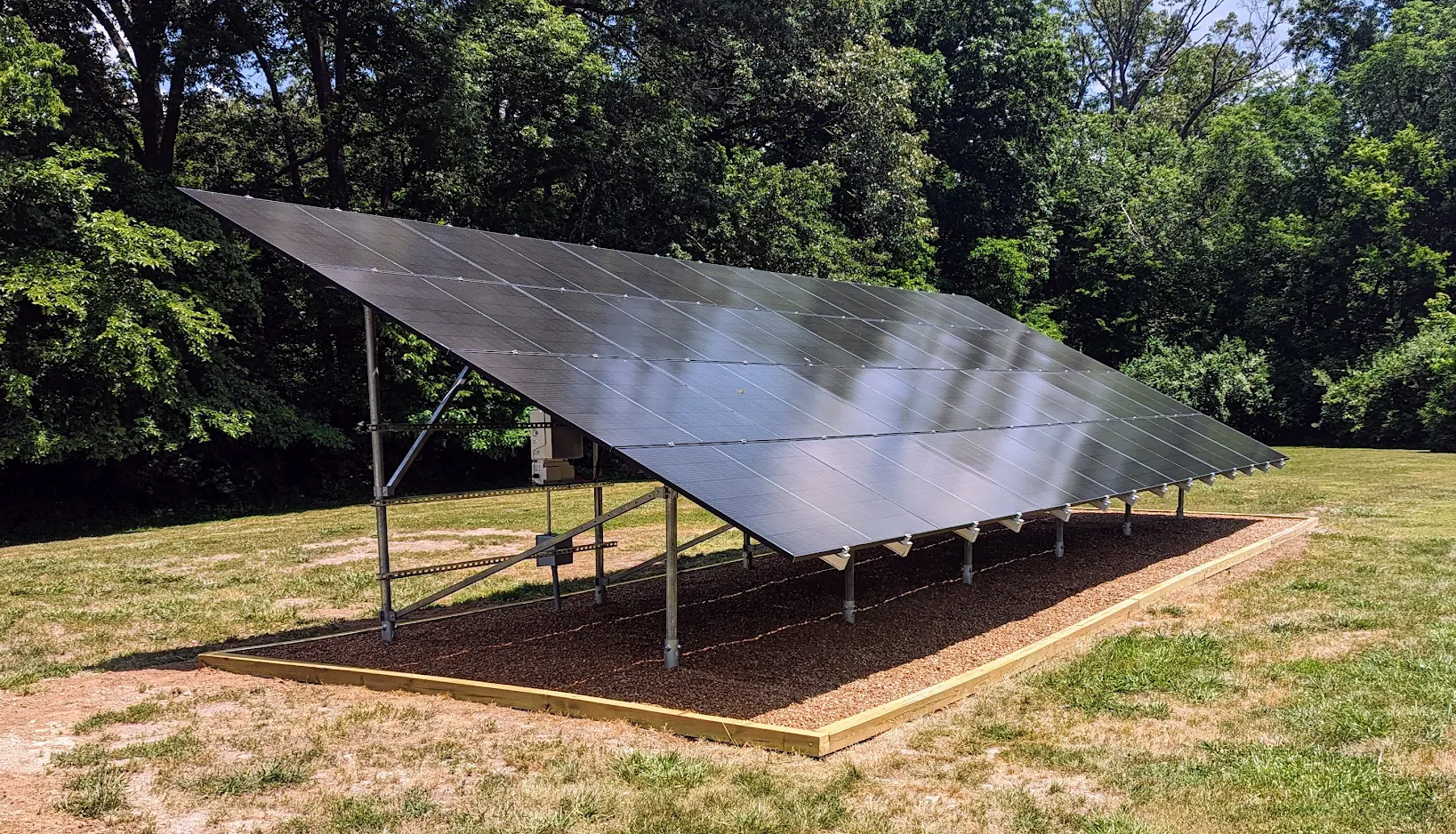
A heat pump adds an estimated 5,600 to 6,700 kWh a year to a house that used to heat with gas, and nearly all of it lands between November and March. That's the stretch when Illinois panels produce the least. By my estimates from NREL solar data, output falls about 45 percent from summer to December downstate and closer to 54 percent up north, which I charted in how Illinois solar production drops in fall and winter.
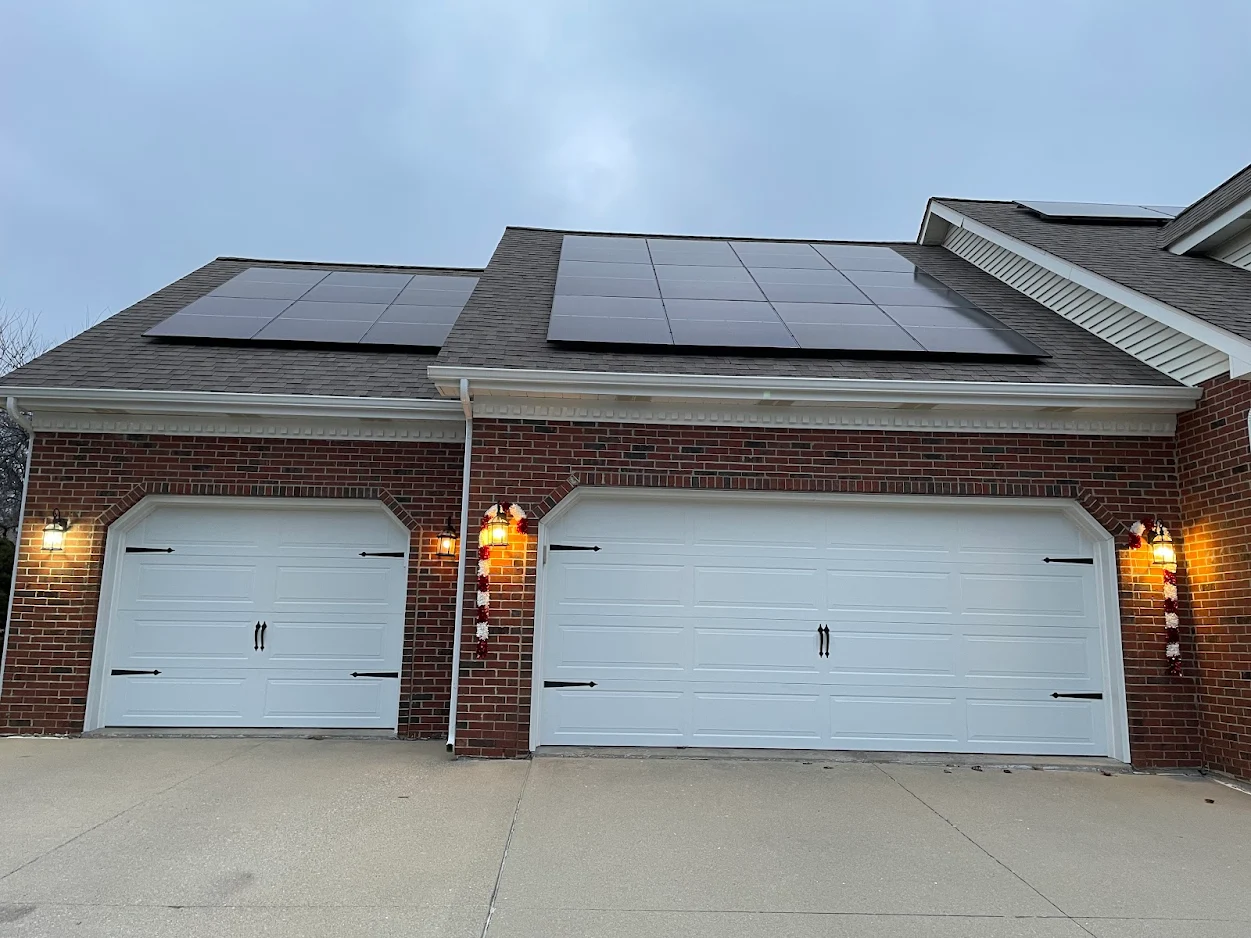
I'd rather tell you that now than have you find it on a January bill. Solar on an all-electric home earns most of its keep from April through September, when supply and delivery prices peak. With a $0-down lease, the power the panels make is billed at a predictable rate as low as $0.10 per kWh, with the full 25-year schedule set in your contract before you sign and a battery included. On a year-round basis that can offset a real share of a bigger electric bill, and solar lease cost per month in Illinois walks through the numbers. If money is tight, look at Illinois Solar for All first, and check Illinois electric bill help and income limits before winter.
Thinking about a heat pump, solar, or both? Send me a recent gas bill and a recent ComEd or Ameren bill. I'll show you your real per-therm and per-kWh prices, your delivery class, and an estimate of what an all-electric switch would do to your year. Call (618) 217-2001, run your numbers through the savings calculator, or get in touch here. For the full picture of what Illinois homes pay today, see the average Illinois electric bill breakdown and the current ComEd rates and Ameren rates.
Sources
- Nicor Gas, Rate 1 Residential Service (customer charge $21.30; distribution 24.44¢ per therm), effective Jan 17, 2026 — https://www.nicorgas.com/content/dam/southern-co-gas/nicor-gas/docs/rates-and-riders/nicor-rate-1.pdf
- Nicor Gas, Pricing and Rate Plans (gas supply cost, September 2026: 33¢ per therm) — https://www.nicorgas.com/residential/pricing-rate-plans.html
- Nicor Gas, Rider 6 Gas Supply Cost history (monthly gas supply cost, 2025–2026) — https://www.nicorgas.com/content/dam/southern-co-gas/nicor-gas/docs/rates-and-riders/nicor-rider-6-history.pdf
- Peoples Gas, Gas Rates (Rate 1 heating: customer charge $25.81; distribution 46.583¢; storage 8.257¢; gas charge September 2026 31.45¢), accessed Sept 26, 2026 — https://www.peoplesgasdelivery.com/payment-bill/gas-rates
- Ameren Illinois, Rate GDS-1 Residential Gas Delivery Service (customer charge $23.33; uncollectible $0.63; distribution $0.48344 per therm), effective Jan 16, 2026 — https://www.ameren.com/-/media/rates/illinois/residential/gas-rates/distribution-delivery/aigs18gdsc.ashx
- Ameren Illinois, Purchased Gas Adjustment, October 2026 (GDS-1 total gas charge 45.235¢) — https://www.ameren.com/-/media/rates/illinois/residential/gas-rates/gas-adjustment-charges/2026/aiifpga1026.ashx
- Ameren Illinois, Purchased Gas Adjustment, September 2026 (GDS-1 total gas charge 43.171¢) — https://www.ameren.com/-/media/rates/illinois/residential/gas-rates/gas-adjustment-charges/2026/aiifpga926.ashx
- Illinois Commerce Commission, Purchased Gas Adjustment Rates, current and historical (Nicor, Peoples Gas, North Shore Gas monthly, through September 2026) — https://www.icc.illinois.gov/natural-gas-choice/purchased-gas-adjustment-rates
- ComEd, A Guide to the Retail Customer's Billed Delivery Service Charges, charges beginning with April 2026 bills (6.333¢ standard vs 3.215¢ electric space heat, single-family) — https://www.comed.com/cdn/assets/v3/assets/blt3ebb3fed6084be2a/blt7904befea93c3525/6a74ab1af8608b565710881f/A_Guide_to_the_Retail_Customer_s_Billed_Delivery_Service_Charges.pdf
- ComEd Go Electric, Savings Calculator notes (electric space heat rate eligibility, backup and secondary heating must be electric) — https://goelectric.comed.com/savings-calculator/
- ComEd, Electric Informational Sheets, ICC current tariff book (non-summer supply 8.241¢ and transmission 1.723¢, Oct 2026 – May 2027), effective Aug 21, 2026 — https://icc.illinois.gov/downloads/public/tariff/currentbooks/1/Electric%20Informational%20Sheets%20Ill.%20C.%20C.%20No.%2010[186]..pdf
- Ameren Illinois, Rider HSS / Rider BGS 124th Informational Sheet, effective October 2026 (non-summer energy charge 7.310¢ / 5.131¢) — https://www.ameren.com/-/media/rates/illinois/residential/electric-rates/historical-retail-2016-to-present/2026/aiifhss1026.ashx
- Ameren Illinois, Rider TS 26th Informational Sheet, effective June 2026 (DS-1 residential transmission 2.765¢ per kWh) — https://www.ameren.com/-/media/rates/illinois/residential/electric-rates/historical-retail-2016-to-present/2026/aiifts626.ashx
- Ameren Illinois, Rate PBR-R Appendix (DS-1 non-summer delivery 4.572¢ first 800 kWh, 2.427¢ above) — https://www.ameren.com/-/media/rates/illinois/residential/electric-rates/distribution-delivery/aiel8rtpbrr08282025.ashx
- Ameren Illinois Energy Efficiency, HVAC and Water Heating Discounts (air-source heat pump $900, ductless $630, geothermal $1,350 – $5,400) — https://amerenillinoissavings.com/residential/products-discounts-and-rebates/hvac-and-water-heating-discounts/
- ComEd, Home Energy Rebates customer guide, September 2025 update (air-source and centrally ducted mini-split heat pumps, discounts up to $2,000) — https://www.comed.com/cdn/assets/v3/assets/blt3ebb3fed6084be2a/bltb8206206cff6f9c9/68bef7975c76c05195ee2699/2025_HHC_Customer_Guide_V3_September_Update.pdf
- IRS, Energy Efficient Home Improvement Credit (30 percent, up to $2,000 a year for qualified heat pumps) — https://www.irs.gov/credits-deductions/energy-efficient-home-improvement-credit
- U.S. Energy Information Administration, Units and Calculators (1 therm = 100,000 Btu; 1 kWh = 3,412 Btu) — https://www.eia.gov/energyexplained/units-and-calculators/
- U.S. Energy Information Administration, Today in Energy: Midwest households' natural gas use (RECS 2020), Aug 7, 2023 — https://www.eia.gov/todayinenergy/detail.php?id=57321
- Pacific Northwest National Laboratory, DOE Cold Climate Heat Pump Challenge field validation (PNNL-37127), January 2025 — https://www.pnnl.gov/main/publications/external/technical_reports/PNNL-37127.pdf
- ENERGY STAR, Version 6.2 Heat Pump Specification (cold climate: COP ≥ 1.75 at 5°F), March 2025 — https://www.energystar.gov/sites/default/files/2025-04/ENERGY%20STAR%20Version%206.2%20Heat%20Pump%20Specification%20Rev.%20March%202025.pdf
- NOAA NCEI, U.S. Climate Normals 1991–2020, annual heating degree days (Chicago O'Hare, Springfield, St. Louis Lambert) — https://www.ncei.noaa.gov/access/services/data/v1?dataset=normals-annualseasonal-1991-2020&stations=USW00094846,USW00093822,USW00013994&dataTypes=ANN-HTDD-NORMAL&format=csv
- IRS, FAQs for modification of sections 25C, 25D and others under Public Law 119-21 (25C not allowed for property placed in service after Dec 31, 2025), Aug 21, 2025 — https://www.irs.gov/newsroom/faqs-for-modification-of-sections-25c-25d-25e-30c-30d-45l-45w-and-179d-under-public-law-119-21-139-stat-72-july-4-2025-commonly-known-as-the-one-big-beautiful-bill-obbb
- Illinois EPA, Energy Rebates (HEAR application not yet processed by USDOE) — https://epa.illinois.gov/topics/energy/energy-rebates.html
- RMI, Five policies to lower heating bills and accelerate heat pump adoption in Illinois, March 20, 2026 — https://rmi.org/resources/five-policies-to-lower-heating-bills-and-accelerate-heat-pump-adoption-in-illinois/