Solar Panels on a Metal Roof in Illinois: No Holes on Standing Seam, a Roof That Outlasts the Lease, and the Snow Plan to Ask For
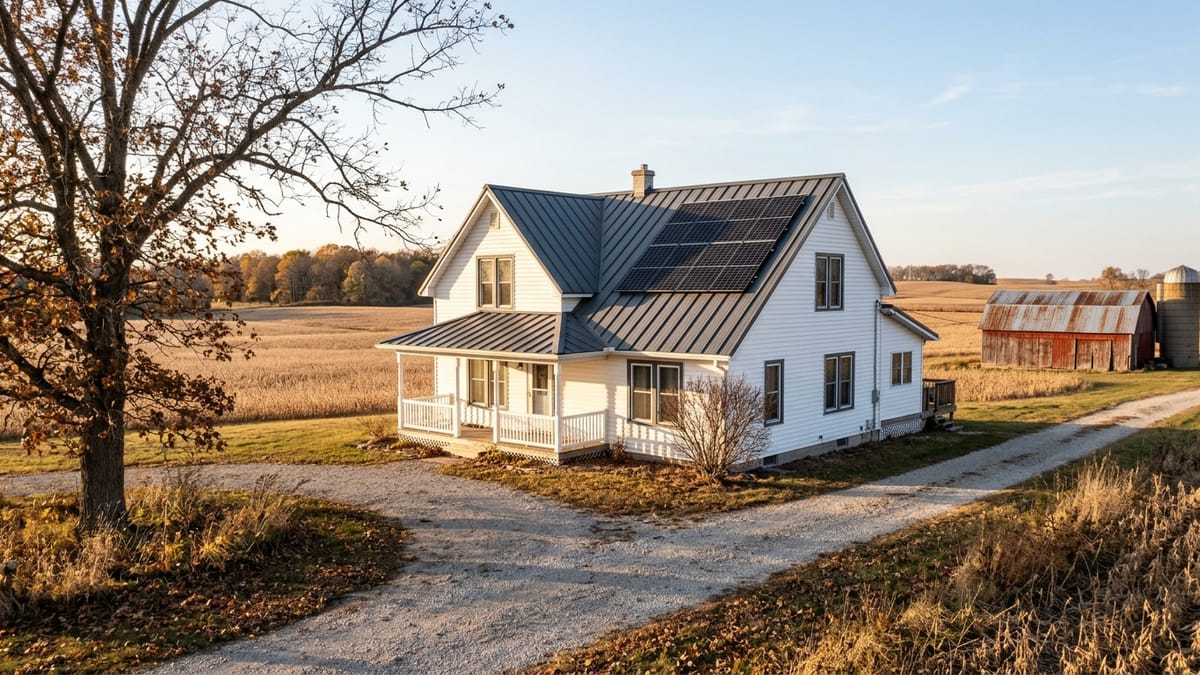
Yes, you can put solar panels on a metal roof, and on a standing seam roof they usually go up without a single hole through it. The racking clamps onto the raised seams. Corrugated and other exposed-fastener metal roofs are different: the mounts screw through the metal and every one has to be sealed. Either way, a metal roof will likely outlast a 25-year solar lease. An industry study projects standing seam steel roofs lasting more than 60 years, so you probably never pay the estimated $2,800 to $6,000 it costs to pull panels off for a re-roof.
That's the short version. The details that matter in Illinois are which metal you have, who seals what, and where the snow goes when it slides.
The key facts
| Item | What it is | Source |
|---|---|---|
| Standing seam attachment | Panels held by clamps attached to the standing seam ribs; seam fasteners are nonpenetrating | FEMA Recovery Advisory 5 (April 2018); IIBEC (1997) |
| Exposed-fastener metal (corrugated, ribbed "ag panel") | Mounts fasten through the metal; each penetration needs flashing or sealing | FEMA Recovery Advisory 5 (April 2018) |
| Expected life of a standing seam steel roof | "in excess of 60 years" for roofs built today with best practices (low-slope study) | Metal Construction Association white paper (2014) |
| Our lease term | 25 years | Our lease terms |
| Illinois Shines REC contract | 15 years (180-month delivery term) | Illinois Shines 2026-27 Program Guidebook, Section 6 |
| Remove and reinstall for a re-roof | Est. $2,800–$6,000 for a typical home system | Industry estimates, 2026; your quote will vary |
| Roof-leak warranty on the state's sample disclosure form | Installer, 5 years (a sample, not a minimum) | Illinois Shines sample Disclosure Forms, June 1, 2026 |
| Utility DG rebate | $300 per kW through Dec. 31, 2029 | 220 ILCS 5/16-107.6 |
Standing seam: the easiest roof I can put solar on
A standing seam roof has long metal panels joined by raised seams that run from the ridge down to the eave. Those seams are the whole trick. Instead of drilling through the roof, the racking uses small clamps that grip the seam itself.
FEMA's advisory on rooftop solar attachment, written after the 2017 Caribbean hurricanes, describes this setup: panels "attached to standing seam metal roof ribs with panel clamps attached to external seam clamps." It goes further and recommends clamping panels straight to the seams rather than running rails across them, because rails can overload the hidden clips that hold the metal panels to the roof.
That's the one question I'd add to your list for an installer: did anyone check the concealed clips? FEMA says the designer "should consider whether the concealed clips may be overstressed" by the extra wind load the panels add. It's an engineering check, not a deal-breaker, and a good crew will already have an answer.
The other detail is movement. Metal roofing grows and shrinks with the temperature, and an Illinois roof lives through bitter January nights and sun-baked July afternoons. FEMA says the seam clamps "should be located so that they do not interfere with the thermal expansion and contraction" of the panels and clips. Clamps placed right let the roof keep moving the way it was designed to.
Corrugated and exposed-fastener metal: doable, with sealed holes
Then there's exposed-fastener metal: corrugated or ribbed panels with the screw heads showing, the kind you see on farmhouses, shops and pole barns all over the country. You can put solar on those too. There just aren't seams to clamp, so the mounts fasten through the metal into the framing underneath.
That makes it more like a shingle roof than a standing seam one. Every mount is a hole, and every hole needs a proper seal or flashing. FEMA recommends "having a professional roofing contractor flash penetrations through the roof covering." On a lease, the installer handles that, but you still want to know the plan.
This is also where the roof-leak warranty matters most. The Illinois Shines disclosure form you sign before the contract has its own line for "Warranty against roof leaks from installation." On the program's June 2026 sample forms, the example installer offers 5 years, and the state sets no minimum. I covered that line in detail in do solar panels cause roof leaks. On a through-fastened metal roof, read it twice.
Metal shingles and stone-coated steel are their own category. They look like shingles or tile but they're stamped metal, so the standing seam and corrugated methods don't map neatly onto them. Ask the installer which attachment they'll use and whether the roof maker approves it.
The money angle: a roof that outlives the contract
Here's the part most national "solar on metal roofs" guides skip, because it's about Illinois paperwork.
Solar sits on your roof for a long time. Our lease runs 25 years. The Illinois Shines REC contract that pays for the system's renewable energy credits runs 15 years. If the roof under the panels wears out before those clocks run down, the system has to come off and go back on. That runs an estimated $2,800 to $6,000 for a typical home system (industry estimates, not a quote), and the panels earn nothing while they're in the yard. I walked through that math in do you need a new roof before solar.
A metal roof mostly takes that problem off the table. In 2014 the Metal Construction Association published a study of standing seam steel roofs across five U.S. climate regions, some in service up to 35 years. It concluded a similar roof built today with best practices "can be expected to be in excess of 60 years." The study looked at low-slope commercial roofs, not houses, so I treat it as a ballpark, not a promise. But even at half that number, a sound metal roof comfortably covers a 25-year lease.
That's why a metal roof is my favorite roof to see on a lease appointment. It's one less thing that can go wrong in year 12.
If you'd rather own the system, the same logic holds, and the other numbers still apply: ComEd and Ameren pay a distributed generation rebate of $300 per kW on systems that qualify, and our average price is about $2.60 per watt before incentives. Our posts on the $300-per-kW utility rebate and Illinois SREC prices cover what you'd collect.
Snow: the Illinois detail nobody puts in the brochure
Put solar glass on a metal roof and you've stacked two slick surfaces. An engineering paper on snow guards says it flatly: "Metal roofs are slippery." In an Illinois winter, snow on that roof doesn't creep off. When it lets go, it can come down in one big slide.
That's not a reason to skip solar. It's a reason to look at what's under the bottom edge of the array. That paper on snow guards for metal roofs, published by the building-envelope engineering group IIBEC, also puts the stakes plainly: "Sliding snow and ice can damage property, kill people and overload lower roofs." If the panels sit above a front door, a walkway, a porch roof, a deck, a driveway or a gas meter, ask about a snow fence or snow guards below the array.
How they're attached matters as much as whether they're there. The same paper says "most mechanically-attached snow guards are secured with nonpenetrating fasteners at or near the top of the standing seam," and that drilling guards through the roof into the purlins below "is seldom a viable alternative" because it locks down a roof that needs to move. Its summary of what happens then: "Leaks are highly likely."
The upside is that tilted panels shed snow on their own. Sandia National Laboratories puts published snow losses at 1% to 12% of a year's output, and our post on snow and solar panels in Illinois explains why you should leave it alone and let it slide, as long as nobody's standing underneath.
What about the pole barn or the shop?
Out in the country, the metal-roofed shed, shop or pole barn sometimes has a better south face than the house. Sometimes that's the right place for panels, and sometimes it isn't. It depends on whether the building is on the same electric service as the house, how far the wire has to run, and whether the framing was built to carry the extra load.
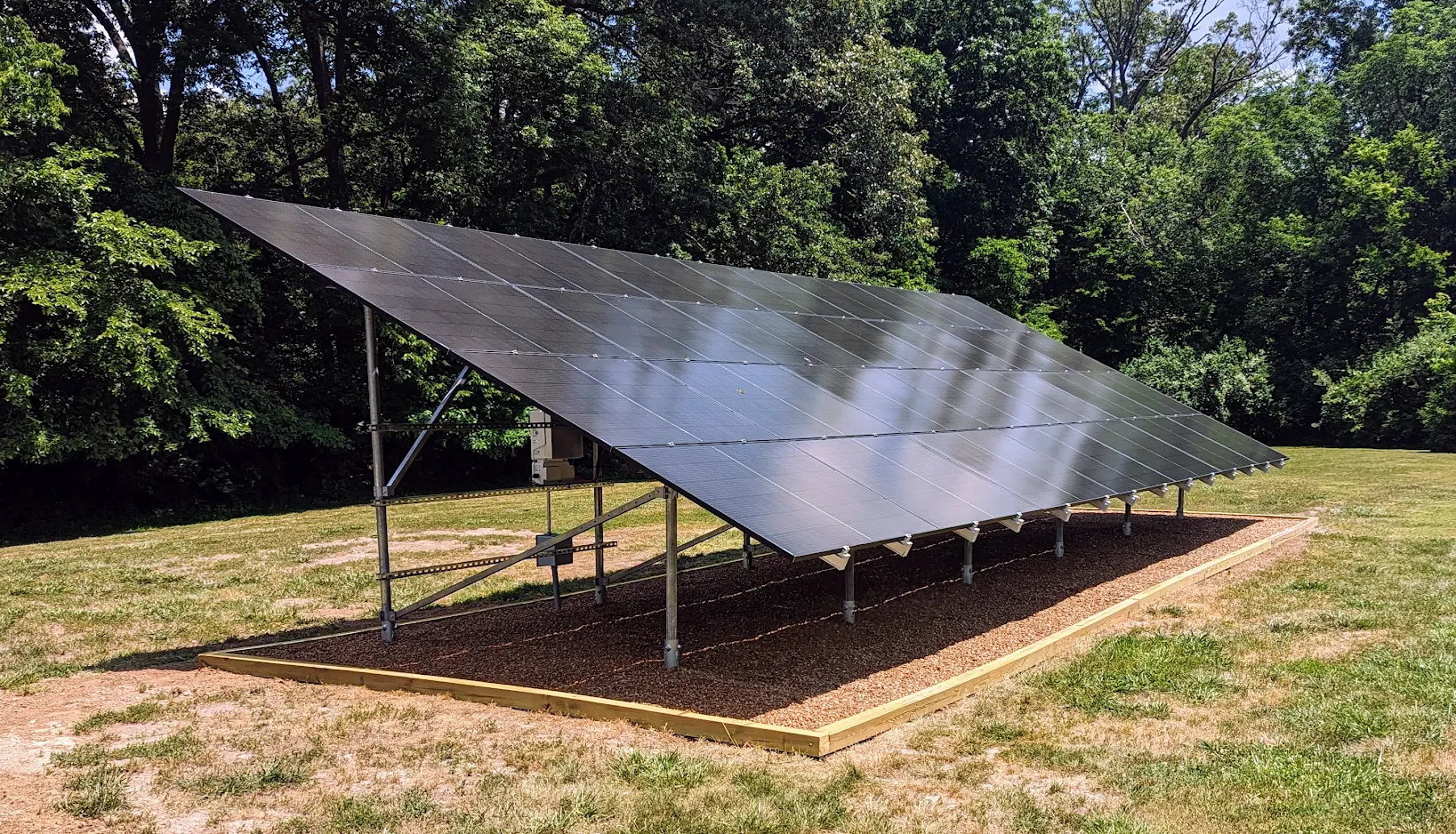
If neither roof works, a ground-mount system puts zero holes in anything. And if you're not sure how many panels you need in the first place, our guide to how many solar panels you need in Illinois breaks it down town by town.
Questions to ask before anyone climbs up
- What kind of metal is it? Standing seam, exposed-fastener, or metal shingle. The answer decides the attachment.
- Clamps or penetrations? On standing seam, the answer should be clamps.
- Did you check the concealed clips and the framing? FEMA flags the clips; through-fastened roofs need solid framing under each mount.
- What's on the roof-leak warranty line, and for how many years? It's on your Illinois Shines disclosure form.
- Where does the snow land? If the answer is people or anything breakable, get snow retention in the plan.
- Does my roof's own warranty allow it? If the metal roof is new, read the attachments section or call the maker first.
My bottom line
A metal roof isn't a problem for solar. On standing seam it's close to ideal, and on through-fastened metal it just means paying attention to the seals. The best part for an Illinois homeowner is the timing: a roof built to last for decades lines up with a 25-year lease in a way a tired asphalt roof can't.
Want a first look at your roof? Check my roof uses satellite data, and our savings calculator estimates what a system could do against your Ameren or ComEd bill. If you'd like a lease, a cash price and a Solar for All check side by side, see how our solar lease works.
Sources
- Rooftop Solar Panel Attachment: Design, Installation, and Maintenance, Recovery Advisory 5 (FEMA Mitigation Assessment Team, Hurricanes Irma and Maria in the U.S. Virgin Islands, April 2018)
- Service Life Assessment of Low-Slope Unpainted 55% Al-Zn Alloy-Coated Steel Standing Seam Metal Roof Systems (Dutton, Haddock, Howard and Kriner, Metal Construction Association white paper, © 2014)
- Snow Guards for Metal Roofs (Tobiasson, Buska and Greatorex, IIBEC Interface, January 1997)
- Illinois Shines Solar Project Lease Disclosure Form, sample (June 1, 2026)
- Illinois Shines Solar Project Purchase Disclosure Form, sample (June 1, 2026)
- Illinois Shines 2026-27 Program Guidebook, Section 6: 180-month delivery term under the 2026 15-Year REC Delivery Contract (Illinois Power Agency, April 17, 2026)
- 220 ILCS 5/16-107.6, distributed generation rebate ($300 per kW through Dec. 31, 2029)
- IPA Appendix H-1, Illinois Shines DG Contract Requirements §A.6 Warranty (published April 2026)
- The Impact of Snow on PV Performance (Sandia National Laboratories project page, accessed November 2026)
Got a metal roof and wondering what it would take? Call me at (618) 217-2001 or reach out here and I'll tell you what I'd look at first.