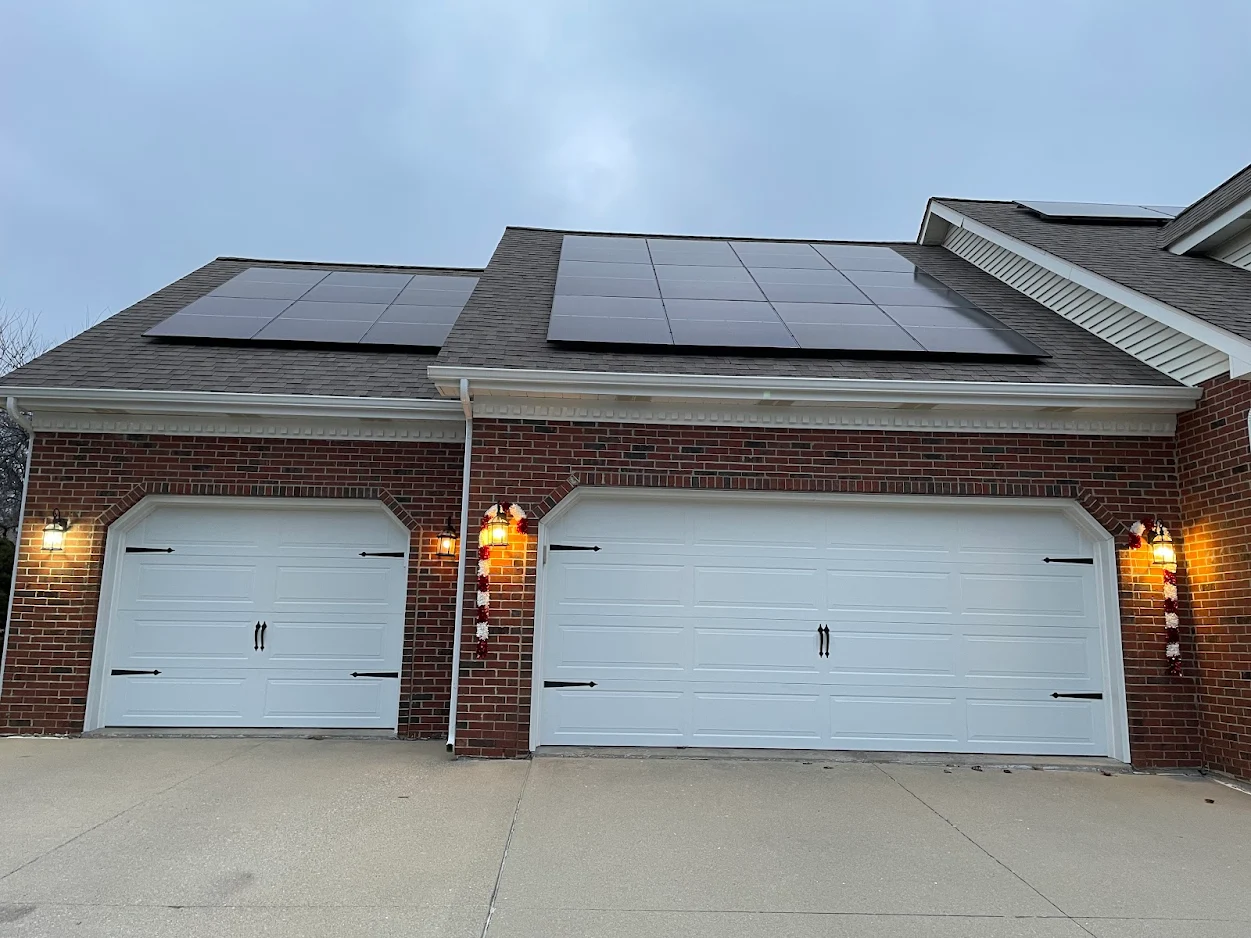
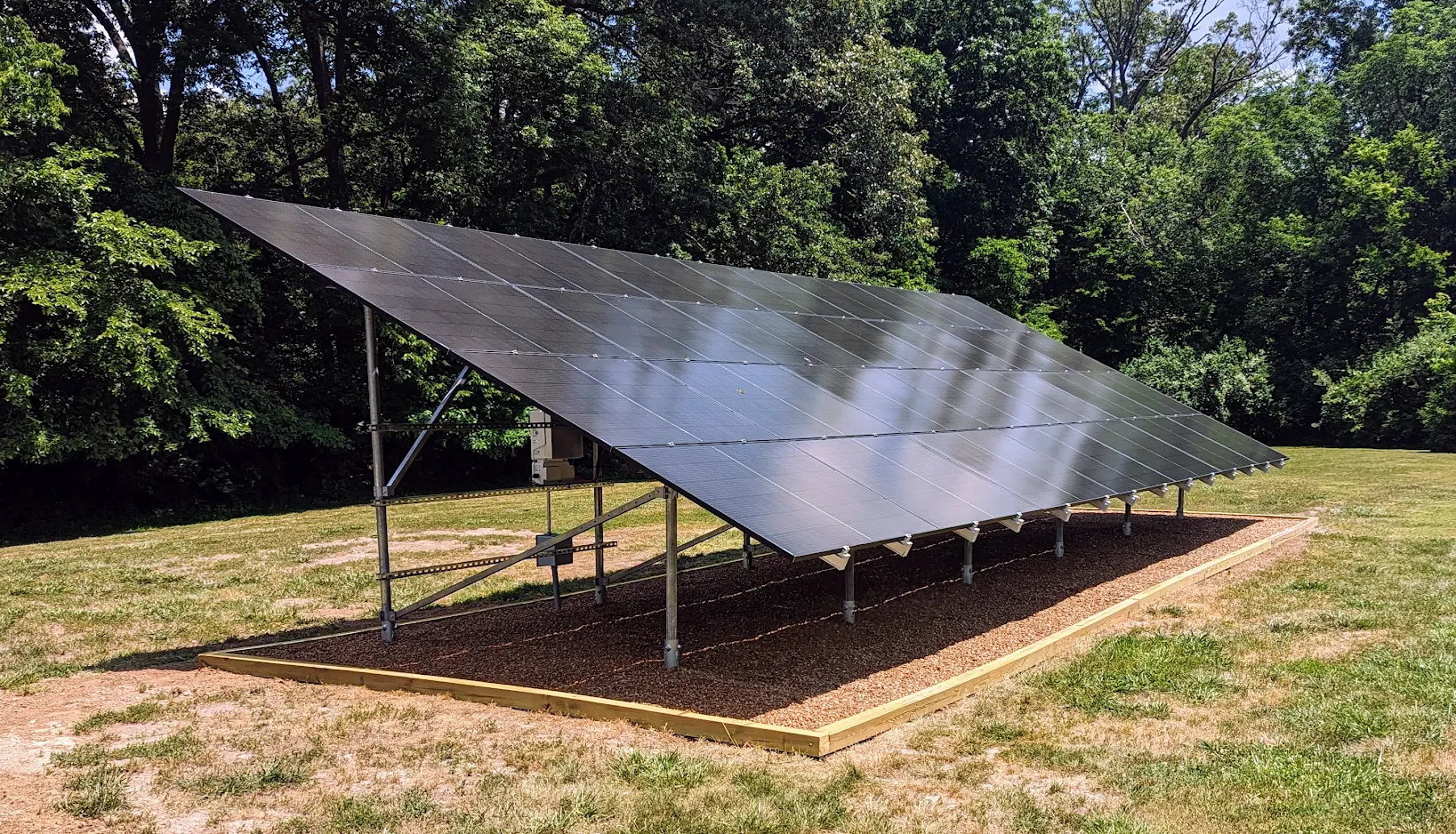
Solar Panel Removal and Reinstall for a New Roof in Illinois: Est. $2,800 to $6,000 and 3 Rules to Know
Removing and reinstalling a home solar system for a roof replacement in Illinois runs an estimated $2,800 to $6,000, about $225 to $300 per panel, and the system is usually down for about a week. Three rules shape the job. Illinois requires companies that install solar to be certified by the Illinois Commerce Commission, so the electrical reconnection belongs with a certified installer, not the roofing crew. A system in Illinois Shines has to go back on the same property. And if you lease, the leasing company owns the equipment, so get its approval before anyone touches a panel.
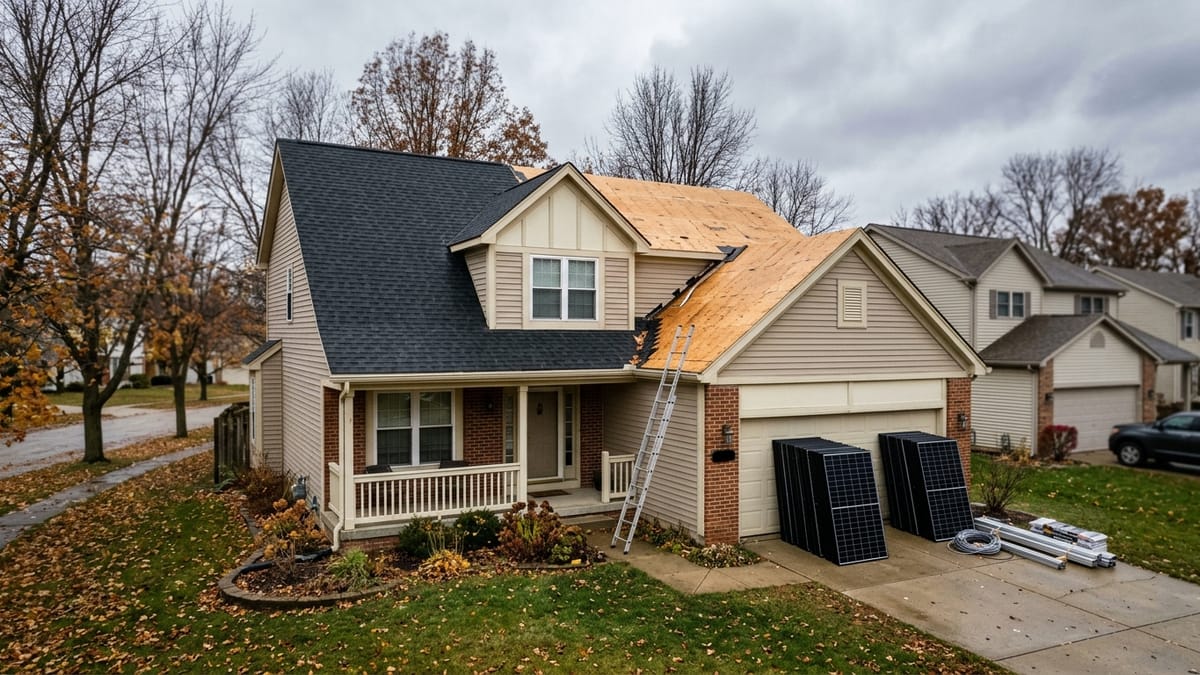
I get this call most often after a hailstorm. The roof is covered, the adjuster has been out, and nobody has said a word about the array sitting on top of the damaged shingles. Here's how I'd handle it.
The key numbers
| What | Figure | Source |
|---|---|---|
| Remove and reinstall, typical home system | Est. $2,800 to $6,000 (about $225 to $300 per panel) | Industry estimates, 2026; your quote will vary |
| Time the system is down | About a week (1 to 2 days off, 2 to 3 days back on, roof work between) | Industry estimates |
| Who should reconnect it | An installer certified by the Illinois Commerce Commission (its rule covers all entities that install, except self-installers) | ICC, 83 Ill. Adm. Code 468 |
| Illinois Shines location rule | Systems "must remain at the approved location" for the contract and "may not be relocated" | Illinois Shines Program Guidebook, 2026-27 |
| Collateral draw for missed credits | Only when the vendor's shortfall reaches $5,000, measured on a three-year average | Same Guidebook |
| One week of lost output, 7.5 kW system | Est. 107 kWh in December, 192 kWh in July (Belleville area) | Our estimates from NREL solar resource data |
| Price to Compare, Oct. 1, 2026 to May 31, 2027 | Ameren Illinois 10.441¢/kWh on the first 800 kWh; ComEd 10.103¢/kWh (supply only) | Plug In Illinois |
What the job costs, and what moves the number
The per-panel math is simple. At an estimated $225 to $300 a panel, a 15-panel system lands near $3,400 to $4,500 and a 20-panel system near $4,500 to $6,000. Smaller arrays start lower. The jobs we coordinate typically come in between $3,000 and $5,000 for the panel work. The roof is its own bill.
Four things push a quote toward the top of the range:
- Pitch and height. A steep two-story roof needs more safety gear and more hours.
- New mounts. The old attachment points come off with the old shingles. Good crews set new flashed mounts on the new roof instead of reusing tired hardware.
- A battery or older electronics. More equipment to shut down, label, and test.
- Storage. Twenty panels have to sit somewhere safe for a week.
My opinion: the cheapest quote is rarely the one that includes new flashing. Ask. A reinstall is a second installation, and the second set of holes deserves the same care as the first. I covered what bad mounts do in do solar panels cause roof leaks.
Who's allowed to touch it
Two trades share this job, and each has its own state rule.
A roofer can tear off and replace your roof. Roofing is licensed under the state's Roofing Industry Licensing Act. But putting a solar system back into service is electrical work tied to the grid, and the Illinois Commerce Commission certifies the companies that do that work. The ICC's rule reads: "all entities that install distributed generation facilities shall be certified by the Commission." It defines install as completing "the electrical wiring and connections necessary to interconnect the distributed generation facility with the electric utility's distribution system."
The rule exempts self-installers, meaning an individual who installs a system on his or her own premises without anyone's help. A roofing crew you hire isn't one.
The rule doesn't mention reinstalls by name. My read: putting a system back into service means redoing those same connections, so the solar half belongs with a certified installer.
Before you sign, ask which company is doing the solar half and whether it's on the ICC's certified Distributed Generation Installer list. Then ask one more question in writing: will the same equipment go back in the same layout? If the answer is no, because an inverter is being swapped or panels are being added, ask the installer to confirm with Ameren or ComEd whether the utility needs anything before the system is turned back on.
Your town may want paperwork too. The re-roof usually needs its own building permit, and some building departments want an electrical permit for the reinstall. Our Illinois solar permit post shows how much that varies from city to city.
What a week on the ground costs you
Less than most people fear, and a lot less in winter.
Here's the estimated output a 7.5 kW system gives up in one week, using the monthly production numbers from our fall and winter production curve. The dollar column is supply only, at the Price to Compare for that season. Delivery charges add to it.
| One week down | Belleville area (Ameren Illinois), est. | Chicago area (ComEd), est. |
|---|---|---|
| In December | ~107 kWh, about $11 of supply at 10.441¢ | ~83 kWh, about $8 of supply at 10.103¢ |
| In July | ~192 kWh, about $22 of supply at the summer 2026 price of 11.326¢ | ~181 kWh, about $19 of supply at the summer 2026 price of 10.399¢ |
The winter prices run October 1, 2026 through May 31, 2027. The summer prices are the ones that ran June 1 through September 30, 2026, used here as a stand-in because next summer's haven't posted.
Two takeaways. A re-roof in December costs you roughly half the solar output of the same job in July. And one week is small money next to a job that stalls. Three weeks in July is an estimated 577 kWh downstate. The delay is what costs you, so get the reinstall date in writing before the panels come off.
Your Illinois Shines contract survives a short gap
People worry that pulling panels breaks their REC contract. A week won't.
Illinois Shines counts one renewable energy credit per 1,000 kWh. A week of downtime on that 7.5 kW system is an estimated 0.1 to 0.2 credits. The program's Guidebook says the annual evaluation "compares a three-year average of REC values" against the delivery schedule, and that the calculations are "performed on a portfolio basis" across all the systems in the vendor's contract. Collateral gets drawn only when the shortfall is $5,000 or more. One short gap on one roof doesn't move that.
Two rules do apply to you:
- Same location. The Guidebook says systems "must remain at the approved location for the duration of the 15-year or 20-year contract, as applicable, and may not be relocated." Putting the array back on the same house is fine. Moving it to a different property is not something the contract allows.
- Tell your Approved Vendor. The company that holds your REC contract is on the hook for deliveries. It should hear about planned downtime from you, before the fact.
If you want the longer version of how those credits are tracked, it's in how long solar panels last in Illinois and on our Illinois Shines page.
If a storm claim is paying for the roof
Ask your adjuster one question in writing: is the labor to detach and reset the solar array included in the claim? Get it listed as its own line so nobody argues about it later. Whether it's covered depends on your policy.
Then check how the roof itself is valued. The Illinois Department of Insurance's Post-Disaster Claims Guide works an example where a $15,000 roof with a $1,000 deductible pays $14,000 under replacement cost coverage and $4,000 under actual cash value. That gap matters more than the panel labor. I walked through it in does homeowners insurance cover solar panels in Illinois.
I'm not an insurance agent. Your policy and your adjuster govern.
If you lease, call the owner first
On a lease, the equipment on your roof belongs to the leasing company. Don't hire your own crew to pull it without the company's written approval. Call the company, tell them a roof replacement is coming, and ask three things: who does the removal, what it costs, and how long the scheduling takes.
Illinois Shines requires a lease to disclose any removal fee that applies when the contract ends early. I didn't find a requirement in the program's contract rules to spell out a fee for a temporary removal during roof work, so that number may not be in your paperwork at all. Get it in an email.
The upside of leasing shows up here too. The state's June 2026 sample lease disclosure form shows project repairs as "Included - provided by Lessor for 20 years." That's a sample, so check the same line on your own form. Either way, the owner has every reason to get its system back up and producing. Our lease vs. buy breakdown covers the rest of that paperwork.
The order I'd do it in
- Get the roof assessed by someone who works on roofs for a living, and get the insurance question answered if there's storm damage.
- Call the system owner or your Approved Vendor. On a lease, that's the leasing company. If you own, it's the company that handles your REC contract.
- Get the solar quote in writing, with new flashed mounts, storage, testing, and a reinstall date.
- Confirm the ICC certification of whoever is reconnecting the system.
- Take photos of the array, the inverter screen, and your monitoring app before shutdown, so you can compare production after.
- Check production for two weeks after the system is back on. If the numbers look low, who fixes your solar panels covers the next call.
We handle panel removal, the roof replacement, and the reinstall as one coordinated project, which means one schedule and one phone number. Details are on our roofing page.
If you don't have solar yet
Then you get to skip all of this. If your roof has under about 10 years left, replace it first and put panels on the new surface once. I laid out that math in do you need a new roof before solar. A storm claim that's already paying for a roof is the best time to look at solar, whether that's a $0-down lease with a predictable rate as low as $0.10/kWh, a cash purchase, or Illinois Solar for All if your household qualifies. You can get a first look at your roof with check my roof.
Sources
- Distributed Generation Installer: certification rule, definitions and certified installer list (Illinois Commerce Commission, 83 Ill. Adm. Code 468; page read Nov. 19, 2026)
- Illinois Shines 2026-27 Program Guidebook (Illinois Power Agency, released April 17, 2026)
- Illinois Shines Distributed Generation Contract Requirements (April 17, 2026)
- Illinois Shines Solar Project Lease Disclosure Form, sample (June 1, 2026)
- Illinois Department of Insurance, Post-Disaster Claims Guide (read Nov. 19, 2026)
- Ameren Illinois Price to Compare, Oct. 1, 2026 to May 31, 2027 (Plug In Illinois)
- ComEd Price to Compare, Oct. 1, 2026 to May 31, 2027 (Plug In Illinois)
- Roofing contractor licensing under the Roofing Industry Licensing Act (Illinois Department of Financial and Professional Regulation; page read Nov. 19, 2026)
Need a new roof under panels you already have, or want a second look at a removal quote? Call me at (618) 217-2001 or reach out here. Every dollar figure above is an estimate until someone has seen your roof.