Illinois EV Rebate 2026: $4,000 or $2,000, and Your Application Has to Be Postmarked by December 31
guide13 min read

Illinois EV Rebate 2026: $4,000 or $2,000, and Your Application Has to Be Postmarked by December 31

Ryan Cook•

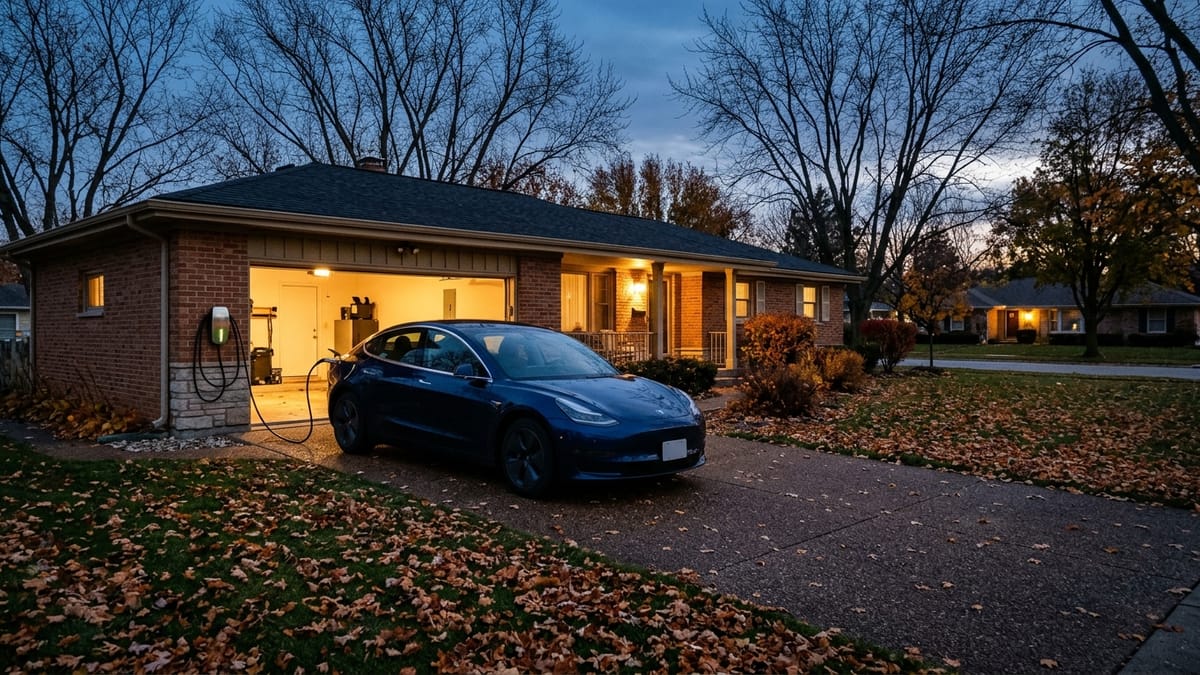
Illinois will send you a check for $4,000 if you're a low-income applicant, or $2,000 if you're not, when you buy a new or used all-electric vehicle from an Illinois dealer. The current application cycle opened August 1, 2026, and your application has to be postmarked by December 31, 2026, and within 180 days of the purchase date. It's a paper application, sent by mail, to the Illinois EPA in Springfield.

With the federal EV credits gone, this is the main money left on the car itself in Illinois. And the state pays in a specific order that most write-ups skip. Here's what the Illinois EPA's own documents say, including how much of this year's money has been claimed.

Key facts: Illinois EV rebate, 2026 cycle

Item Figure Source date
Rebate, low-income applicant $4,000, new or used all-electric vehicle Application instructions, rev. July 2026
Rebate, other eligible applicants $2,000 Same
Electric motorcycle $1,500 Same
Application cycle August 1 – December 31, 2026 (postmark) Illinois EPA program page
Time limit after purchase Postmarked within 180 days of the purchase date Same
Vehicle price cap $80,000 selling price, before taxes and fees Same
Income cap to apply 500% of federal poverty line: $79,800 (1 person), $108,200 (2), $136,600 (3), $165,000 (4) Application instructions, rev. July 2026
Low-income line 80% of county median income, HUD 2026 limits Same
Money appropriated $14 million for the fiscal year ending June 30, 2027 Illinois EPA FAQ
Applications so far Low income: 753 received, 669 awarded. Others: 621 received, 0 awarded Week ending Nov. 6, 2026
Federal EV credits Not available for vehicles acquired after Sept. 30, 2025 IRS
Federal home charger credit Ended for equipment placed in service after June 30, 2026 IRS

Who qualifies, and what knocks people out

The rules are short, and they're strict. From the Illinois EPA's program page:

  • All-electric only. Plug-in hybrids and range-extended cars with a gas engine don't qualify.
  • Bought, not leased. Financing is fine. A lease isn't.
  • From an Illinois-licensed dealer, delivered in Illinois. An out-of-state dealer or an out-of-state delivery disqualifies the car. A private-party sale isn't a dealer sale.
  • $80,000 or less, not counting taxes, registration, doc fees, and add-ons that are itemized separately on the bill of sale. Trade-in value and manufacturer rebates don't lower the price for this test.
  • New or used. A used EV qualifies as long as that specific vehicle hasn't already received an Illinois rebate. The state tracks this by VIN and posts a lookup table, so check the VIN before you sign on a used car.
  • One rebate per person every 10 years.
  • Keep it 12 months. You have to keep the car, and keep it registered in Illinois, for 12 straight months after purchase, or pay the rebate back. You also have to live in Illinois both when you buy and when the rebate is issued.

The used-car VIN rule is the one I'd watch. Used EVs are where the prices are friendliest right now, and a car that already drew a rebate for its first owner is worth $2,000 to $4,000 less to you than the same model that didn't.

The two income lines

There's a ceiling to apply at all, and a lower line for the bigger check.

The ceiling. Your household's combined gross income can't be more than 500% of the federal poverty line. The application lists $79,800 for a one-person household, $108,200 for two, $136,600 for three, $165,000 for four, $193,400 for five, and $221,800 for six. Over that, the Illinois EPA says it can't process your application.

The low-income line. For the $4,000 rebate, your household has to be at or below 80% of the median income for your county, using HUD's 2026 income limits. I pulled the "Low (80%)" figures from HUD's fiscal 2026 data file for the counties where most of our customers live:

County (HUD area) 1 person 2 people 3 people 4 people
Cook, DuPage, Kane, Lake, Will (Chicago area) $68,050 $77,800 $87,500 $97,200
McLean (Bloomington) $65,550 $74,900 $84,250 $93,600
Sangamon (Springfield) $64,350 $73,550 $82,750 $91,900
St. Clair, Madison (Metro East) $63,600 $72,650 $81,750 $90,800
Champaign $62,100 $71,000 $79,850 $88,700
Peoria $59,450 $67,950 $76,450 $84,900
Macon (Decatur) $53,300 $60,900 $68,500 $76,100
Williamson $53,200 $60,800 $68,400 $76,000
Winnebago (Rockford) $50,250 $57,400 $64,600 $71,750

Confirm your own county in HUD's lookup tool before you certify. The state counts the gross income of the applicant plus every related adult living in the home, including Social Security, pensions, and other income that isn't taxed. Since 2025 the Illinois EPA can also ask a recipient for tax returns after the fact and take back all or part of the rebate if the certification doesn't hold.

A lot of working households land under these lines without thinking of themselves as low income. A family of four in Naperville or Joliet earning $95,000 is under the line for the $4,000. That's worth five minutes with the table.

Who gets paid first, and how much money is left

The order matters more than anything else on this page. The Illinois EPA's FAQ says rebates are "first issued to applicants that qualify as low-income and then in postmark date order to other applicants." Non-low-income applicants "may have to wait until after the close of the rebate cycle" before theirs is processed.

You can see it in the state's running tally. For the week ending November 6, 2026:

  • Low-income: 753 applications received, 669 rebates awarded.
  • Everyone else: 621 applications received, 0 awarded.

Nothing is wrong with those 621 applications. They're in line behind the low-income group, in postmark order.

Is there enough money? The General Assembly appropriated $14 million for this fiscal year. If every application received so far were approved at the full amount, that's about $3.0 million for the low-income group and about $1.2 million for the rest, roughly $4.3 million in total, a little under a third of the appropriation with about seven weeks left in the cycle. That's my arithmetic, not a state figure, and it comes with a caveat the state repeats everywhere: the real limit is whatever is in the Electric Vehicle Rebate Fund, "not to exceed $14 million."

History says don't get comfortable. The application instructions note that "in previous fiscal years, funds were insufficient to cover all applications" from non-low-income applicants. In fiscal 2025 the state's table shows 3,711 non-low-income applications received and 2,572 rebates awarded. Last fiscal year, after the 2025 rule changes, it was 1,607 received and 1,343 awarded. And applications that go unpaid when a cycle ends don't roll into the next one.

My take: if you're in the $2,000 group, your postmark date is your place in line. Mail it the week you buy, not the week of Christmas.

How to apply without getting denied

Applications go by mail only. No email, fax, or drop-off. The Illinois EPA denies applications that are illegible, incomplete, early, or late, and an incomplete one that you fix and resend counts as a new application with a new postmark.

You need the three-page form plus four things:

  1. A copy of the signed bill of sale or purchase agreement from the Illinois dealer. A purchase summary isn't enough.
  2. Proof the dealer has been paid in full, such as a $0 balance on the invoice or your loan documents.
  3. A copy of the Illinois registration or the dealer's temporary permit. The title doesn't count.
  4. An IRS Form W-9 (or W-8) with your name, mailing address, and Social Security number.

The dealer has to fill in and sign Section 6, so bring the form with you at delivery. Chasing a signature in late December is how people miss the date.

Two practical points from the state's FAQ. The agency won't confirm it received your application, so send it certified mail if you want proof. And the Postal Service doesn't promise a same-day postmark on mail dropped in a box, so the state suggests walking it to the counter and asking the clerk to hand-postmark it.

The 180-day math. A car bought on or after July 4, 2026 is still inside 180 days on December 31. Buy today and you have until December 31 for this cycle. The state says future cycles will open "as funds allow," and last winter it extended the cycle from January 31 to May 31, 2026, but nothing guarantees a repeat.

The federal credits are gone

The IRS says the new clean vehicle credit, worth up to $7,500, and the used clean vehicle credit, up to $4,000, aren't available for vehicles acquired after September 30, 2025. The home charger credit, 30% of the cost up to $1,000 per item, covered equipment placed in service through June 30, 2026. If your charger went in before that date, it still goes on your 2026 return.

Plenty of pages haven't been updated. When I checked on November 14, Ameren Illinois' own EV savings page still said home charging equipment "may receive up to $1,000 federal tax credit." If a dealer or installer quotes you a federal credit on a 2026 purchase, ask for the IRS page that backs it up.

What ComEd and Ameren add

The state doesn't help with a home charger. Its FAQ says there are "currently no state grants or rebates" for charging at individual homes. That part falls to the utilities.

ComEd runs an EV Charger and Installation Rebate. The string attached: ComEd says you "must be enrolled in a flexible rate option, such as Hourly Pricing, for a minimum of three years," and that enrollment can take one to three months. Rebate amounts and funding windows change, so check ComEd's rebate page for what's open before you schedule an electrician. Whether a flexible rate suits your house is its own question, and I worked through it in ComEd time-of-day pricing: worth it?

Ameren Illinois doesn't have a charger rebate on that scale. Its ChargeSmart program pays a bill credit of 2¢ per kWh in summer and 1¢ from October through May for power used between 11 p.m. and 7 a.m., plus $4 a month for the first 12 months. The catch is a $0.65 per kWh charge on your single highest hour of use between 11 a.m. and 7 p.m. each billing period. Set the car's charge timer and leave it alone.

If your panel is full, the charger circuit can turn into a bigger electrical job. What an electrical panel upgrade costs covers that.

What the car does to your electric bill

A $2,000 or $4,000 check is one-time. The charging bill is every month. For a typical EV driven 1,000 miles a month, my estimate for this winter is about $49 a month on ComEd and $32 to $45 on Ameren, before taxes and riders. The full math is in what it costs to charge an EV at home in Illinois.

That's roughly 3,600 kWh a year added to your house, and it's the reason EV owners call me. It takes an estimated 2.5 to 2.7 kW of extra solar to cover a car in Illinois. With a $0-down lease, the power your panels produce is billed at a predictable rate as low as $0.10 per kWh, the full 25-year rate schedule is set in your contract before you sign, and a battery is included. If you'd rather own the system, the $300 per kW utility solar rebate and the home battery rebate are the solar-side versions of this check.

If you've got an EV in the driveway or one on order, send me a recent ComEd or Ameren bill and I'll show you what the car adds and what solar sized for it would look like. Every number is an estimate until it's your bill. Call (618) 217-2001, try the savings calculator, or reach out here.

Sources

Frequently Asked Questions

The Illinois EV rebate is $4,000 for a low-income applicant and $2,000 for everyone else who qualifies, for a new or used all-electric vehicle. An electric motorcycle gets $1,500. Those are the amounts in the Illinois EPA's application instructions for the cycle that opened August 1, 2026 and closes December 31, 2026. The vehicle's selling price can't be more than $80,000, it has to come from a dealer licensed by the Illinois Secretary of State, and it has to be bought, not leased. Plug-in hybrids don't count. The rebate comes as a paper check from the Illinois Comptroller, not a tax credit, so you don't need a tax bill to use it. Low income here means household income at or below 80% of your county's median as set by HUD, which works out to $97,200 for a family of four in the Chicago area and $84,900 in Peoria County. Rebates depend on money being left in the state's fund.
There are two income lines. To apply at all, your household's combined gross income can't be more than 500% of the federal poverty line, which the Illinois EPA's 2026 application lists as $79,800 for one person, $108,200 for two, $136,600 for three, and $165,000 for four. To get the larger $4,000 rebate, your household has to be at or below 80% of your county's median income under HUD's 2026 limits. For a four-person household that's $97,200 in Cook, DuPage, Kane, Lake, and Will counties, $91,900 in Sangamon County, $90,800 in St. Clair and Madison counties, $84,900 in Peoria County, and $71,750 in Winnebago County. The state counts the gross income of the applicant and every related adult living in the home, taxable or not. It can also ask for tax returns later and take the rebate back if the numbers don't hold up, so check your county's figure before you check the box.
Yes, as of mid-November 2026 the Illinois EPA is still taking applications, and the cycle stays open through December 31, 2026. The agency says it was appropriated $14 million for the fiscal year that ends June 30, 2027. Its own tally for the week ending November 6 shows 753 low-income applications received with 669 rebates awarded, and 621 other applications received with none awarded yet. By my math that's roughly $4.3 million in requests if every one were approved, well under the $14 million ceiling. Two cautions. The actual money depends on what's in the Electric Vehicle Rebate Fund, which can be less than the appropriation. And low-income applicants are paid first, so everyone else is paid in postmark order afterward and may wait until the cycle closes. The state says funds have run short for non-low-income applicants in earlier years, and unpaid applications don't roll into the next cycle. Earlier is safer.
No, not for a car or charger you buy today. The IRS says the new clean vehicle credit, which was worth up to $7,500, and the used clean vehicle credit, up to $4,000, aren't available for vehicles acquired after September 30, 2025. The home charger credit, 30% of the cost up to $1,000, ended for equipment placed in service after June 30, 2026. If your charger was installed on or before that date, you can still claim it on your 2026 return. Some utility and dealer pages haven't caught up, so check the date on anything that still promises a federal credit. That leaves the state rebate as the main incentive on the car itself in Illinois, plus utility programs for charging. ComEd runs a home charger and installation rebate with its own rules, and Ameren Illinois pays small bill credits for overnight charging through ChargeSmart. Illinois has no state rebate for a home charger.

More Illinois Solar Guides

Solar Panel Removal and Reinstall for a New Roof in Illinois: Est. $2,800 to $6,000 and 3 Rules to KnowTaking solar panels off for a new roof in Illinois runs an estimated $2,800 to $6,000. Who should reconnect them, what downtime costs, and REC contract rules.Illinois' First Statewide Power Plan Models Electric Rates Near 23¢ by 2030 and Up to 40¢ by 2047Illinois' first Integrated Resource Plan, issued Nov. 16, 2026, models home electric rates near 23¢/kWh by 2030 and 33¢ to 40¢ by 2047. What's behind it.Solar Panels on a Flat Roof in Illinois: What Low Tilt Costs, and Chicago's Rule for Ballasted RacksYes, solar works on a flat roof. A 10-degree tilt makes about 7.5% less than 30 degrees in Chicago, and ballast on roofs over 15 feet loses the express permit.Do You Need a Permit for Solar Panels in Illinois? What Chicago, Aurora, Rockford and Peoria Require in 2026Yes. Illinois cities require building and electrical permits for home solar, and your utility won't turn the system on without the inspector's sign-off.How to Compare Solar Quotes in Illinois: 8 Lines on the State Disclosure Form That Do the Work for YouEvery Illinois Shines quote comes with the same state disclosure form. Here are the 8 lines to compare, the lease math, and the old tax-credit claim to ignore.Solar Panels on a Metal Roof in Illinois: No Holes on Standing Seam, a Roof That Outlasts the Lease, and the Snow Plan to Ask ForYes, solar works on a metal roof. Standing seam takes clamps with no holes; corrugated needs sealed mounts. The Illinois lease, warranty and snow math.Can Solar Panels Run a Heat Pump in Illinois? Only With Summer Credits, and Here's the MathSolar can cover an Illinois heat pump over a year, not in January. Month-by-month Chicago math, how summer credits carry winter, and the ComEd rate to ask for.Do Solar Panels Cause Roof Leaks? The Illinois Warranty Line to Check Before You SignSolar panels don't leak. Bad mounts do. The roof-leak warranty line on your Illinois Shines disclosure form, ice dams, and what to do in the first 48 hours.Do You Need a Panel Upgrade for Solar in Illinois? The 40-Amp Rule, the $4,000–$6,000 Service Upgrade, and Cheaper FixesMost Illinois homes with 200-amp panels don't need an upgrade for solar. 100-amp homes often do. The 120% rule math, real costs, and the cheaper fixes.How to Lower Your Electric Bill This Winter in Illinois: 7 Moves Ranked by Real 2026 DollarsWinter savings on an Illinois electric bill start with your rate, not your light bulbs. Seven moves for Ameren and ComEd homes, ranked by estimated dollars.Which Way Should Solar Panels Face in Illinois? East and West Roofs Make About 80% of South, North About 55%South is best, but an Illinois east or west roof still makes about 80% as much power and southwest about 94%. PVWatts estimates from Chicago to Belleville.Solar on an Illinois Co-op or City Utility in 2026: Your 25 kW Right, the Insurance Rule That Ended, and the Lease CatchIf a co-op or city utility powers your Illinois home, a 2026 law guarantees solar up to 25 kW and ends the insurance demand. Credits and lease access vary.Illinois Heat Pump Rebates 2026: ComEd Takes Up to $2,000 Off, Ameren $900, and the $8,000 State Rebate Isn't Open YetComEd's 2026 heat pump discount runs up to $900–$2,000 by size and efficiency. Ameren's is $900. The 25C tax credit is gone, and Illinois HEAR still isn't open.Illinois SREC Prices 2026-27: $70–$81 per REC, Plus a $20 Owner AdderIllinois pays $70.37 (Ameren) or $80.77 (ComEd) per solar REC in 2026-27, plus $20 if you own the system. Here's what an 8 kW system earns and when it's paid.Solar Panel Payback Period in Illinois: 6½–9 Years in 2026An 8 kW solar system bought for cash in Illinois pays back in about 6½ to 9 years in 2026, counting Illinois Shines, the $300/kW rebate and today's rates.Behind on Your Ameren Illinois Bill? The Catch-Up Payment Drops From 25% to 10% on December 1Ameren Illinois wants 25% of a past-due balance to start a payment plan until Nov 30, then 10% from Dec 1. Plus four Ameren programs that can cut what you owe.ComEd's $3 Billion Data Center Hookup Bill: Who Pays the $2 Billion Gap?Testimony in ICC Docket 26-0364 says ComEd's data center hookups need $3B+ in upgrades, with deposits covering under 25%. What it means for your bill.Why ComEd Bills Go Up in November 2026: The New 3.758¢ ChargeComEd's Purchased Electricity Adjustment flips from a 1.551¢ credit to a 3.758¢ charge for November 2026. What it adds on 750 kWh, and who doesn't pay it.FERC Rejected PJM's Data Center Fix. Can Illinois's POWER Act Protect Your Bill?FERC rejected most of PJM's data center plan on Oct 9, 2026, leaving it to states. What Illinois's POWER Act would change for ComEd and Ameren bills, and when.Illinois Solar Tax Credit 2026: There Isn't One. Here's What Pays InsteadIllinois has no state solar tax credit in 2026, and the 30% federal credit ended for owned systems. What pays instead: a $300/kW rebate, RECs and a tax break.Illinois Solar Rebate 2026: ComEd and Ameren Pay $300 per kW. Who Gets the Check, and What You Give UpIllinois' solar rebate pays $300 per kW from ComEd or Ameren through 2029, about $1,800 on a 6 kW system. Who gets it on a lease, and what older systems lose.Nicor Gas Rate Settlement Approved: The $15 Customer Charge Starts Nov. 16, but Winter Bills Still RiseRegulators cut $139M from Nicor's rate request. On Nov. 16 the fixed charge falls to $15 and delivery rises to 34.59¢ a therm. Who pays more this winter.ComEd's Battery Rebate Changes October 19: No Hourly-Rate Rule, and Batteries Without Solar Qualify in 2027ComEd's revised rebate starts Oct. 19, 2026: the $300/kWh home battery rebate drops the hourly-rate rule, and batteries without solar qualify Jan. 1, 2027.How Long Do Solar Panels Last in Illinois? 25 to 35 Years, Still Making About 89% at Year 25Solar panels last 25 to 35 years, per the DOE. Illinois Shines assumes a 0.5% yearly loss, so year 25 still makes about 89%. What aging costs and the real risk.Is a Heat Pump Cheaper Than Propane in Illinois? Yes, by an Estimated $125 to $470 a YearIllinois propane averaged $1.83 a gallon on Oct. 5. At 2026 Ameren and ComEd rates, a heat pump heats for far less. The math, and Ameren's propane-switch help.Roof Too Shaded for Solar in Illinois? The State's 2× Tree Test and the Dollar MathToo shaded for solar? Illinois Shines' test: no tree closer than 2× the height it rises above your panels. What shade costs per year and who owns the tree.Why Is My Solar Loan Bigger Than the Cash Price? A '1.99%' Loan Can Really Cost 4.4%A solar loan's principal can run 10–30% above the cash price because of a dealer fee. The Illinois math, what a 1.99% rate really costs, and what to ask first.How Many Solar Panels Do I Need in Illinois? About 15, Town by TownThe average Illinois home needs about 15 solar panels (400 W, ~6 kW). Town-by-town PVWatts output, what your usage and roof direction change, and the math.Does Ameren or ComEd Pay for Spoiled Food After a Power Outage? What Illinois Law Actually CoversIllinois law makes Ameren and ComEd pay for spoiled food only after big 4+ hour outages, with waivers for unpreventable storms. The thresholds and claim forms.Solar Farm Lease Rates in Illinois (2026): Farm Managers Report $1,000 to $2,999 an AcreIllinois farm managers saw $1,000 to $2,999 an acre for new solar and wind leases in 2026, versus $227 to $384 cash rent. What the law protects, what to check.Cheapest Electricity in Chicago? No Year-Long Supplier Plan Beats ComEd's 10.103¢ (October 2026)On Oct. 8, 2026, none of the 28 year-long fixed plans posted for ComEd customers beat ComEd's 10.103¢ price. What's cheapest in Chicago and when to switch.Will Illinois Heating Bills Be Higher This Winter? Gas Down About 10%, Electric Heat Up About 3% (2026–27 Forecast)EIA's Oct. 6 outlook: Midwest gas-heated homes should spend about 10% less this winter and electric-heat homes about 3% more. What it means on Illinois bills.Why Is My ComEd Bill So High? 7 Things to Check First (October 2026)ComEd's price fell to 10.103¢ on Oct 1, but the nuclear credit on your bill shrank from 1.628¢ to about 0.1¢. Seven ComEd bill lines to check, in order.Why Is My Ameren Bill So High? 7 Things to Check First (October 2026)Ameren's supply price is 10.441¢ through May 2027, up 24% from last fall, and 259 of 260 town power deals cost more. Seven bill lines to check, in order.Generator or Home Battery for an Illinois Winter Outage? A 22 kW Generator Burns About $37 to $51 of Gas a DayA 22 kW standby generator burns about 57 therms a day at half load, roughly $37 to $51 on Illinois gas rates. When a battery beats it, and when it doesn't.Best Time to Go Solar in Illinois: Winter Is About 18% of Your Output. Spring Is 28%.In Illinois, Dec–Feb makes only about 18% of a year's solar output; March–May makes about 28%. Here's what waiting until spring costs at today's rates.Snow on Your Solar Panels in Illinois: Leave It There. Here's What It Actually Costs YouSnow costs Illinois solar owners less than they think: published estimates run 1% to 12% of a year's output. Why you shouldn't climb up to clear it, by region.Base Power Illinois Review (October 2026): The $95 Battery, 7.4–7.6¢ Supply, and the 3.48¢ Solar CatchBase Power's $95 battery prices ComEd supply at 7.4–7.6¢ from Oct 1. I read its Illinois contracts: a 12-year term, no aggregation, and a 3.48¢ solar credit.Ameren's Winter Electric Rate Is Up 24% From Last Year: October 2026 Prices Are 10.441¢ (Ameren) and 10.103¢ (ComEd)Ameren's price is 10.441¢/kWh from Oct 1, 2026, up 24% from last winter's 8.402¢. ComEd's is 10.103¢, up 4%. Supply cost by usage, 10-year history, next steps.Is a Heat Pump Cheaper Than Gas in Illinois? Only If You Drop the Gas Bill — the 2026 Math for Nicor, Peoples Gas and AmerenPer unit of heat, gas still beats a heat pump in every Illinois gas territory. The savings show up only when you close the gas account. 2026 math by utility.What It Costs to Charge an EV at Home in Illinois This Winter: About $49 a Month on ComEd, $32 to $45 on AmerenCharging an EV 1,000 miles a month costs an estimated $49 on ComEd and $32 to $45 on Ameren this winter, vs about $157 in gas. Rates, programs, and the math.Heat With Electricity on ComEd? One Line on Your Bill Can Halve Your Delivery Rate — and What Electric Heat Costs This WinterComEd's electric space heat class pays 3.215¢/kWh for delivery, not 6.333¢. How to check your bill, who qualifies, and what electric heat costs on Ameren.Average Electric Bill in Illinois (2026): What ComEd and Ameren Homes Really Pay, and What Moves October 1Illinois' average home used 693 kWh and paid $110 a month in 2024. At 2026 rates that usage runs an estimated $136 on ComEd and $147 on Ameren. Tables by usage.Do Solar Panels Increase Home Value in Illinois? What Zillow, Berkeley Lab and Fannie Mae Actually Say (2026)Owned solar sold for 4.1% more in Zillow's study and about $4 per watt in Berkeley Lab's. Leased panels count for $0 on a Fannie Mae appraisal. Illinois rules.Why Peoria Electric Bills Keep Rising (2026): Ameren Delivery, a 13.29¢ City Supply Deal, and the October 1 ResetPeoria pays Ameren 7.811¢/kWh for summer delivery plus supply: 11.326¢ from Ameren or 13.29¢ in the city deal through June 2027. What resets October 1.Is Ameren Power Smart Pricing Worth It in 2026? Last October Averaged 3.5¢, but One Peak Hour Can Erase the SavingsAmeren's hourly prices averaged 3.50¢ last October vs a 7.310¢ standard rate, but hourly customers pay transmission on peak-hour kW. Who wins, with real data.Naperville Solar in 2026: The City Runs Its Own Utility, the $1,750 Rebate Is Spent, and Credits Pay 4.9¢ If You OversizeNaperville isn't ComEd. The city utility charges 11.968¢/kWh plus $21.52 a month, its $1,750 solar rebate ran out June 26, 2026, and extra credits pay 4.9¢.How Big a Battery Do You Need to Run a House in Illinois? A Sizing Guide With Real 2026 NumbersThe average Illinois home uses about 23 kWh a day. How to size a home battery for one night, a full day, or whole-home backup, and what each costs after rebate.Your Ameren Illinois Bill Explained (2026): Every Line, the Real Price Per kWh, and What Resets October 1Ameren Illinois supply is 11.326¢/kWh through Sept 30, 2026, plus 7.811¢/kWh summer delivery and $14.51 in fixed charges. Every bill line, with 2027 rates.Is Homefield Energy Cheaper Than Ameren? 245 of 260 Illinois Town Power Deals Cost More Than the Utility RateAs of Sept 15, 2026, 245 of 260 priced town aggregation deals in Ameren Illinois territory cost more than Ameren's 11.326¢ rate. Find your town, then opt out.ComEd's Delivery Charge Is 6.333¢/kWh Now — The Full 2026 Breakdown, and the Part Solar Can't TouchComEd's residential delivery charge moved to 6.333¢/kWh plus $19.37 in fixed monthly charges with April 2026 bills. Every line item, a worked example, and what solar offsets.Yes, There's a Solar Surcharge on Your Illinois Electric Bill — Here's Who Gets the MoneyA commentary running in Illinois papers says you fund solar farms through bill surcharges. It's true — and homeowners can get on the receiving side of the fund.Did Your Electric Rate Really Go Up Again? Every ComEd and Ameren Increase Since 2021, DatedEvery ComEd and Ameren Illinois rate increase since 2021, with dates, docket numbers and figures, plus the changes already scheduled for late 2026 and 2027.Illinois Bought 600 MW of Grid Batteries (It Wanted 1,038) — When Does Your Bill Feel It?Illinois' first CRGA battery buy closed Sept 1: 600 MW awarded of a 1,038 MW target, five projects, four in Ameren country. The honest timeline for your bill.Your Illinois Solar Output Falls About 45% by December — Here's the Month-by-Month CurveIllinois solar output falls roughly 45% from August to December. Here's the real month-by-month curve for Ameren and ComEd homes — and how to tell normal from broken.A Squirrel Under Your Solar Panels Can Chew Through a Wire in a Weekend — and Homeowners Insurance Usually Won't PaySquirrels and birds nest in the gap under Illinois solar panels. Standard homeowners policies exclude the damage. What a critter guard costs and who pays.Bad Roof for Solar in Illinois? A Ground Mount Works, Even on a $0-Down LeaseRoof won't work for solar? In Illinois a ground mount usually will, and $0-down leases cover it with a size minimum and a per-watt adder. 2026 costs inside.Told Your Roof or Electrical Panel Rules Out Solar? Illinois Solar for All Paid for 79 Roof Replacements Last YearThe state's new report: Illinois Solar for All paid for 79 full roof replacements and 73 electrical panel upgrades last year, up to $22,000 per home. The 2026–27 single-family window ran Sept 14–25.July Was the Hottest Month in U.S. History. Your August Ameren or ComEd Bill Is Where It Lands.NOAA confirmed July 2026 as the hottest month ever recorded in the U.S., and ComEd says it's on your August bill. Here's the math for an Illinois home and what changes Oct 1.Buying an Illinois House With Solar? Odds Are the Seller Doesn't Own the PanelsBuying an Illinois home with solar panels? Who owns the system decides what you inherit — a lien on title, a lease credit check, or grandfathered net metering.When Can Ameren and ComEd Not Disconnect You in Illinois? The Dec. 1–March 31 RulesIllinois limits Ameren and ComEd shut-offs from Dec. 1 to March 31 and on 32°F or 95°F forecast days, but there's no blanket ban. Who's covered and what to do.Your Illinois Solar Credits Can Expire in October — Check Which Date Your Installer PickedIllinois solar owners on pre-2025 net metering lose unused kWh credits every April or October. Here's how to find out which date is on your account before it hits.Illinois Shines Promised to Fix Its Solar Backlog by Mid-August. It Just Moved That to October.Illinois Shines said Part I reviews would be back to two weeks by mid-August. Its August 6 update moved that to mid-October. As of August 28, Part I is still a 10-week wait.Budget Billing Didn't Save You From the June 1 Rate Hike — Ameren Settles Up in May or NovemberAmeren and ComEd budget billing spread your payments — they don't lower the rate. Here's when the June 1 increase actually shows up on your Illinois bill.Illinois Price to Compare Now: Ameren 10.441¢, ComEd 10.103¢ (Through May 2027)Illinois Price to Compare through May 31, 2027: Ameren 10.441¢ on the first 800 kWh, ComEd 10.103¢. What it covers, what it leaves out and how to use it.Denied for Solar in Illinois? Federal Law Says They Owe You a Real ReasonNo published credit score gets you solar in Illinois — but if you're denied, federal law entitles you to the specific reason, a free credit report, and a dispute right.Illinois Homes Lost $2.3 Billion to Electric Supplier Switching — Check One Line on Your BillState data shows Illinois families paid $2.3 billion extra to alternative electric suppliers since 2015 — Ameren customers hit hardest. Here's the bill line to check.How to Get Out of a Solar Contract or Lease in Illinois: 4 ExitsIllinois gives you at least three calendar days to rescind a solar lease and get your deposit back. After that, three more exits are in writing. Here's each.Solar Installed but Still Dark? Illinois Gives Your Utility 15 Business DaysYour panels are up but the bill hasn't moved. Illinois Part 466 and Ameren's own guide set real deadlines — 15 business days for a Level 1 witness test.Solar Won't Zero Out Your Illinois Electric Bill — the State's Own Example Shows WhySolar offsets the supply half of your Illinois bill, not the delivery half. The state's own net metering example shows which kilowatt-hours you still pay for.Does Illinois Homeowners Insurance Cover Solar Panels? The $14,000 vs $4,000 Roof ClauseIllinois insurers are moving roofs to actual cash value. The state's own example pays $14,000 on one roof and $4,000 on another. Here's what that does to solar.Illinois Will Pay About $4,050 Toward a Home Battery — Here's What ComEd and Ameren Want in ReturnComEd and Ameren both pay $300 per kWh toward home battery storage in Illinois. The rebate is real — but each utility attaches conditions almost nobody mentions.Your Illinois HOA Can't Ban Solar — and It Has 30 Days to Answer YouIllinois law bars an HOA from prohibiting solar panels, caps design rules at a 10% production loss, and gives boards 30 days to process your application.ComEd Now Charges Four Different Prices a Day — Who Wins on Time-of-Day PricingComEd's Time-of-Day pricing splits the day into four price windows, cheapest overnight. Who actually saves, who pays more, and how solar fits in.Illinois Will Help Churches, Food Pantries, and Libraries Go Solar — Applications Open August 3Illinois Solar for All opens its Non-Profit and Public Facilities window August 3, 2026. Who qualifies, what it costs, and why the date matters.Your Illinois Electric Rate Drops October 1 — Why Your Bill Won't Drop as MuchIllinois summer supply rates expire September 30. Ameren's fell 31% last October — but supply is only half your bill. Here's what actually drops.Who Fixes Your Solar Panels in Illinois When Something Breaks?Who actually fixes solar panels in Illinois? Maintenance costs, what a lease covers, and what to do if your installer stopped answering the phone.Will Your Illinois Electric Bill Go Back Down? PJM Just Locked In Prices Through 2029PJM's July 2026 capacity auction cleared at $325/MW-day for 2028-29 — the third straight auction at the price cap. Why your Illinois bill isn't dropping soon.Illinois Logged 832 Solar Complaints in 2025 and Has Paid $473,000 Back to Burned Customers — What Actually Went Wrong, and Who Gets PaidIllinois logged 832 solar complaints in 2025, and its restitution fund has paid 170 customers nearly $473,000. Here's what goes wrong and who gets paid.Do You Need a New Roof Before Solar in Illinois? (2026 Roof-Age Rules)Old roof, new panels? Pulling solar off for a roof job runs an estimated $2,800-$6,000. The Illinois roof-age rule, and how to sequence both jobs to pay once.Can You Rent Solar Panels in Illinois? What Actually Exists in 2026There's no such thing as renting solar panels in Illinois. But there is Community Solar — a state-vetted subscription that gets you bill credits without any equipment. Here's how it actually works.New Illinois Laws: A Family of Four Earning $99,000 Can Now Get Help With Their Electric BillPritzker signed HB 4456 and HB 5524 on July 9. One raises energy-assistance income limits to 300% of poverty. The other itemizes every charge on your bill.Do Solar Panels Increase Your Property Taxes in Illinois? (2026)Adding solar raises your home's value — so will your property taxes jump too? In Illinois, no. The state's special solar assessment keeps that value off your tax bill.New Illinois Solar for All Income Limits (2026): $97,200 for a Cook County Family of FourIllinois Solar for All raised its income limits on June 1, 2026. A family of four can earn $97,200 in Cook County and still qualify. Here are the county numbers.Will Illinois Have Rolling Blackouts? What ComEd's 'Critical Level' Alerts Mean (2026)ComEd told parts of Chicagoland the grid hit a 'critical level' during the July heat wave. Here's the honest answer on rolling blackout risk in Illinois — and what you can control.Freedom Forever Filed for Bankruptcy — What Illinois Solar Customers Should Do NowFreedom Forever filed Chapter 11 in April 2026. If your Illinois solar system is installed, unfinished, or under quote — here's exactly what to do next.ComEd & Ameren Want Another Rate Hike — CUB Found $1 Billion in Questionable SpendingComEd filed a $15.3B grid plan and Ameren wants millions more — CUB found over $1 billion in questionable spending. What the next IL rate hikes mean for you.What Solar Panels Really Cost in Illinois in 2026 (Honest Numbers, No Lead-Selling)What solar panels actually cost in Illinois in 2026 — real per-watt and per-system numbers, what changed this year, and why we don't sell your info to five callers.Illinois Electric Rates Keep Climbing — Does Solar Finally Make Sense in 2026?Ameren and ComEd rates are up ~90% in five years and still climbing. Here's how to see what you're on track to overpay — and whether solar finally makes sense.Illinois Net Metering Changed in 2025 — What It Costs You and How to Protect Your SavingsIllinois ended full retail net metering on Jan 1, 2025. Here's what the switch to net billing actually costs solar owners — and how to protect your savings.The 30% Solar Tax Credit Ended — Here's How Illinois Homeowners Still Get It in 2026The 30% federal tax credit ended for homeowner-owned systems on Dec 31, 2025. Here's what Illinois homeowners still have to work with in 2026.How Much Does a Solar Lease Cost Per Month in Illinois? (2026)What does a solar lease actually cost per month in Illinois? Real 2026 numbers, what's included, and how a predictable lease rate compares to a rising utility bill.Ameren vs ComEd 2026: Which Costs More Per kWh? (ComEd Runs ~1.5¢ Higher)ComEd averages ~17¢/kWh, Ameren Illinois ~15.5¢/kWh. See the full 2026 breakdown: supply charges, delivery fees, summer spikes, and how much it costs per month.Ameren Rate Increase 2026: Summer Rate Ends — Oct 1 Price to Compare Is 10.441¢ (ComEd 10.103¢)Updated September 30, 2026: the Ameren rate increase put the summer Price to Compare at 11.326¢/kWh (ComEd 10.399¢) through September 30; from October 1 it is 10.441¢ (ComEd 10.103¢). See the average Illinois electric rate now, why bills jumped June 1, and what changed October 1.The Iran War Is Sending Oil Prices Through the Roof — Will Your Illinois Electric Bill Follow?Oil is at $112/barrel after the Strait of Hormuz blockade. Here's how the Iran conflict could push Illinois electricity rates even higher — and what you can do now.Why Your Ameren Bill Keeps Going Up (and What MISO Has to Do With It)Ameren bills jumped 18-22% in summer 2025 and rose again June 1, 2026. Here's why MISO capacity auctions are driving your rates up and what you can do about it.The Real Cost of Solar Panels in Illinois: 2026 BreakdownWhat do solar panels actually cost in Illinois in 2026? Real numbers for cash purchase, lease, and Solar for All — from a local Illinois solar installer.Selling a House With Leased Solar Panels in Illinois (2026 Guide)Selling a house with leased solar panels in Illinois? Here's how the lease transfer works, what buyers actually think, and why it's not the problem most people expect — owned systems too.Are Solar Panels Worth It in Illinois? Lease vs Buying, With the 2026 MathAre solar panels worth it in Illinois? For most sunny roofs, yes: about a 7-year cash payback by my estimate, or $0 down on a lease. The 2026 math for both.Data Centers = 70% of Illinois's Rate Spike (Here's What It Costs You)Data centers drove 70% of Illinois's capacity-cost spike in 2026. See the PJM/MISO mechanism, the per-household cost impact, and what to do to protect your bill.ComEd Rate Increase 2026: Oct 1 Supply Drops to 10.103¢, but Delivery Didn'tUpdated Oct 2026: ComEd's 2026 rate increase put the Price to Compare at 10.399¢/kWh through September 30; from October 1 it is 10.103¢/kWh. What changed June 1, what reset October 1, the ICC delivery increases that didn't reset, and your all-in cost per kWh.Illinois Electricity Rates Have Nearly Doubled Since 2021 — Here's What That Means for Your BillIllinois electricity rates have surged 90%+ since 2021. Here's what's driving the increases, what to expect next, and how to protect your household.Illinois Solar Incentives 2026: 7 Programs Worth $12,000-$18,000+Illinois solar incentives 2026: Illinois Shines RECs, the new $20/REC customer-owned adder, $300/kW DG rebate, battery rebate, net metering, and property tax exemption — worth $12,000-$18,000+ on an owned system. Plus Solar for All, with no upfront costs and no solar payments for income-eligible households.Solar Battery Backup in Illinois — What It Actually Powers and Whether It's Worth ItWhat does a solar battery actually run during an outage? How much does it cost with the $300/kWh rebate? Here's the honest breakdown for Illinois homeowners.

“41 panels, $10/month electric bills. Ryan stayed on top of the project from start to finish.”

Bruce Brooks
Bruce BrooksShiloh, IL

“$10/month Ameren bills since June 2023. Outstanding knowledge and responsiveness.”

Rod Hinrichs
Rod HinrichsFreeburg, IL

“Ryan is knowledgeable, caring, and a really good listener. I highly recommend discussing solar with him.”

LH
Linda HaycraftShiloh, IL

Ready to See Your Numbers?

This article covers the big picture. For savings specific to your home, get a free consultation.

✓ Lease, cash, or Solar for All — explore your options

Every month on rising utility rates is money you could be saving.